BY KING’S OFFICE CORRESPONDENTS
AWAZA, TURKMENISTAN – Just a day after the Kingdom of Eswatini and Turkmenistan established diplomatic relations, His Majesty the King wants two major Turkmenistan companies to open their offices in the country.

The King accompanied by Inkhosikati LaMotsa, Emazinyane Princess Sikhanyiso, Princes Sicalo, Lindani, Princess Nqobile and Ministers Pholile Shakantu of Foreign Affairs and Chief Ndlaluhlaza of Public Works, toured Turkmenbashy Oil Processing Complex (TNGIZT) and Turkmen Bashi International Seaport to be appraised and establish links with the view to work closely with the Kingdom.

The King’s tour of these two major facilities took place on the sideline of the third UN Conference on Landlocked Developing Countries (LLDC’s). The experience from these tours is expected to aid in the establishment of the E5.2 billion Strategic Oil Reserve to be built at Phuzamoya in Siphofaneni, commencing before the fall of the year.
LHis Majesty the King was taken through the company’s operations by General Director Cishiywe Dovran Gurbangeldiyevevich and Deputy Minister of Oil and Mineral Resources Batyr Jumayev who informed him that it was established in 1943.

“TNGIZT is involved in the processing of oil and gas condensate, the production of various oil and petrochemical products and their sale in the domestic and foreign markets.

“The production capacity of the complex of plants includes a number of oil refineries, as well as a number of oil refineries that increase the depth of primary oil refining. The company produces over 150 oil products amongst which are types of products produced at the complex includes amongst which is jet fuel purifier, diesel fuel water purifier, paraffin, olefin alkylation and light gas isomerizer, production of polypropylene coatings, bitumen, general oil coating, drying oil coating, polypropylene and polypropylene packages,” he said, to name just a few.
The complex is completed with power generating gas turbine plants, seawater desalination plants, steam generators, secondary water coolers, pumping stations, tank farms, power plants and other auxiliary facilities.
Dovran stated that their high-quality oil and petrochemical products produced at the Turkmenbashi oil processing complex are exported to different directions, namely to Europe, Asia, and the Middle East.

His Majesty the King expressed the country’s interest in partnering with company and in future consider establishing strong links and sale agreements that would see the company’s products reaching Eswatini.
The King said the ministry of Foreign Affairs and International Cooperation will soon make follow ups to see what could be done to ensure that relations between the two countries is strengthened and open more trade opportunities.
From the Turkmenbashy Oil Processing Complex, the King and his delegation toured Turkmen Bashi International Seaport where he also had interest on the possibilities of opening trade routes and further benefit from the company’s experience as a landlocked country in the movement of goods.

Yunus Kakabayor, the Channel’s director explained to the King that their port is involved the movement of millions of cargo per annum to various markets across the world, especially in Central Asia, Europe and neighbouring countries.
Chief Ndlaluhlaza, the Minister of Public Works and Transport, expressed the country’s interest in learning from Turkmen Bash International Seaport, especially because the country was exploring options of joining the International Maritime Organisation (IMO).
“The the United Nations promotes that even landlocked countries should have access to the coasts and operate their own seaports. Part of the bilateral agreements we signed with Mozambique would assist in such an endeavour, hence our visit to this seaport here,” the minister said in a interview.
The companies appreciated His Majesty the King’s gesture to visit each one of them and indicated that it will forever remain in their records that such an esteemed guest toured their facilities.
ESWATINI AIMING TO BECOME TECHNOLOGY HUB – SAVANNAH
AWAZA, TURKMENISTAN – Eswatini has shared its goal to transform itself into a regional technology hub to the global community.
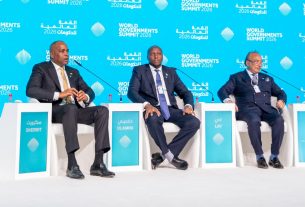
The Minister for Information, Communication and Technology, Savannah Maziya, outlined how the nation is harnessing digital innovation to overcome its landlocked geography and drive inclusive economic growth.
This was during the third United Nations Conference on Landlocked Developing Countries (LLDC3), being held from 5–8 August 2025.
Reframing Eswatini’s landlocked status as “land-linked,” Minister Maziya emphasised the potential for connectivity and collaboration. “It is very important for countries who share the same structural positions to get together and share how best to create opportunities for their citizens,” she said.
The nation, she said, is leveraging ICT to access global markets and bring the world to its doorstep. “We in ICT see this positioning as a way to garner advantage in leading in the technology space,” Maziya said, underscoring the goal of opening new markets and opportunities.
This vision aligns with the directive of His Majesty, King Mswati III, to transform Eswatini into a digitised, first-world nation. In this regard, she said a core focus is empowering marginalised groups, particularly youth and women, to participate fully in the economy. “We are focused on ensuring that we develop so as to ensure that the youth, women, and others who are currently marginalised are able to participate,” Maziya noted. By sharing its progress and plans for the coming years, Eswatini aims to learn from and partner with other nations to achieve its goal of becoming a regional leader in technology. “We will certainly not let geography be our destiny,” she affirmed.
Maziya’s speech highlighted the power of collaboration, expressing Eswatini’s enthusiasm for working with other landlocked developing countries (LLDCs). “We are honoured to be amongst colleagues who are searching for ways to be better and to develop more for the benefit of humanity,” she said.
The LLDC3, themed “Driving Progress Through Partnerships,” brings together over 3,000 delegates, including more than 20 heads of state, representatives from international organisations, civil society, youth, academia, and the private sector. Hosted in Turkmenistan’s National Tourist Zone on the Caspian Sea coast, the conference is addressing the challenges faced by the 32 LLDCs, home to over 500 million people. These nations grapple with high transport costs, limited market access, and climate vulnerabilities due to their lack of direct sea access.
The event, supported by the United Nations Office of the High Representative for the Least Developed Countries, Landlocked Developing Countries, and Small Island Developing States (UN-OHRLLS), features five thematic round tables on issues like transport connectivity and trade enhancement. The Awaza Programme of Action (2024–2034), adopted by the UN General Assembly, guides these efforts, aiming to foster sustainable development through regional cooperation.
(Courtesy Pics)