BY MFANUFIKILE KHATHWANE
MBABANE– Bold leadership and the dedicated service of uniformed personnel are critical catalysts in ending AIDS as a public health threat, UNAIDS Eswatini Country Director Nuha Ceesay has affirmed.
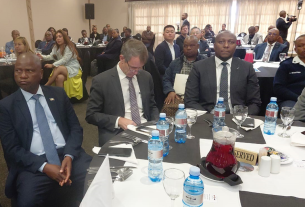
Ceesay was speaking on 25 November 2025 during the His Majesty’s Correctional Services (HMCS) World AIDS Day commemoration held at the institution’s headquarters in Mbabane. Addressing attendees under the national theme, “Eswatini Overcoming Disruption, Transforming the AIDS Response,” he highlighted the essential role played by correctional officers, police, and other uniformed services in advancing the country’s HIV response.
Uniformed Services as Frontline Responders
Ceesay noted that members of the uniformed forces are “often among the first lines of contact with people living with HIV, as well as those at elevated risk.” Because their work centres on security, order and rehabilitation, they occupy spaces where attitudes toward HIV—particularly stigma and discrimination—can either be challenged or reinforced.

“Your leadership by example is essential,” he emphasised.
He commended HMCS for notable achievements within correctional facilities, including ensuring that all HIV-positive offenders are on treatment with high adherence rates, expanding HIV testing for both inmates and staff, and fostering a non-discriminatory environment. He further applauded the launch of the HMCS Health and Wellness Strategy (2024–2028), designed to strengthen HIV and AIDS services, and the implementation of peer-support programmes that train inmates as “expert clients” to provide adherence counselling.
Strengthened post-release linkages to Ministry of Health facilities, ensuring uninterrupted continuity of care for former inmates, were also cited as a significant milestone.
Bold Leadership and Innovation Needed
According to Ceesay, ending AIDS requires courageous and transparent leadership at every level. “Bold leadership translates into concrete actions: clear policies, accountable targets, and transparent reporting on progress, gaps, and resource needs,” he said.
He called for innovation and greater multisectoral collaboration, urging the adoption of approaches such as same-day antiretroviral therapy (ART) initiation, discreet testing services that safeguard privacy, and expanded peer-led support networks.
Three Pillars for Transforming the Response
Ceesay outlined three core pillars necessary to strengthen the HIV response within correctional environments:
- Access, linkage and retention in care – ensuring universal HIV testing, immediate ART initiation, and strong follow-up systems.
• Prevention and risk reduction – providing condoms, TB care, vaccinations, harm-reduction services, and robust health education.
• Human rights-centred care – upholding confidentiality, eliminating discrimination, and supporting rehabilitation and successful reintegration into society.
Describing what a transformed HIV response looks like, he said: “Regular, rapid HIV testing for all inmates and staff, with immediate start on treatment for those who test positive… and peer-led support networks that empower people living with HIV to become ambassadors of health, resilience and hope.”
A Call to Action
Ceesay urged all uniformed personnel to ensure uninterrupted ART supply, enforce stigma-free policies, invest in continuous training, and strengthen partnerships that support rehabilitation and community health engagement.
“Together with government, correctional leadership, healthcare providers, civil society and communities, we can realise Eswatini’s vision of an AIDS-free generation,” he concluded.