




BY MBONGENI NDLELA
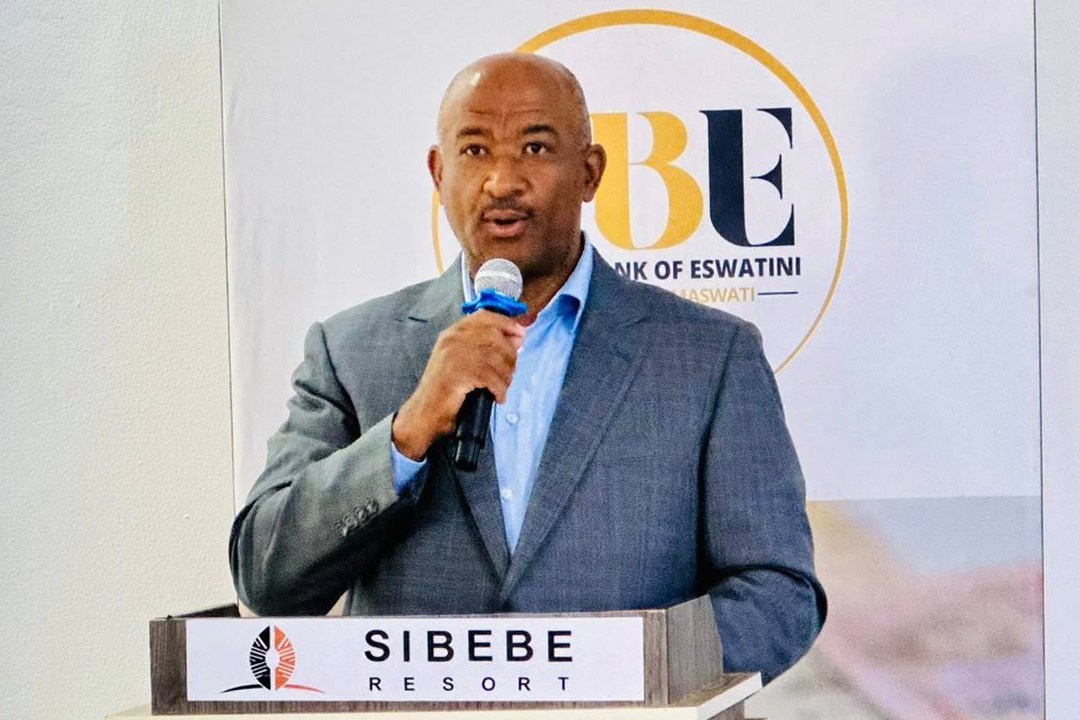
SIBEBE RESORT – Central Bank of Eswatini Governor Dr. Phil Mnisi has assured the nation that Eswatini Bank remains stable and operational despite challenges that prompted the regulator to deploy a consultant to support a structured transformation programme.
Addressing concerns raised by journalists during the Governor’s Annual Media Engagement Session at Sibebe Resort on Friday, Dr. Mnisi provided extensive clarification regarding the Central Bank’s intervention at the indigenous financial institution.
The Governor stressed that contrary to public speculation, Eswatini Bank is not collapsing and continues to meet critical regulatory requirements monitored by the Central Bank.
“A strategy bank has complied with regulatory requirements. It is meeting the financial ratios expected of licensed institutions,” he said.
Dr. Mnisi explained that the Central Bank receives weekly reports from all licensed banks, allowing regulators to monitor liquidity, cash reserves and other key indicators used to assess the health of financial institutions.
He revealed that while Eswatini Bank remains compliant, the regulator identified several structural challenges requiring intervention before they become more serious.
One of the primary concerns is a costly deposit base, which has increased funding expenses for the institution. The Central Bank is working with management to improve the liability structure and reduce financing costs.
Another challenge involves non-performing loans (NPLs). Dr. Mnisi disclosed that NPLs at the bank exceed 20 percent, significantly higher than industry expectations. However, he clarified that the problem is concentrated among specific clients and loan portfolios rather than across the entire institution.
The Governor also identified technology modernisation as a critical priority.
He said digital transformation is increasingly important in today’s banking environment, but Eswatini Bank faces limitations because it does not enjoy the same level of capital support available to larger international banking groups operating in the country.
In addition, the consultant is reviewing whether the bank’s operational structure adequately supports business growth and customer acquisition.
Despite these challenges, Dr. Mnisi emphasised that the Central Bank deliberately chose a supportive approach instead of placing the institution under administration.
“We decided not to use a curator or administration route because the numbers are still looking good,” he explained.
Instead, the regulator introduced an independent consultant who is working closely with the board and management to strengthen governance, improve operational effectiveness and restore long-term sustainability.
The consultant’s assignment began on 1 April 2026 and forms part of a broader transformation programme designed to strengthen the bank’s balance sheet, enhance risk management and reinforce corporate governance structures.
Dr. Mnisi said encouraging progress is already being observed, particularly in loan recoveries.
The Governor urged depositors and customers to remain calm, saying the Central Bank’s intervention demonstrates proactive supervision rather than evidence of failure.
“Our actions should give the public confidence that the regulator is aware of the challenges and is acting early to protect financial stability,” he said.


