



BY LINDELWA MYENI
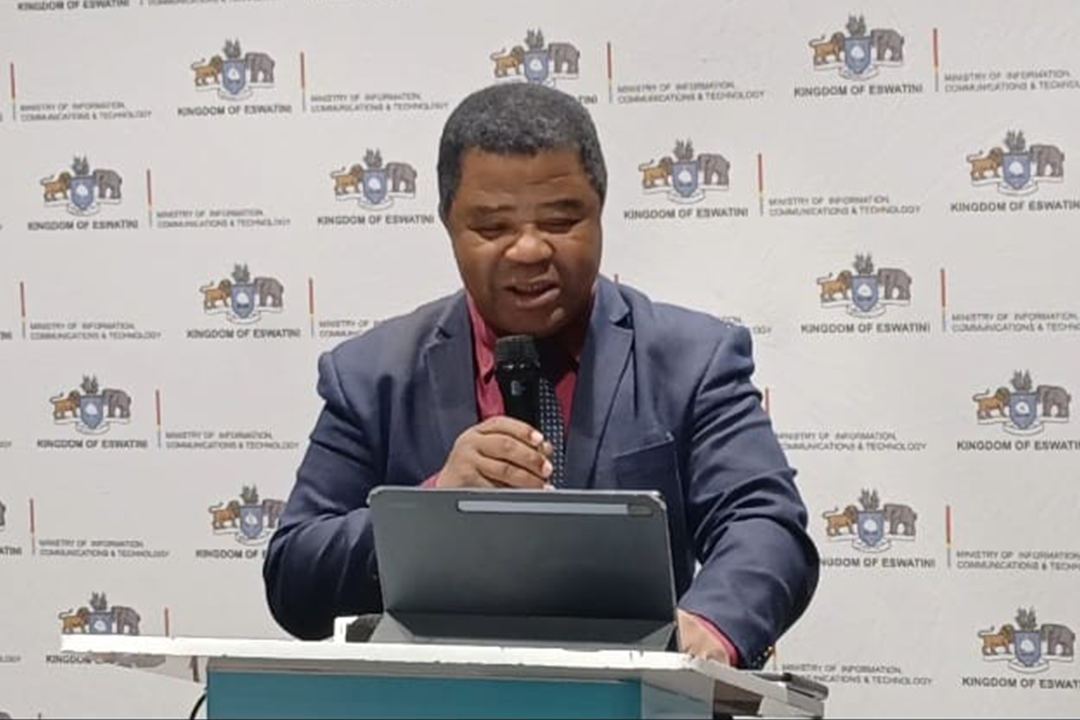
MBABANE – The Vice-Chancellor of the University of Eswatini (UNESWA), Professor Justice M. Thwala, has called for urgent and sustained investment in research, science, technology and innovation, saying Eswatini cannot build a secure development future while relying heavily on knowledge and solutions produced elsewhere.
Thwala made the call during the Capacity Strengthening Workshop for the Operationalisation of the Eswatini National Research Council (NRC), where he said research must be treated as a national development priority rather than an issue confined to academia.
“Science, technology and innovation are not just matters for research alone. They are matters of national policy, national investment and national development,” said Thwala.
He said the operationalisation of the NRC presented Eswatini with an opportunity to translate a long-standing national aspiration into a capable, credible and sustainable institution that could drive solutions to the country’s development challenges.

Thwala said the Council should help identify and support research responding directly to Eswatini’s realities, including food and water security, public health, energy, climate resilience, environmental protection, digital transformation, education, industrial development and the sustainable use of natural resources.
He also emphasised the importance of supporting social sciences, humanities and indigenous knowledge systems, arguing that technological advancement alone cannot guarantee inclusive development.
“Technological progress without social understanding cannot produce inclusive development,” he said.
Thwala warned that Eswatini’s dependence on externally developed technologies, medicines, machinery and other solutions leaves the country vulnerable to global disruptions.
He pointed to the COVID-19 pandemic as a major lesson, when countries competed for medicines, technologies and essential supplies as international supply chains came under pressure.
According to figures cited by Thwala, Africa imports close to 70 per cent of its medicines and medical products and nearly 90 per cent of its medical devices.
He said the experience demonstrated the need for Eswatini to develop its own capacity to understand its challenges, adapt technologies to local conditions and generate home-grown solutions.
“The lesson is clear. We will have another crisis, and while the world is in crisis, we cannot assume that the world will always be able to supply us. We need our own solution,” said Thwala.
He said strengthening the NRC would therefore go beyond advancing research, as it would also contribute to national resilience and sovereignty.
Thwala highlighted the importance of investment, noting that countries aspiring to become knowledge economies deliberately invest in research, innovation and development.
He cited Taiwan and the United States as examples of countries that have invested significantly in research and development, while noting that Eswatini’s investment remains comparatively low.
According to World Bank and UNESCO figures cited during the address, Eswatini invests approximately 0.2 per cent of its GDP in research and development.
Thwala said this should prompt the country to reconsider the scale of resources committed to research, particularly given the country’s development challenges.
He further called for transparent, sustainable and competitive research funding mechanisms, stressing that national research cannot depend on government funding alone.
“The private sector must become a committed funding and implementation partner of the national research system,” he said.
Thwala said businesses stood to benefit from a strong research base through improved productivity, a skilled workforce, locally adapted technologies and access to new products and markets.
He also challenged researchers across Eswatini to actively support the NRC by contributing their expertise to the national research agenda, participating in peer review, forming multidisciplinary and multi-institutional teams, sharing data responsibly and maintaining high standards of research quality.
The Vice-Chancellor said the NRC must be built on trust, transparency, clear governance, capable staff and efficient systems.
He said it should coordinate national research without frustrating academic freedom, harmonise national efforts without suppressing institutional initiatives and promote excellence while building the capacity of emerging researchers.
The operationalisation of the NRC follows the National Research and Innovation Act of 2023, which established the Council as a statutory institution.
Thwala said the current workshop was therefore critical in ensuring that the NRC moves from legislation to effective implementation.
He said the review of the draft NRC regulations should produce a responsive regulatory framework aligned with the Act, while the operationalisation roadmap should set out realistic responsibilities, milestones, institutional arrangements and investment requirements.
The workshop is also expected to strengthen research and innovation funding mechanisms and review the country’s STI Policy, including its response to artificial intelligence and the Fourth Industrial Revolution.
Thwala further placed the NRC within the broader national innovation system, calling for stronger links between government, universities, research institutions, schools, industry, innovators, funders, civil society and communities.
He welcomed representatives from Namibia’s National Commission on Research, Science and Technology and South Africa’s National Research Foundation, saying their regional experience would enrich discussions and provide lessons for Eswatini.
Thwala also highlighted the establishment of the Kingdom of Eswatini Academy and the Eswatini Young Academy of Sciences as important milestones in strengthening the country’s scientific and research ecosystem.
He explained that while the NRC would focus on national coordination, priority-setting and funding oversight, the Academy could mobilise scientific expertise, provide independent evidence-based advice and promote excellence in science.
Thwala reaffirmed UNESWA’s commitment to supporting the successful operationalisation of the NRC, offering the university’s laboratories, students and professional expertise to strengthen the national research agenda.
He challenged stakeholders at the workshop to ensure that the regulations, roadmap, funding mechanisms and STI policy recommendations produced are practical, inclusive, adequately resourced and supported by clear responsibilities and measurable results.
Thwala said Eswatini already possesses the talent required to generate knowledge for its own development, but that talent must be supported through coordinated action and sustained investment.
“Eswatini has the talent to generate knowledge for its own development. And that talent deserves coordinated support, sustained investment and opportunities to flourish,” he said.
#ResearchForDevelopment #ScienceAndInnovation #Eswatini #NationalDevelopment #NRC