



BY LINDELWA MYENI
MBABANE – Eswatini’s pension fund assets have reached approximately E55.8 billion, equivalent to about 57 per cent of the country’s Gross Domestic Product (GDP), highlighting the growing strength of retirement savings as a major pool of long-term domestic capital.
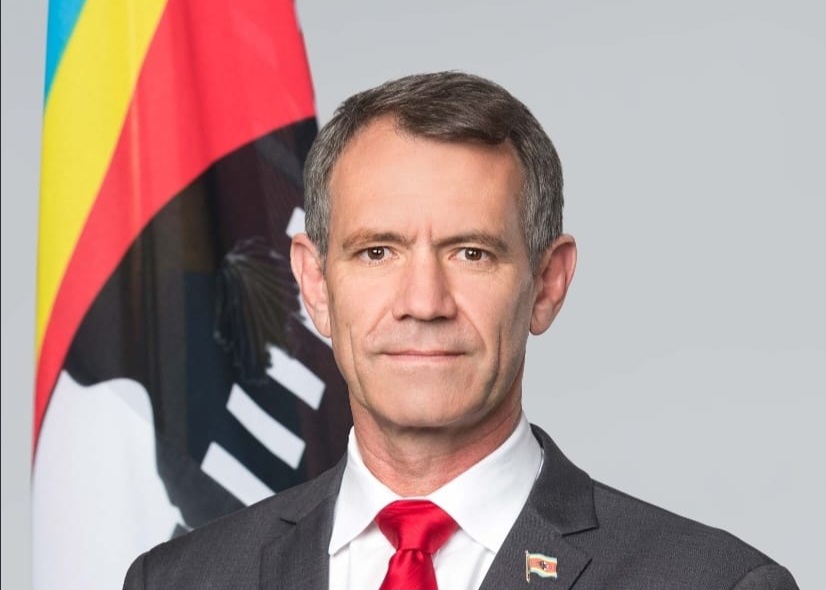
Finance Minister Neal Rijkenberg said the figure presented a significant opportunity for institutional capital to contribute to sustainable economic growth, provided investments remained commercially sound and protected the interests of pension fund members.
Speaking at the fifth annual Eswatini Institutional Investment Forum at Happy Valley Hotel in Ezulwini, held under the theme “Mobilising Institutional Capital for Sustainable Growth and Regional Impact,” Rijkenberg said the size of the pension sector made it one of the country’s most significant sources of long-term capital.
He, however, stressed that the funds belonged to workers, retirees and their families and should not be treated as Government finances.

“Pension money is not public money. It is not a government cheque book,” Rijkenberg said.
The Minister said the scale of pension assets should encourage institutional investors to consider productive investments in Eswatini while maintaining their fiduciary responsibility to members.
“Fiduciary duty is not a reason to avoid productive assets. It’s the reason to approach them properly,” he said.
Rijkenberg warned that developmental investment should not mean accepting poor-quality projects or weaker returns, insisting that investments must meet commercial and institutional standards.
“Developmental investment must never mean concessionary investment. Local investment must never mean low-quality investment,” he said.
He called for competent project managers, independent oversight, transparent fees and measurable performance, while urging Government to create an environment that makes projects attractive to institutional investors.
This, he said, would require policy certainty, transparent procurement, credible project preparation, fair regulation and timely decision-making.
Rijkenberg said Government could not finance the country’s next growth cycle alone without increasing pressure on public debt.
“We cannot borrow our way to prosperity, or tax our way to competitiveness, or consume our way to transformation,” he said.
He proposed a five-part agenda to turn the institutional investment dialogue into actual transactions, including creating a prioritised pipeline of institutional-grade projects, strengthening project preparation, increasing co-investment and knowledge-sharing among SADC funds, identifying at least one flagship transaction and publicy demonstrating progress.
Meanwhile, efforts to expand the country’s pension savings base are also targeting people outside traditional formal employment.
ENPF General Manager: Investments Phesheya Dlamini said the fund’s voluntary contribution facility allowed entrepreneurs, self-employed people and others not required to contribute through statutory employment arrangements to build retirement savings.
“Voluntary actually says you can contribute even if you are not obligated to be a member,” Dlamini said.
He said individuals could make lump-sum contributions, while existing members could also contribute above the statutory requirement.
Dlamini noted, however, that ENPF’s operations remain guided by the 1974 Act, which determines the fund’s mandate and the products it can offer.
He said expanding participation among people in both formal and informal employment would promote financial inclusion while growing the pool of long-term savings available to the economy.
For Rijkenberg, the objective is ultimately to create projects strong enough to attract pension and other institutional capital without compromising investors’ responsibilities to their members.
“Our ambition is not to force capital into development. Our ambition is to make development worthy of capital,” he said.
#Eswatini #PensionFunds #E55Billion #DomesticCapital #EconomicGrowth #InstitutionalInvestment #SustainableGrowth #FinancialInclusion #PensionSavings #EconomicDevelopment #FinanceMinistry #ENPF #Investment #SADC #CapitalMobilisation


