



BY SIFISO NHLABATSI
MBABANE – Government has defended its decision to stop the capital investment subvention to Mbabane and Manzini, arguing that the country’s two major cities have developed sufficiently and now have the revenue-generating capacity to sustain their operations and fund further improvements.
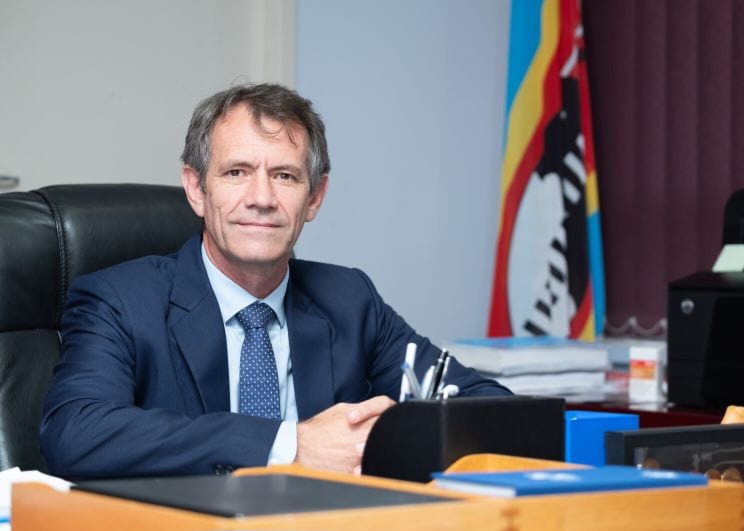
Finance Minister Neal Rijkenberg made the position clear in Parliament on Wednesday while responding to a motion by Kubuta MP Masiphula Mamba, who had called for the immediate release of outstanding capital investment programme subventions to the two cities.
Mamba, seconded by Mbabane East MP Welcome Dlamini, also wanted the Minister to explain why the subvention had been stopped and to lift the ban.
However, Rijkenberg said the decision followed discussions between government and the Ministry of Housing and Urban Development, with the view that the two cities had reached a stage where they could increasingly rely on their own revenue.

“It was then discussed and agreed that the subvention would be stopped considering that these cities have developed and now have potential to generate revenues to sustain their operations and further improvements,” Rijkenberg said.
The Minister said Mbabane and Manzini were in a stronger financial position than smaller towns because of the revenue they generate, particularly through property rates.
“The two big cities have developed over the years; they are generating revenues from all the property rates that they collect unlike the small towns,” he said.
Government’s financial support has, however, not completely ceased. Rijkenberg said government continues to pay rates on all its properties located in the two cities, including office blocks, pool houses and institutional houses.
For the 2026/27 financial year, government has allocated E74.58 million for rates in Mbabane and E40.83 million for Manzini.
These allocations, according to the Minister, also include funding towards the settlement of long-outstanding arrears owed to the municipalities.
Despite the allocations, Rijkenberg disclosed that E20 million remains outstanding due to government’s cash flow constraints.
He said government had agreed to make efforts to clear the outstanding rates and, going forward, budget appropriately for rates based on the municipalities’ billing.
The Minister also addressed the broader issue of capital funding for urban local authorities, saying E26.5 million had been allocated in the current financial year under project X480/99, the Inter-Governmental Capital Development Fund for infrastructure projects in urban local authorities.
Although the fund is intended to benefit municipalities, Rijkenberg said the Ministry of Housing and Urban Development had decided that only one municipality would benefit each year on a rotational basis.
The approach, he said, was intended to ensure that the available funding made a meaningful impact instead of being spread thinly among several municipalities.
Government would continue making annual allocations to the fund, but implementation remained the responsibility of the ministry concerned.
Rijkenberg said the government’s ability to settle outstanding released amounts was also being affected by cash flow constraints, adding that these would be cleared once the country’s financial position improves.
#Eswatini #Mbabane #Manzini #LocalGovernment #UrbanDevelopment #InfrastructureDevelopment #GovernmentFunding #Municipalities #PropertyRates #PublicFinance #ParliamentEswatini #NealRijkenberg