


BY PHUMELELE GAMEDZE
MBABANE – A conversation does not always need sound.
For thousands of Deaf people around the world, hands, facial expressions and sign language carry conversations, emotions, ambitions and ideas. Yet the biggest challenge they often face is not the inability to hear, but a society that is still not fully designed to listen to them.
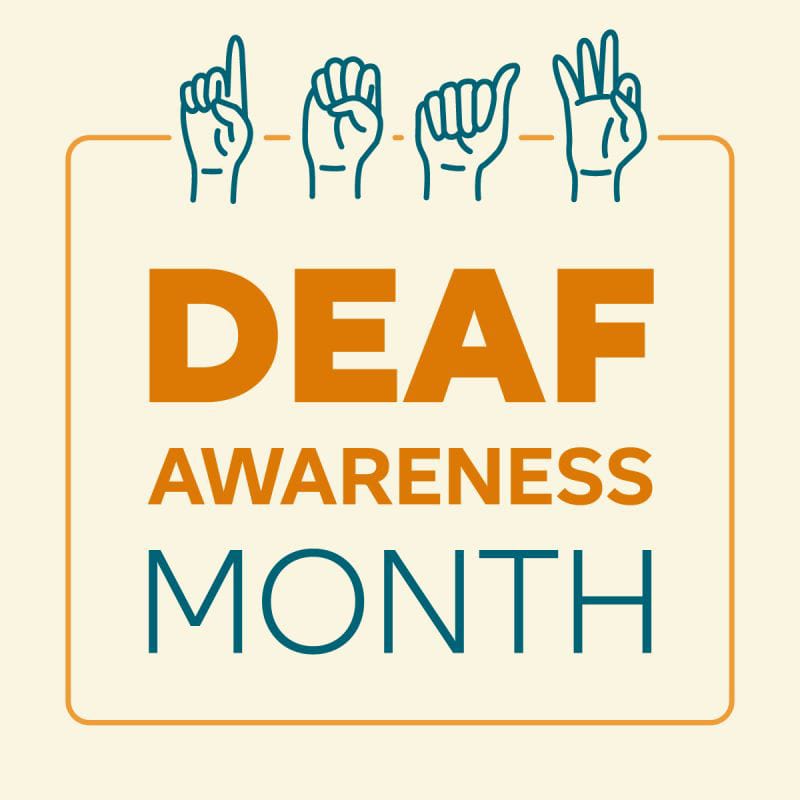
As September marks Deaf Awareness Month, attention is being drawn to the everyday barriers that prevent Deaf people from enjoying equal access to education, healthcare, employment, public services and other opportunities.
The month provides an opportunity for communities, institutions and individuals to move beyond viewing deafness purely as a disability and instead recognise Deaf people as citizens with dreams, abilities, dignity and fundamental human rights.

This year’s global theme, “Declaring Deaf People’s Human Rights,” places the spotlight firmly on equality, accessibility and meaningful inclusion.
The World Federation of the Deaf (WFD) will observe the International Week of Deaf People from September 21 to 27, while September 23 will mark the International Day of Sign Languages.
The 2026 campaign places particular emphasis on sign language, accessible communication, inclusive education and ensuring that Deaf people have a meaningful voice in decisions affecting their lives.
For many Deaf people, however, discrimination can begin with something as simple as trying to communicate.
A patient may arrive at a healthcare facility but struggle to explain symptoms because no sign language interpreter is available. A pupil may sit in a classroom but fail to fully participate because learning materials and communication methods are not accessible.
A qualified job seeker may have the necessary skills and experience but still be overlooked because an employer has not created an inclusive workplace.
These examples demonstrate that the biggest obstacle is often not deafness itself, but barriers created by environments that fail to accommodate different ways of communicating.
Small changes can make a significant difference.
Learning basic sign language, facing a Deaf person directly when communicating, using captions on videos, providing interpreters where necessary and making important information available in accessible formats can help turn exclusion into participation.
Beyond improving communication, Deaf Awareness Month also calls for Deaf people to be included in discussions and decisions affecting them.
The WFD’s 2026 campaign promotes the principle of “Nothing About Us Without Us,” emphasising that Deaf people and organisations representing them should be central to the formulation of programmes, policies and decisions concerning their lives.
This is especially important in education.
For a Deaf child, early access to sign language can mean the difference between merely being present in a classroom and being able to understand lessons, ask questions, interact with classmates and realise their full academic potential.
For a Deaf young person entering the labour market, an accessible workplace can provide the opportunity to demonstrate skills rather than being judged according to communication barriers.
The same principle applies to Deaf entrepreneurs, parents, customers, students and professionals.
Accessibility should therefore not be viewed as charity or a special favour. It is about creating equal opportunities for every person to participate meaningfully in society.
Deaf Awareness Month also provides an opportunity for hearing people to reconsider some of the assumptions they may hold about Deaf communities.
Instead of asking what Deaf people cannot do, society can begin asking what institutions, workplaces, schools and communities can change to make full participation possible.
The shift may appear simple, but it changes the entire conversation.
Deaf people are already contributing to communities, raising families, pursuing education, building businesses and following professional careers. What is required is an environment that gives them the same opportunities to communicate, participate and succeed.
The message this September is therefore bigger than awareness alone.
It is about dignity, equality and ensuring that no person is excluded simply because they communicate differently.
Their hands speak. Their achievements speak. Their ambitions speak.
The responsibility of society is to listen.
(Courtesy Pic)