


BY LINDELWA MYENI
MBABANE – Eswatini has reaffirmed its commitment to strengthening cooperation with the International Atomic Energy Agency (IAEA) to use nuclear science and technology to improve energy security and advance sustainable national development during the 70th Regular Session of the IAEA General Conference in Vienna, Austria.
His Royal Highness Prince Lonkhokhela, Minister of Natural Resources and Energy, made the commitment while delivering Eswatini’s Country Statement at the conference, highlighting the Kingdom’s exploration of Small Modular Reactor (SMR) technology and other peaceful applications of nuclear science.
The Minister said Eswatini’s nuclear energy exploration would remain guided by nuclear safety, security, non-proliferation and international safeguards.
Eswatini also welcomed its inclusion in the RAF-2016 Project, through which the IAEA is supporting African countries in developing capabilities and infrastructure for potential nuclear power programmes.

IAEA SUPPORTS ESWATINI’S DEVELOPMENT PRIORITIES
Prince Lonkhokhela expressed appreciation for the IAEA’s continued support to Eswatini in healthcare, agriculture, water resource management, nuclear safety and sustainable energy development.
He conveyed warm greetings from His Majesty King Mswati III and the people of the Kingdom of Eswatini, while reaffirming the country’s commitment to deepening cooperation with the IAEA in applying nuclear science and technology for peaceful purposes.
WATER SECURITY PRIORITISED
Water security was highlighted as one of Eswatini’s key national priorities, with the country continuing to participate in the IAEA’s Water Availability Enhancement Initiative (IWAVE).
The Kingdom is also working towards developing a National Hydrological Gap Plan, supported by specialised equipment, technical training, scientific visits and isotope hydrology expertise through the IAEA partnership.
The support is expected to strengthen Eswatini’s ability to assess and manage its water resources, including shared water resources, while supporting evidence-based planning for long-term water security.
NUCLEAR SCIENCE BOOSTS FOOD SECURITY
The Minister further highlighted progress in agriculture, where nuclear techniques have been used to develop promising early-maturing and high-yielding cowpea mutant lines.
The developments have the potential to improve agricultural productivity and resilience, particularly as the country responds to climate-related challenges.
Eswatini has also expressed interest in participating in the IAEA–FAO Atoms4Food Initiative, which promotes innovative approaches to food security and climate-smart agricultural production through nuclear and related technologies.
CANCER CARE TO BENEFIT FROM IAEA SUPPORT
In healthcare, Eswatini has made progress towards establishing its first public radiotherapy facility at Manzini Government Hospital.
With technical guidance from the IAEA, the country has completed preliminary designs as well as environmental, social and geotechnical assessments for the proposed facility, which is estimated to require approximately €10 million for construction and equipment.
Prince Lonkhokhela appealed for continued IAEA assistance through specialist fellowships and multidisciplinary training to equip local personnel with the skills required to operate and sustain the facility once completed.
STRENGTHENING NUCLEAR SAFETY
Eswatini is also strengthening its regulatory framework to ensure the safe and responsible use of nuclear and radiation technologies.
The Minister noted the establishment of an independent Nuclear Radiation Safety Regulatory Authority in line with IAEA standards.
Government is continuing to strengthen the policy and legislative framework governing nuclear and radiation safety while prioritising domestic resources for the establishment and operation of the regulatory institution.
IAEA REAFFIRMS SUPPORT
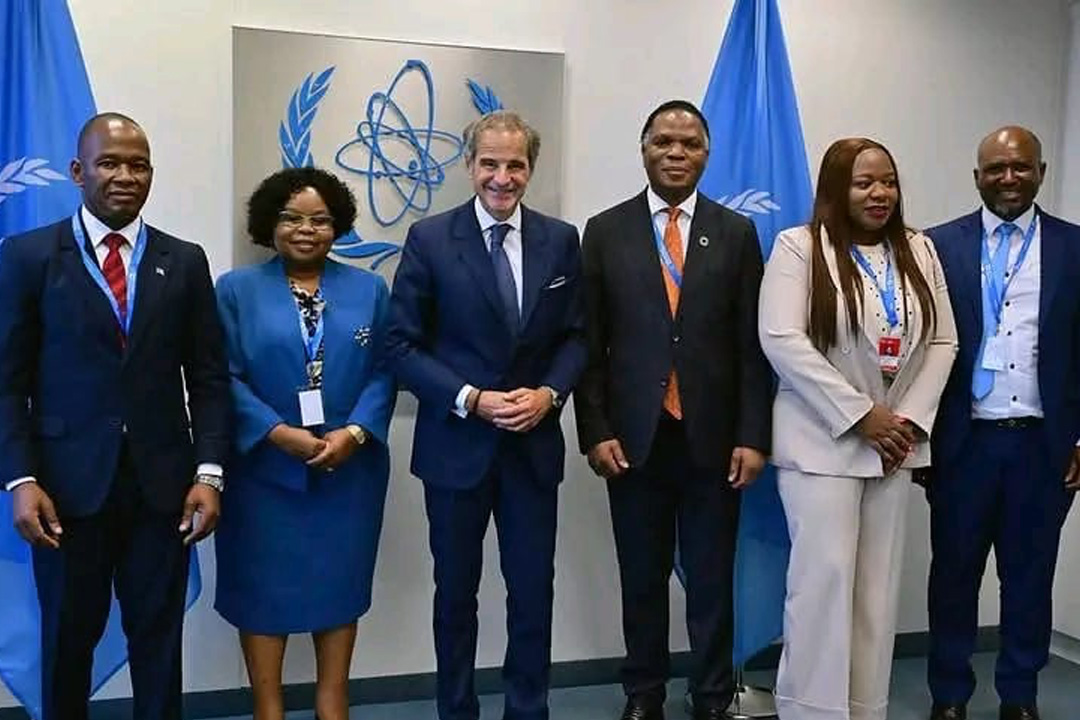
Following the Country Statement, Prince Lonkhokhela held a bilateral meeting with the IAEA Director General in Vienna to discuss further cooperation on Eswatini’s nuclear science and technology priorities.
The IAEA Director General reaffirmed the organisation’s readiness to support Eswatini in establishing its nuclear regulatory body and training officers responsible for nuclear and radiation safety standards.
The IAEA also confirmed continued support for the establishment of the radiotherapy facility and other peaceful applications of nuclear science and technology.
Meanwhile, Eswatini will host the SADC Sustainable Energy Week from 15–19 March 2027, with the Minister inviting the IAEA Director General and his team to participate through exhibitions, technical engagements and speaking roles.
The event is expected to strengthen regional dialogue on sustainable energy solutions and innovative technologies to address the region’s energy needs.
#Eswatini #IAEA #NuclearScience #EnergySecurity #SustainableDevelopment #WaterSecurity #FoodSecurity #CancerCare #NuclearSafety #SADC #SustainableEnergy
(Courtesy Pic)