


BY SIFISO NHLABATSI
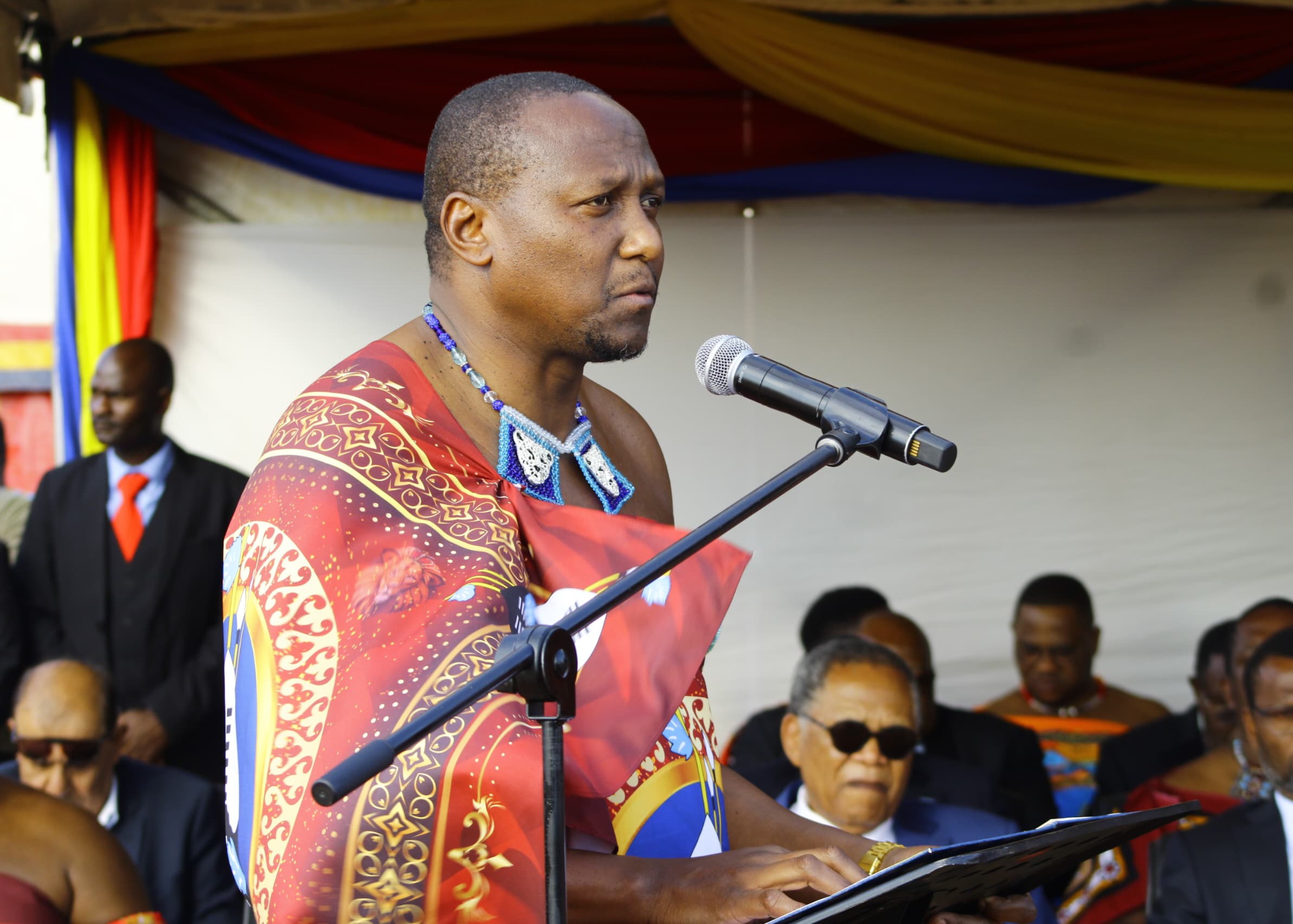
NHLANGANO – Prime Minister Russell Mmiso Dlamini has called for an education system that develops not only academic and technical skills but also patriotism, discipline, integrity, responsibility and respect.
Dlamini said education should prepare learners to do more than earn a living, stressing that they must also be equipped to live honourably, serve faithfully and contribute constructively to society.
The Prime Minister made the remarks yesterday during the 40th graduation ceremony of Ngwane Teachers College, where he challenged educators to play a central role in shaping the character and values of the country’s future citizens.
He said curriculum reform should go beyond improving teaching methods and should address the broader question of the type of citizens Eswatini wants to produce in the decades ahead.

“Education is more than public service; it is national trust,” said Dlamini.
“Through it, one generation transmits knowledge, character, culture and responsibility to the next.”
The Prime Minister said the country’s classrooms should produce learners with the skills, discipline and innovation needed to drive national transformation.
He described teachers as nation-builders, saying every engineer, scientist, doctor, entrepreneur, farmer, public servant and national leader first passed through the hands of a teacher.
Dlamini said this placed a significant responsibility on educators to ensure that their conduct and example complemented what was taught in classrooms.
He said the country needed schools that produced young people who were firmly rooted in emaSwati culture and heritage while also being confident and competent enough to engage with the wider world.
“Progress must not require the abandonment of our identity,” he said.
“Rather, it must enable us to carry that identity into the future with knowledge, dignity and purpose.”
The Prime Minister said patriotism, discipline, integrity, responsibility and respect should form an important part of the country’s education system.
He said learners should not only be prepared to enter the workforce but should also understand their responsibilities as citizens and be able to make positive contributions to their communities and the nation.
Dlamini also called for the teaching profession to regain the honour and respect it historically commanded.
He said Government had a responsibility to provide teachers with the training, tools and working conditions necessary for effective service.
At the same time, he said educators were expected to uphold ethical standards, proper conduct and accountability in order to maintain public confidence in the profession.
The Prime Minister said parents also had an important role to play in shaping the character of children.
He described the home as the first school and the parent as the first teacher, warning that schools could not, acting alone, overcome problems such as indiscipline, neglect and a lack of moral guidance.
“When the home and the school speak with one voice, the child receives a firm foundation for a purposeful life,” he said.
Dlamini further acknowledged that teachers were now operating in an environment increasingly influenced by artificial intelligence, digital platforms and rapid technological change.
He said while these technologies should be embraced and used wisely, they should not come at the expense of human judgment, compassion, integrity and personal example.
“Technology may supply information; only a teacher can recognise the learner, inspire confidence and shape character,” he said.
The Prime Minister also emphasised the importance of science, technology, engineering and mathematics (STEM) education in preparing learners for the future.
He said STEM disciplines were critical to industrialisation, digital transformation, energy security, modern agriculture, healthcare, infrastructure development and national competitiveness.
However, Dlamini said STEM education should not be confined to theory or reserved for a privileged few.
He said schools should be supported with competent teachers, functioning laboratories, digital resources and practical programmes that connect classroom knowledge to the economic and developmental needs of Eswatini.
He said Ngwane Teachers College should carry its 40-year history into the future by remaining a centre of professional excellence, STEM education, research, innovation and national values.
The Prime Minister said the institution had an important role in preparing teachers not only for the classroom of today but also for the Eswatini of tomorrow.
He said the aspirations contained in the Nkwe Programme of Action could only be achieved if the education system produced the skills, discipline and innovation required for national transformation.
“Economic transformation begins in the classroom,” said Dlamini.
The Prime Minister said the responsibility for shaping the country’s future could not rest with Government alone.
He said Government should provide direction and resources, the Ministry should implement with diligence and accountability, institutions should train with excellence, teachers should serve with professionalism and integrity, parents should guide with vigilance and learners should pursue knowledge with discipline and purpose.
Dlamini said the quality of teachers being produced today would ultimately influence the quality of citizens and the nation Eswatini would become.
“The teacher we prepare today will shape the citizen of tomorrow, and that citizen will determine the nation we become,” he said.
The 40th graduation ceremony also coincided with the commemoration of 40 years of the reign of His Majesty King Mswati III.
Dlamini said the two milestones were significant because Ngwane Teachers College had spent four decades developing the country’s human capital, while the King’s reign had seen the Kingdom pursue its development under his leadership.
He said the history of the college was therefore closely linked to the wider development story of Eswatini.
#Eswatini #NgwaneTeachersCollege #Education #TeacherTraining #Patriotism #Discipline #Integrity #STEMEducation #NationalDevelopment #NkweProgrammeOfAction