


BY THEMBA ZWANE
EZULWINI – Auditor General (AG), Timothy Matsebula, has warned that corruption does not occur in isolation, saying it often hides within the very systems audited by the Office of the Auditor General (OAG).
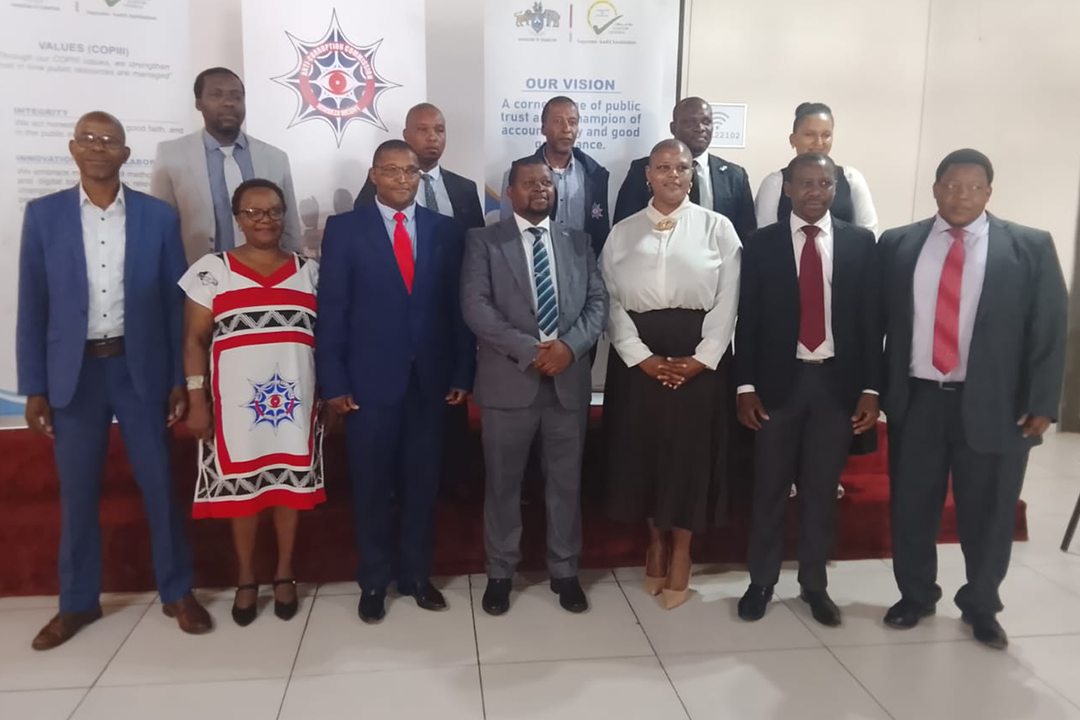
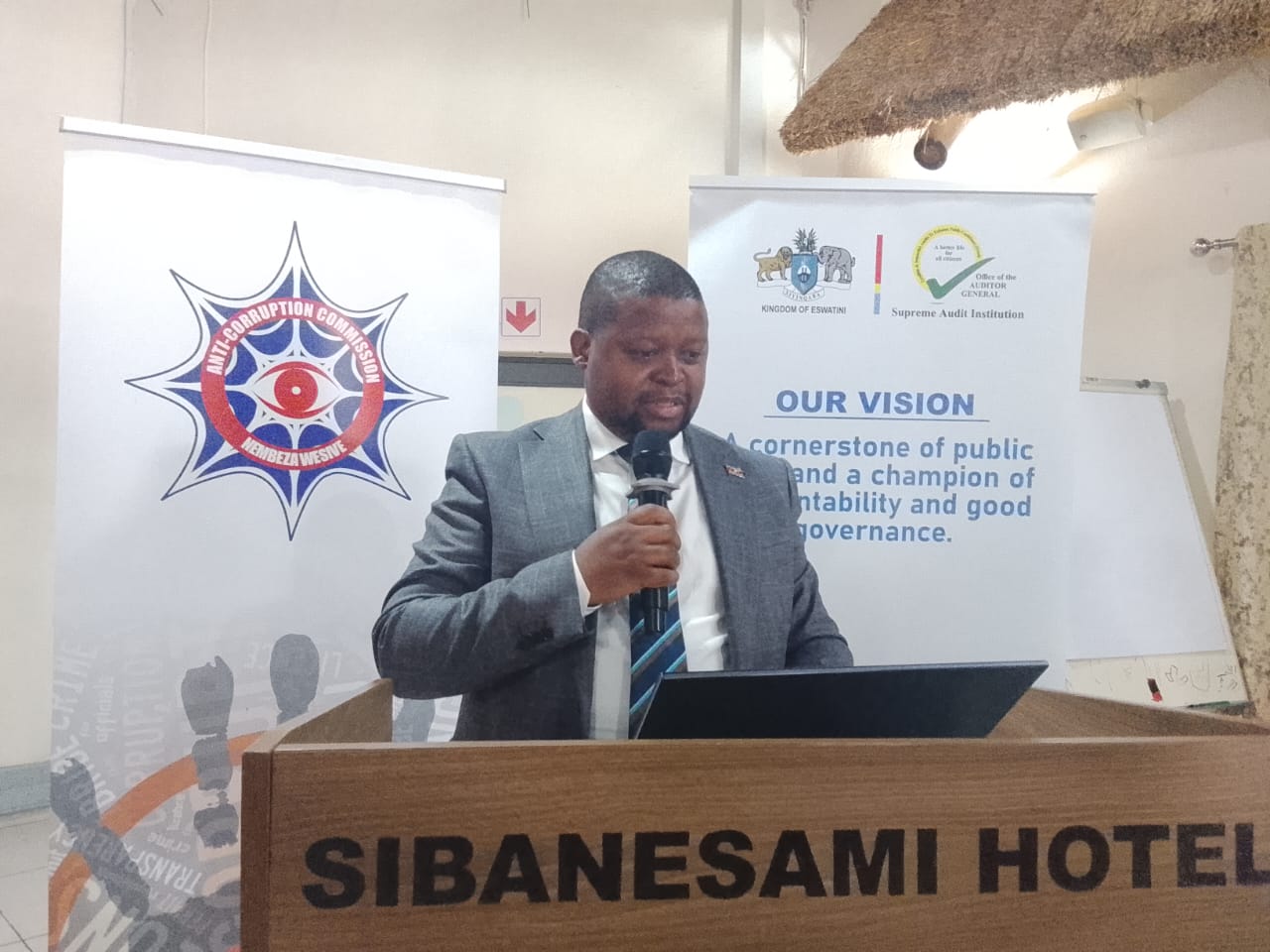
Matsebula made the remarks on Wednesday, September 23, 2026, during the signing of a Memorandum of Understanding (MoU) between the OAG and the Anti-Corruption Commission (ACC) at SibaneSami Hotel in Ezulwini.
He described the agreement as a historic moment and a turning point in strengthening good governance in the Kingdom of Eswatini, stressing that closer collaboration between the country’s Supreme Audit Institution (SAI) and anti-corruption agencies was essential.
“Corruption does not occur in isolation. It often hides in the very systems we audit — in procurement irregularities, in ghost workers, in overpriced contracts, in unaccounted-for expenditures, in weak internal controls,” Matsebula said.

The AG said an audit finding could serve as the first red flag of corruption, while a corruption investigation could expose systemic weaknesses that needed to be addressed through auditing.
“An audit finding can be the first red flag of corruption and a corruption investigation can reveal systemic weaknesses that auditing must address,” he said.
Matsebula said the mandates of the two institutions were distinct, but their overall purpose was shared.
“The SAI is mandated to promote accountability, transparency and the prudent, economical, efficient and effective use of public funds. We audit, we report, we recommend,” he said.
He said the ACC, on the other hand, was mandated to prevent, detect and investigate corruption in all its forms.
“Yet, we share a common responsibility: to safeguard public resources, to fight corruption, and to ensure that every cent of public money serves the citizen it was intended for,” Matsebula said.
The AG said the two institutions could no longer afford to operate in isolation, describing collaboration as essential to strengthening accountability and protecting public resources.
“This is why we cannot work in silos. Our collaboration is not optional — it is essential,” he said.
Matsebula outlined three key reasons for closer cooperation between the institutions.
First, he said the two bodies were complementary, with the SAI providing a technical, financial and compliance perspective, while the ACC provided an investigative and law-enforcement perspective.
“Together, we turn an audit observation into accountability,” he said.
Second, he said collaboration would strengthen oversight over the prudent use of public funds.
He explained that while auditors ask whether public money was spent as authorised and whether value for money was achieved, the ACC could establish whether such expenditure was tainted by abuse of office, bribery or conflict of interest.
“The two questions together complete the accountability cycle,” Matsebula said.
Third, he said collaboration could strengthen deterrence and prevention by increasing the consequences of corrupt conduct.
“When public officials know that auditors and investigators share information, conduct joint risk assessments, and follow up on each other’s findings, the cost of corruption becomes high,” he said.
Matsebula said the signing of the MoU should now translate into structured cooperation rather than remaining an expression of goodwill.
He identified information sharing within the law as one of the practical areas of cooperation, including the prompt and secure sharing of audit reports, referrals and whistleblower information.
He also called for joint capacity building, including training auditors to identify fraud and corruption indicators and equipping investigators with a stronger understanding of public financial management systems.
The AG further proposed joint task teams focusing on high-risk sectors such as procurement, infrastructure and public health.
He said follow-up mechanisms would also be necessary to ensure that audit recommendations relating to corruption risks were implemented and that referrals made by the SAI were investigated to their logical conclusion.
Matsebula said the ultimate objective of the partnership was to protect public trust and ensure that public resources delivered tangible benefits to citizens.
“Public trust is our common currency. When public funds are misused, it is not just figures in a report — it is a clinic not built, a textbook not delivered, a road not completed,” he said.
He called on both institutions to treat the fight against corruption as a shared responsibility.
“Let us today reaffirm that the fight against corruption is not the job of one institution. It is our shared constitutional and moral responsibility,” Matsebula said.
He said the partnership between the SAI and ACC would send a clear message that public resources must be protected.
“When the SAI and the ACC stand together, we send a clear message: there is no safe haven for corruption, and public funds must and will be protected,” he said.
#Eswatini #AuditorGeneral #TimothyMatsebula #AntiCorruptionCommission #ACC #OfficeOfTheAuditorGeneral #Corruption #GoodGovernance #Accountability #PublicFunds #Transparency #PublicTrust #Ezulwini