



BY GCWALISILE MHLABANE
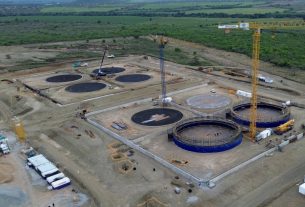
MANZINI – Eswatini has strengthened its fight against climate change with the unveiling of a Refrigerant Recovery and Recycling Centre at Mhobodleni, a facility expected to help prevent harmful refrigerants from being released into the atmosphere while supporting greener cooling technologies.
The facility was officially unveiled on October 5, 2026, during the commemoration of the International Day for the Preservation of the Ozone Layer, held under the theme “Global Action for a Cooler Planet.”
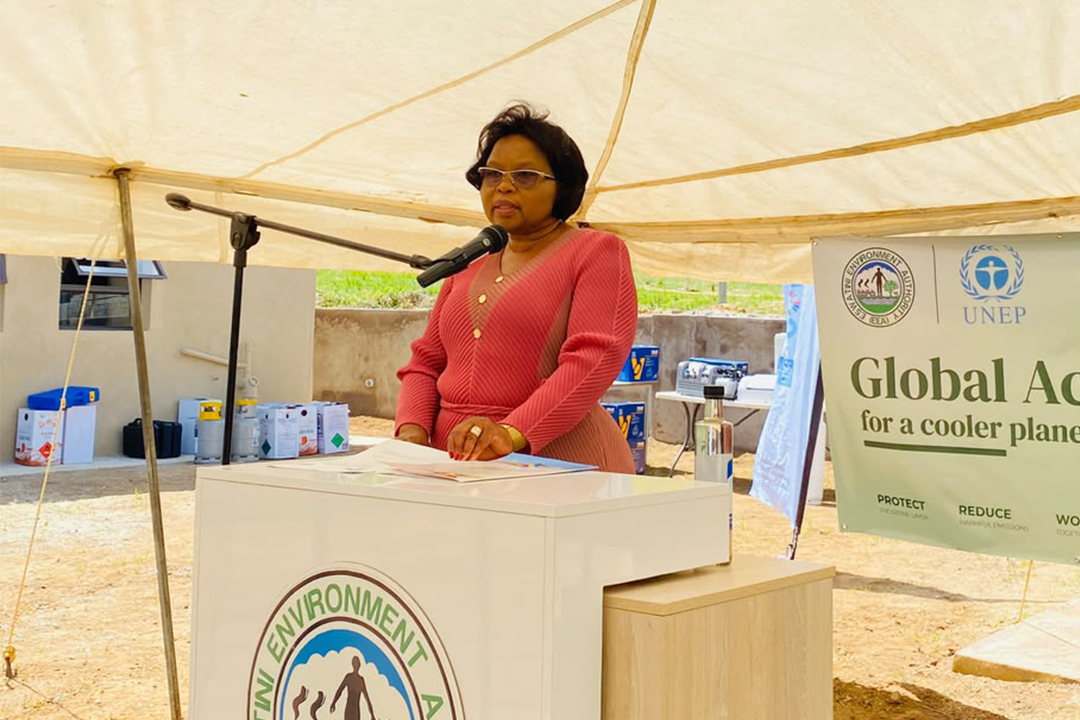
Minister of Tourism and Environmental Affairs Jane Mkhonta-Simelane said the centre marked another important milestone in Eswatini’s commitment to protecting the ozone layer and reducing greenhouse gas emissions.
She said the centre would serve as a national collection point where used refrigerants from across the country could be recovered, recycled and reused instead of being released into the atmosphere.
“Venting refrigerants into the atmosphere is prohibited. With this centre in place, there is no longer any excuse,” Mkhonta-Simelane said.
The minister said sustainable cooling had become essential to food security, vaccine storage and distribution, public health and trade, making responsible management of refrigerants important to the country’s economy.
The facility comes as Eswatini continues implementing its commitments under the Montreal Protocol and its Kigali Amendment, which seeks to significantly reduce the use of hydrofluorocarbons (HFCs), powerful greenhouse gases commonly used in refrigeration and air-conditioning equipment.
Eswatini formally accepted the Kigali Amendment on November 24, 2020, committing the country to phase down HFC consumption by 80 per cent by 2045.
Mkhonta-Simelane said Government had also established a licensing system for HFCs alongside the existing system for ozone-depleting substances, ensuring that refrigerants entering the country were accounted for.
She said the country was also working towards its 2030 target of phasing out hydrochlorofluorocarbons (HCFCs), with progress supported by international partners.
On March 27, 2026, the United Nations Development Programme (UNDP) handed over a refrigerant recovery vehicle to the Eswatini Environment Authority to support the recovery and management of refrigerants.
The minister said Eswatini had also taken steps to strengthen technical standards in the refrigeration and air-conditioning sector.
Together with the Directorate of Industrial and Vocational Training, the Eswatini Environment Authority conducted the country’s first national trade test for refrigeration and air-conditioning technicians, creating a national system for certifying their competence.
Mkhonta-Simelane said the country’s refrigeration technicians remained critical to the successful implementation of the Montreal Protocol because they were responsible for safely recovering refrigerants from cooling equipment and supporting the transition to cleaner technologies.
She further linked the transition to cleaner cooling technologies with Eswatini’s ambition to create green economic opportunities and jobs for emaSwati.
“These technologies are more energy efficient: they cut greenhouse gas emissions and lower running costs for households and businesses,” she said.
The minister encouraged young people pursuing refrigeration and air-conditioning studies at Gwamile VOCTIM in Kwaluseni to use the new facility for practical training once it becomes operational.
She said practical exposure would help transform classroom knowledge into marketable skills and prepare young people for employment in the growing green economy.
The centre also reflects collaboration between Government and development partners, with the Ministry of Housing and Urban Development having allocated the land for the facility.
Mkhonta-Simelane described the contribution as an example of a whole-of-Government approach to addressing environmental challenges.
She also thanked UNDP for its technical expertise, capacity-building and strategic support in establishing the facility and strengthening the skills of local technicians.
The minister recognised the German Agency for International Cooperation (GIZ), through the Cooling Programme for Southern Africa (CooPSA), for strengthening the country’s capacity by training technician trainers and donating 13 energy-efficient air-conditioners using natural, climate-friendly refrigerants.
Some of the units will be used as demonstration equipment at selected Government institutions, while others will support practical training at Gwamile VOCTIM, particularly in the safe handling of flammable refrigerants.
The minister said the global effort to protect the ozone layer had demonstrated what could be achieved when countries acted collectively on the basis of scientific evidence.
She noted that the Montreal Protocol had resulted in the phase-out of nearly 99 per cent of ozone-depleting substances controlled under the agreement, with the ozone layer projected to recover to 1980 levels across most of the world by around 2040.
For Eswatini, she said, the challenge was now to translate global commitments into practical action at home.
“Global action for a cooler planet begins at home,” Mkhonta-Simelane said, calling on Government, industry, development partners and citizens to work together towards a cooler, safer and more resilient future.