



BY GCWALISILE MHLABANE
MALINDZA– Church leaders have been urged to prioritise the safety of gender-based violence (GBV) survivors over marital reconciliation and ensure perpetrators are held accountable, as the Royal Eswatini Police Service steps up efforts to strengthen the role of faith communities in combating abuse.
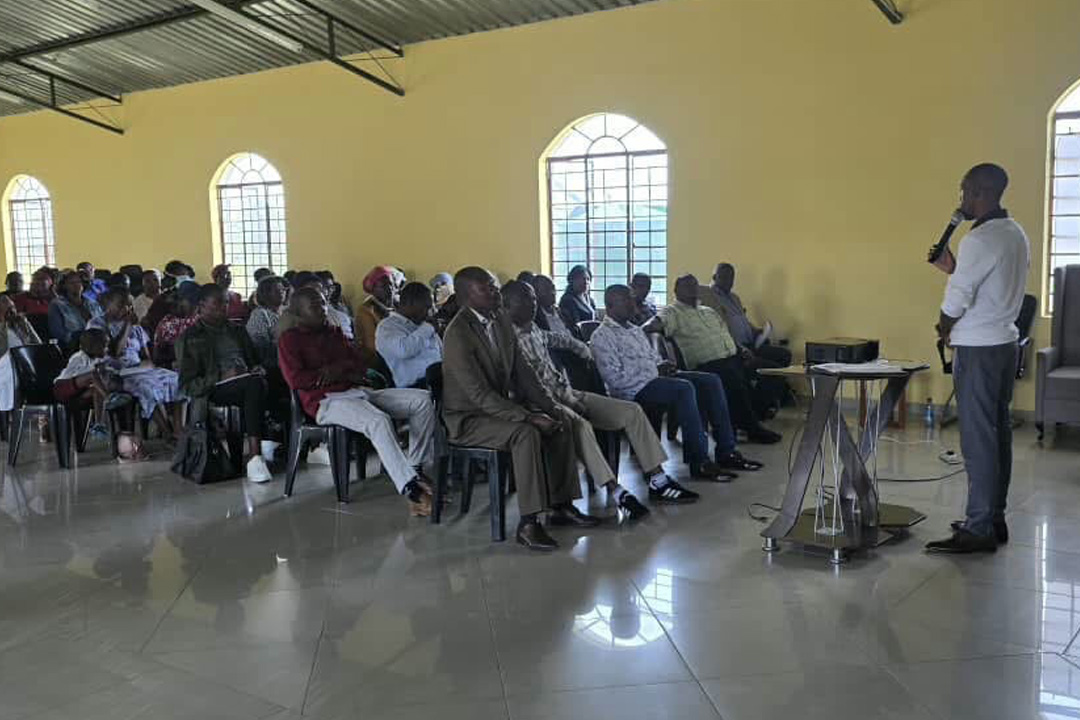
The call was made by Constable Mbongeni Khoza of the Manzini One Stop Centre during a lecture organised by the Domestic Violence, Child Protection and Sexual Offences Unit, in collaboration with the Conference of Churches, for church and community leaders from Lubombo Region at Malindza AEC on Thursday, October 8, 2026.
The engagement focused on the role of churches in ending GBV, accountability for perpetrators, creating safe spaces for survivors and the dangers of joint counselling in relationships where abuse is ongoing.
Khoza said churches had an important role to play in challenging violence by addressing GBV as both a sin and a violation of peace, while ensuring that survivors received appropriate support.

He emphasised that forgiveness and claims of repentance should not be used to shield perpetrators from accountability. He urged church leaders to distinguish genuine repentance, which involves taking responsibility, making restitution where appropriate and demonstrating lasting behavioural change, from what he described as “cheap grace”.
Khoza further stressed that churches should serve as safe spaces where survivors could speak about their experiences without fear of judgement, blame or pressure to remain in abusive relationships.
He cautioned religious leaders against placing marital reconciliation or the restoration of relationships above survivors’ safety, particularly in situations where violence was continuing.
According to Khoza, conventional couples’ counselling can be ineffective and potentially dangerous when abuse is active, as it may expose survivors to further harm. He encouraged church leaders to listen to survivors, acknowledge their pain without judgement and recognise when cases require intervention beyond their pastoral expertise.
He said survivors should be referred to professional psychologists and other relevant specialists when necessary, rather than relying solely on pastoral counselling to address complex cases of abuse.
To improve access to assistance, Khoza introduced the concept of a “warm handover”, a structured approach to connecting survivors with police, medical practitioners, legal professionals and psychological support services.
He encouraged churches to establish referral networks and maintain directories of available local services so that survivors could be connected to appropriate assistance without unnecessary delays.
Khoza said regular training, clear policies and partnerships with relevant organisations were essential in ensuring that churches became genuine sanctuaries for people experiencing violence.
The engagement forms part of the police service’s continued efforts to equip church and community leaders with knowledge of GBV, including its legal implications and the relationship between religious teachings, justice and the law.
Meanwhile, Khoza also addressed parents during a meeting at Maphungwane, Ebenezer, where he sensitised them on children’s rights and their responsibilities in protecting children from abuse and other forms of harm.
He discussed Sections 48 and 50 of the Children’s Protection and Welfare Act, highlighting the importance of understanding the law and safeguarding children’s welfare.
The meeting also covered bullying, the effects of crime, procedures for reporting criminal activities and offences under the Sexual Offences and Domestic Violence Act, including rape, physical abuse and emotional abuse.
The discussions sought to strengthen parents’ awareness of their role in preventing crime, identifying abuse and reporting incidents to the relevant authorities.
Through its engagements with religious leaders, parents and communities, the Royal Eswatini Police Service continues to promote awareness of GBV, child protection and the importance of working together to build safer communities.
(Courtesy Pic)