By Phumzile Ndlovu
EZULWINI — In a bold effort to strengthen climate-smart agriculture and improve climate information services, Eswatini has taken a major step toward enhancing its agrometeorological systems.
From Monday to Friday (May 12–16, 2025_, the Centre for Coordination of Agricultural Research and Development for Southern Africa (CCARDESA), with support from AICCRA (Accelerating Impacts of CGIAR Climate Research for Africa), conducted a Training of Trainers (ToT) Workshop at Sibane Sami Hotel in Ezulwini.
The workshop brought together 21 technical experts (14 men and 7 women) from Eswatini’s Ministry of Agriculture, National Meteorological Services, Academia, National Disaster Management Agency, Early Warning Unit, and the Department of Agricultural Research Services.
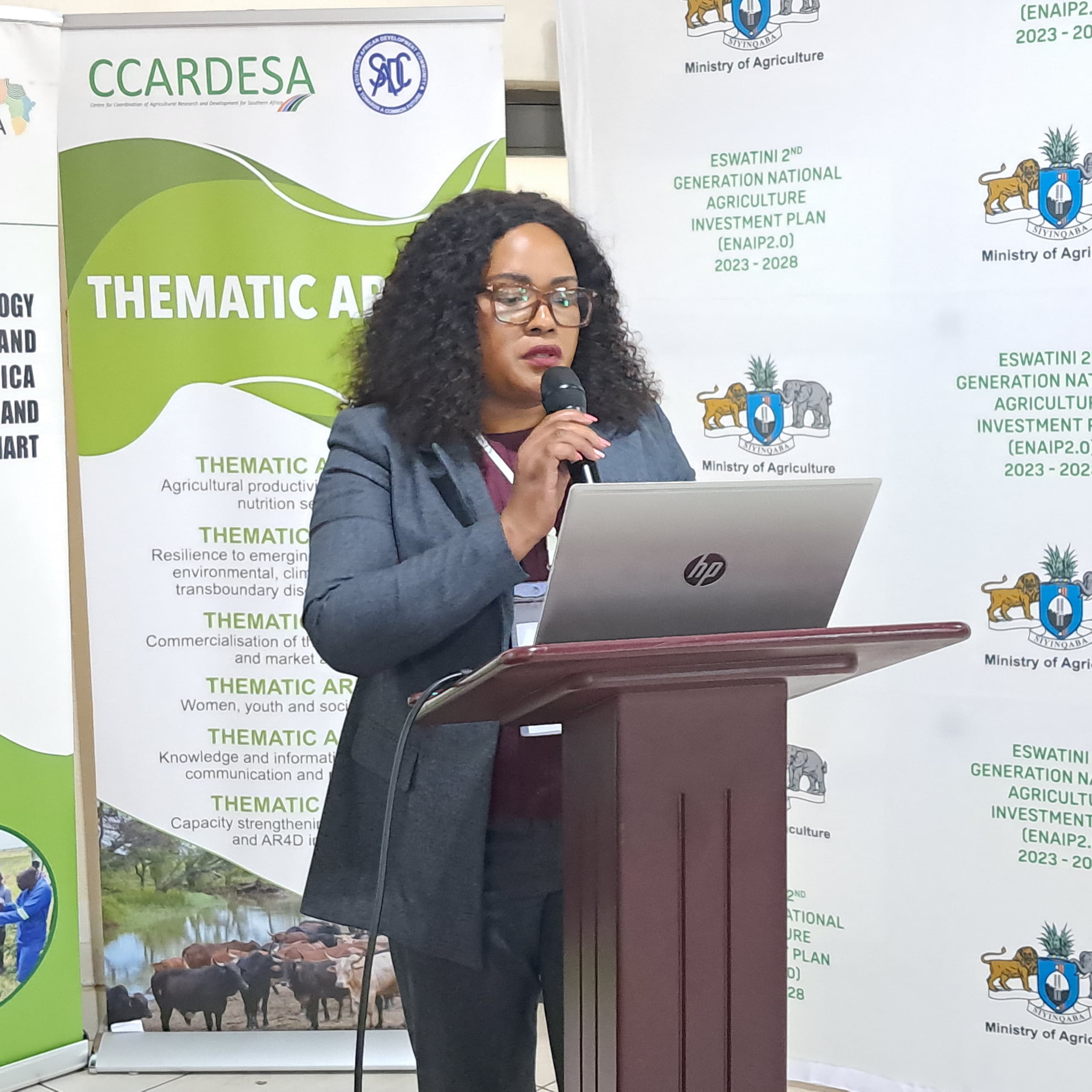
Central to the training was the Climate-Agriculture Modeling and Decision Tool (CAMDT), a powerful temporal weather downscaling algorithm used to drive the Decision Support System for Agro Technology Transfer (DSSAT). This integrated system enables crop capability and yield forecasting up to three months in advance, empowering farmers and policymakers to make informed choices on crop management and resource allocation.

The workshop was anchored on the Socio-economic Benefits (SEB) Framework developed by the African Climate Policy Centre (ACPC) under the United Nations Economic Commission for Africa (UNECA). This framework supports multi-hazard early warning systems and underpins the development of the crop yield prediction model, originally conceived in response to Tropical Cyclones Idai and Kenneth in 2019.
Experts were equipped with tools to assess climate variability and its impact on agriculture, enabling them to support smallholder farmers with tailored climate advisories. These insights will help reduce risks of crop failure, enhance food security, and guide sustainable farming practices.
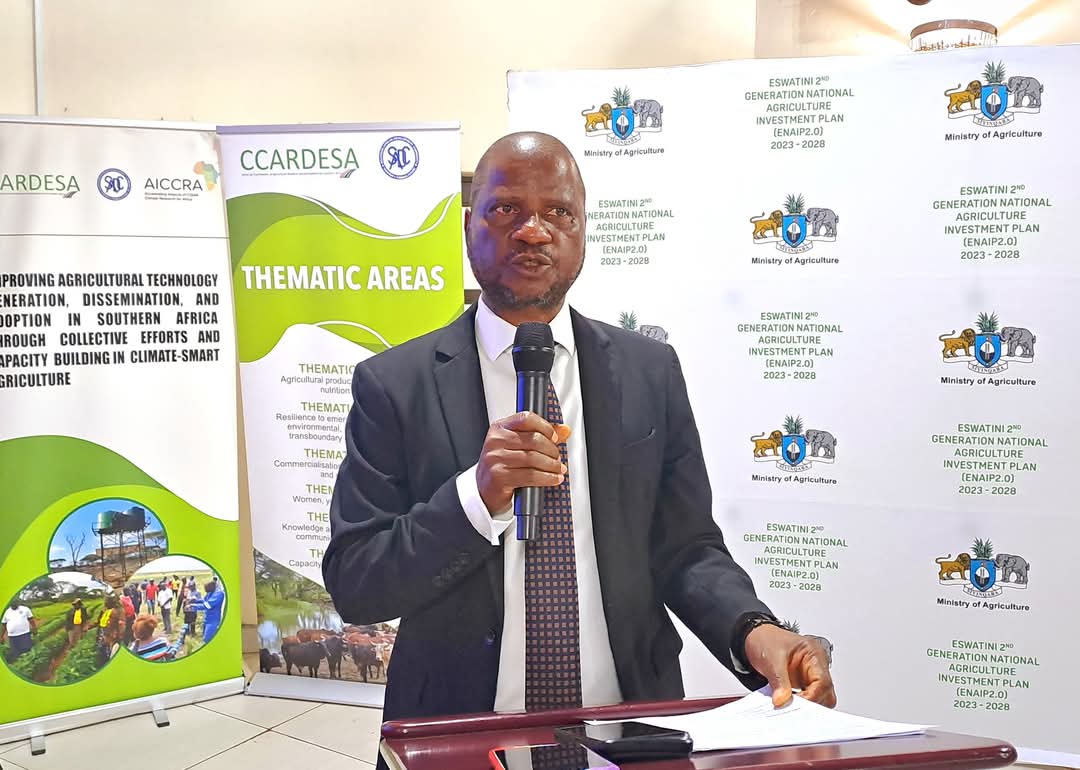
“This tailor-made information will assist farmers to make management decisions that minimize risks, optimize benefits, and seize opportunities presented by a changing climate,” said Honorable Minister of Agriculture Mandla Tshawuka, Eswatini’s Minister of Agriculture, during the workshop’s opening. He emphasized the role of science and innovation in the country’s commitment to the “Nkwe Mandate,” aligned with King Mswati III’s vision to eradicate hunger and poverty.
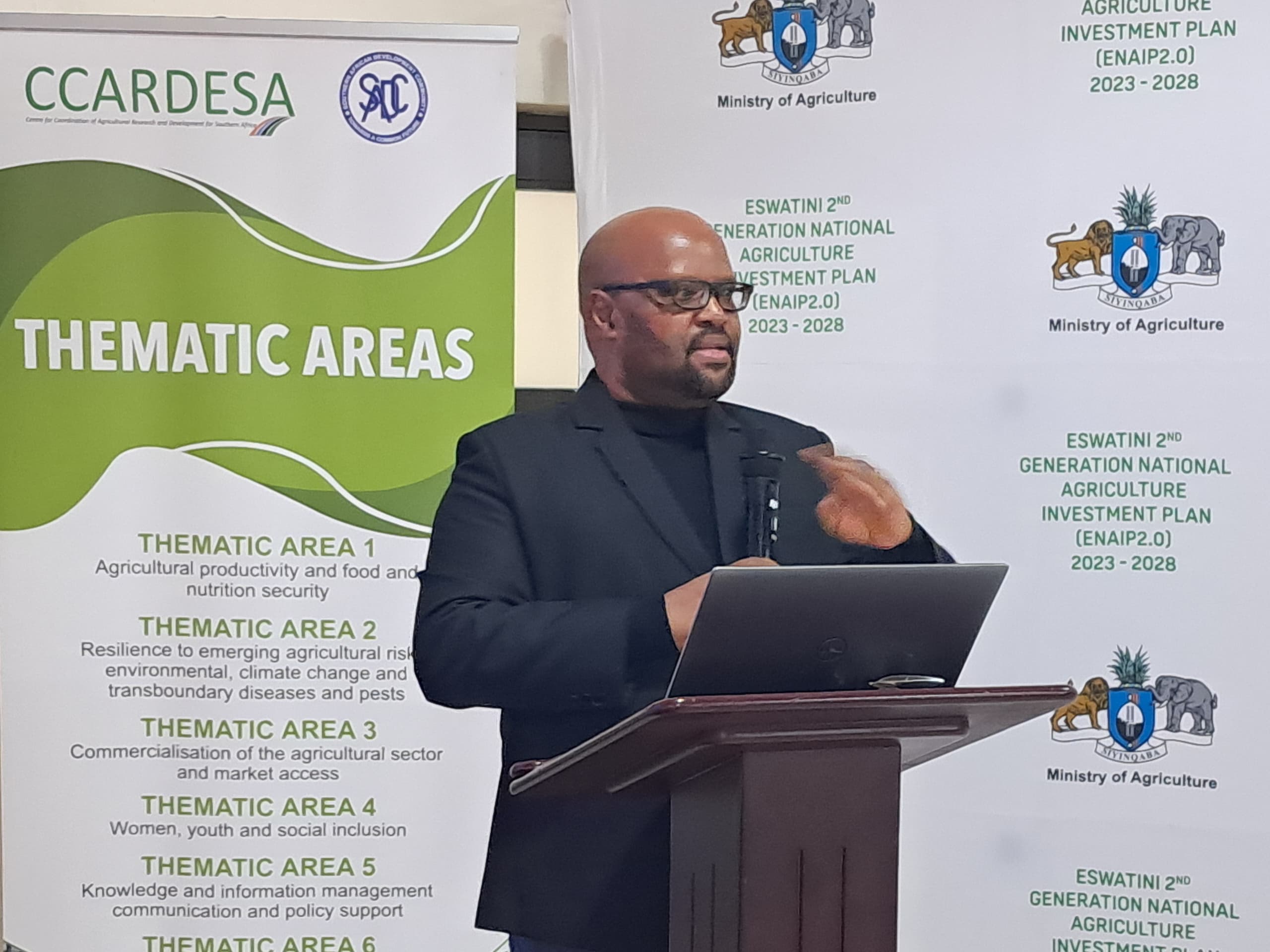
Speaking on behalf of UNECA’s African Climate Policy Centre, Dr. Yosef Amha emphasized the model’s origins in post-disaster recovery and resilience building across Southern Africa. Similarly, Gebermedihin Ambaw, representing Dr. Dawit Solomon of AICCRA Eastern and Southern Africa, underscored the importance of predictive tools for agriculture in times of escalating climate challenges.
“With shifting weather patterns and increasing resource pressures, accurate crop yield forecasting is more critical than ever,” said Ambaw. “These models enable smarter agriculture that is both productive and resilient.”
CCARDESA’s Executive Director, Professor Cliff Dlamini, highlighted the need to review Eswatini’s agro ecological zoning. He warned that due to the evolving nature of climate patterns, traditional zones may no longer reflect the country’s true agricultural potential. “Climate change has reshaped everything we thought we knew about our seasons. We need to adapt, rethink, and rezone accordingly,” he said.
Dlamini also reaffirmed CCARDESA’s commitment to initiating regional dialogues on agro ecological zones and improving data sharing across the region.
Long-Term Impact and Reach
So far, CCARDESA’s regional initiatives have impacted:
4.61 million Beneficiaries
97,000 Trained farmers
3,720 Value chain actors accessing climate-smart agriculture
41,300 Farmers receiving ongoing support.
This workshop was part of the AICCRA project, coordinated by CCARDESA, funded by the World Bank, and implemented in partnership with the Alliance of Bioversity International and CIAT.