


BY MFANUFIKILE KHATHWANE
MBABANE – Empowering women and youth through local employment opportunities is emerging as a cornerstone of sustainable community development in Eswatini — ensuring that children grow up in nurturing and supportive environments rather than being left in the care of elderly relatives.
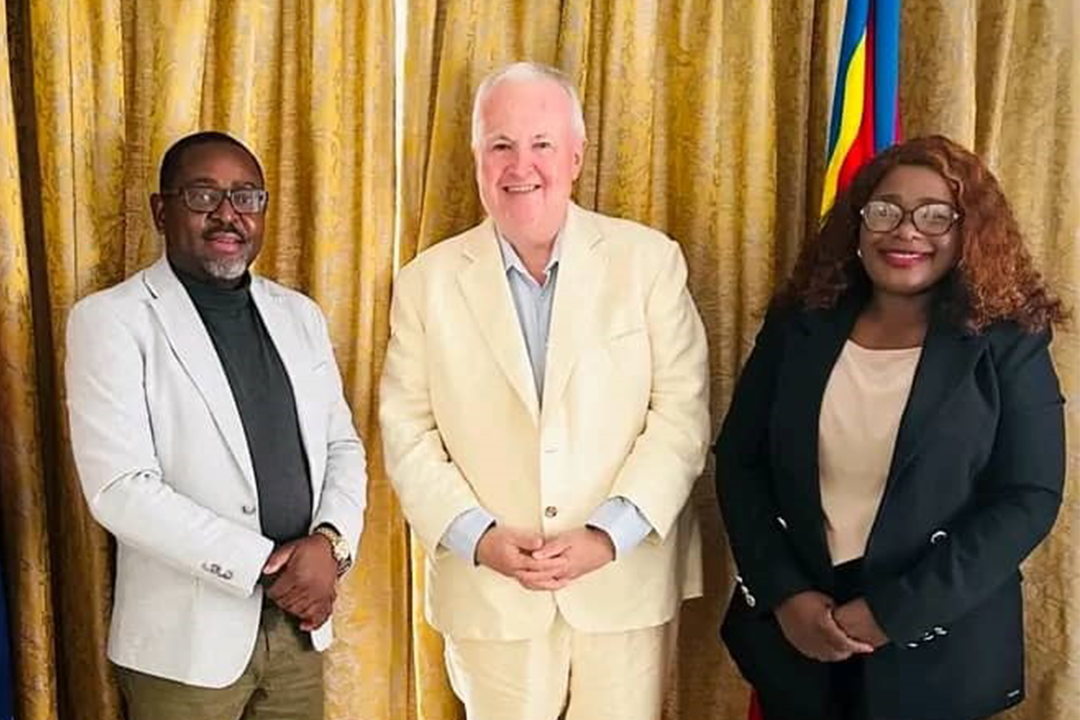
This was highlighted during a strategic meeting between World Vision Eswatini National Director Amos William Zaindi and the British High Commissioner to Eswatini, His Excellency Colin Wells, held under the theme “Strengthening Community Development and Child Well-Being in Eswatini.”
The discussions focused on how strengthening community livelihoods, particularly for women and young people, directly contributes to improved child welfare, family stability, and long-term national resilience.
“Our goal is to support children and families by strengthening the communities in which they live,” said Zaindi. “When women and youth are empowered locally, children benefit directly, and communities become more resilient.”

33 Years of Partnership and Progress
For over three decades, World Vision Eswatini has worked with donors, government, and local communities to deliver holistic development programmes aimed at improving the lives of vulnerable children and families. The organisation’s work spans several sectors — including Water, Sanitation and Hygiene (WASH), Livelihoods, Health, Child Protection, Humanitarian Emergency Affairs, and Refugee Assistance.
Zaindi noted that local job creation and community-based skills development are key to reducing family separation and ensuring that parents, particularly mothers, can remain active participants in their children’s upbringing.
“When parents work closer to home, children are nurtured, women gain employment, and entire communities thrive,” he added.
Collaboration for Lasting Change
His Excellency Colin Wells commended World Vision’s integrated approach, which aligns with the United Kingdom’s broader commitment to supporting inclusive and sustainable development in Eswatini.
“By partnering with government and local communities, World Vision is creating environments where children are safe, families are supported, and opportunities for growth are expanded,” said Wells.
The High Commissioner further emphasised that empowering communities through livelihoods and education initiatives contributes not only to child welfare but also to national economic development and social cohesion.
A Shared Vision for Eswatini’s Future
Both leaders underscored the importance of collaboration between international organisations, government ministries, and local stakeholders to ensure that development programmes have a lasting and measurable impact.
The meeting reinforced World Vision Eswatini’s commitment to complementing government efforts through inclusive community-based skills development and livelihood initiatives — demonstrating how strategic partnerships can transform lives and break cycles of poverty.
As Eswatini continues to navigate economic challenges and youth unemployment, initiatives that create local jobs, empower women, and strengthen family structures are proving essential in building a more equitable and resilient society — one where every child can truly live “life in all its fullness.”
( Courtesy Pic)