


BY MFANUFIKILE KHATHWANE
EZULWINI – Quality assurance in higher education is fast becoming a cornerstone for academic integrity, institutional credibility, and workforce readiness across Eswatini and Lesotho.
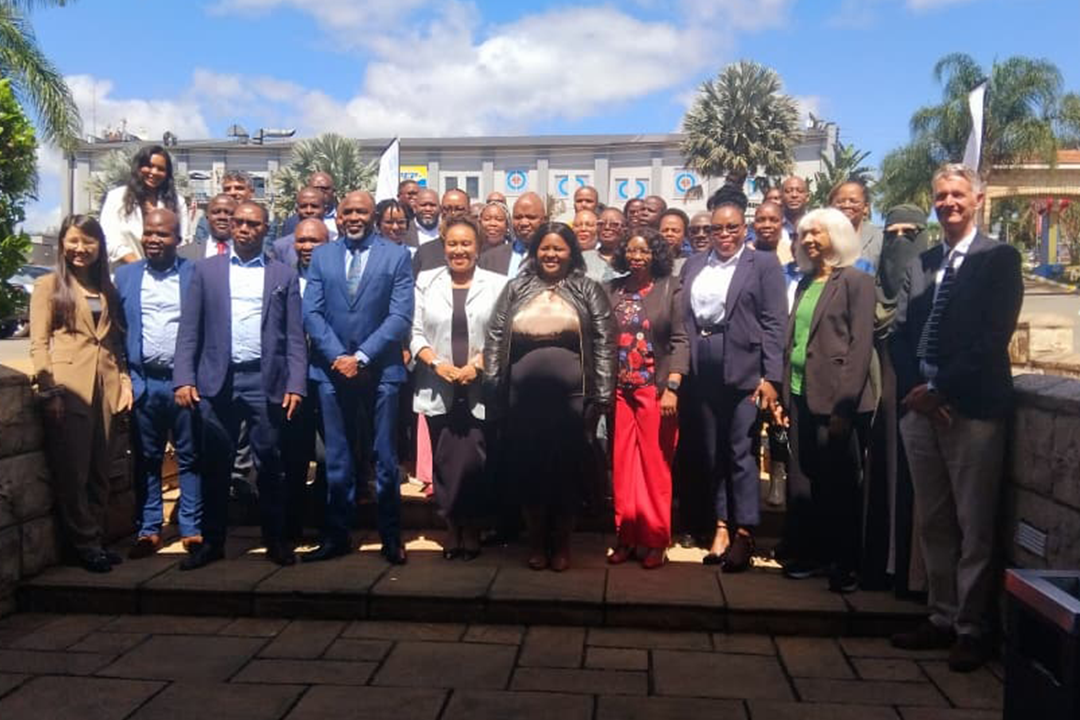
This was the central focus of the Capacity Building Workshop on Strengthening Quality Assurance in Higher Education, hosted by the Eswatini National Commission for UNESCO on 21 October 2025 at Happy Valley, Ezulwini. The event brought together national, regional, and international partners dedicated to improving higher education systems through collaboration and shared standards.
Delivering opening remarks, Nhlanhla Dlamini, Executive Secretary at the Teaching Service Commission in the Ministry of Education and Training, underscored the transformative power of higher education in driving national development.
“Quality assurance is fundamental to ensuring academic integrity, institutional credibility, and continuous improvement in teaching, learning, and research. It ensures that our qualifications are credible, our graduates are competent, and our education systems are responsive to the needs of our societies,” Dlamini said.

He emphasised that education remains central to Eswatini’s National Development Plan (NDP 2024–2028), describing it as “a key enabler for human capital development and a cornerstone for achieving inclusive and sustainable growth.”
The workshop forms part of the HAQAA Initiative, guided by the African Standards and Guidelines for Quality Assurance (ASG-QA). Dlamini noted that capacity-building efforts such as this one are crucial in strengthening institutions, empowering education professionals, and promoting regional progress.
“Our collaborations with UNESCO ROSA, ESHEC, and CHE Lesotho reinforce the importance of sharing best practices and harmonising higher education standards across the SADC region,” he added.
Also addressing the workshop, Peter Wells, Head of Education at UNESCO Regional Office for Southern Africa (ROSA), reminded participants that quality assurance ultimately impacts lives and livelihoods.
“Quality assurance is about people: a student in Mbabane whose degree unlocks a job because employers trust its quality; a lecturer in Maseru whose curriculum adapts to the digital age; and a nation where education fuels innovation, not just certificates,” Wells said.
He described the gathering as “a new chapter in cross-country collaboration, mutual benchmarking, and the strengthening of professional networks across borders.”
Wells further highlighted that quality assurance should be viewed not as an end goal but as an ongoing process:
“It is a means to ensure that every qualification awarded carries meaning and credibility; that every graduate possesses the competencies demanded by society; and that every institution is guided by principles of accountability, transparency, and continuous improvement.”
Encouraging participants to take ownership, Wells concluded:
“Share boldly. The solutions Eswatini and Lesotho need are in this room. Think beyond borders. How can your work ripple across SADC? Quality assurance isn’t someone else’s job – it’s our joint endeavour.”
The workshop is expected to enhance institutional capacity, foster regional cooperation, and advance credible, inclusive, and future-ready higher education systems across Southern Africa — marking another important step towards harmonised academic excellence in the region.