


BY NONCEDO SHABANGU
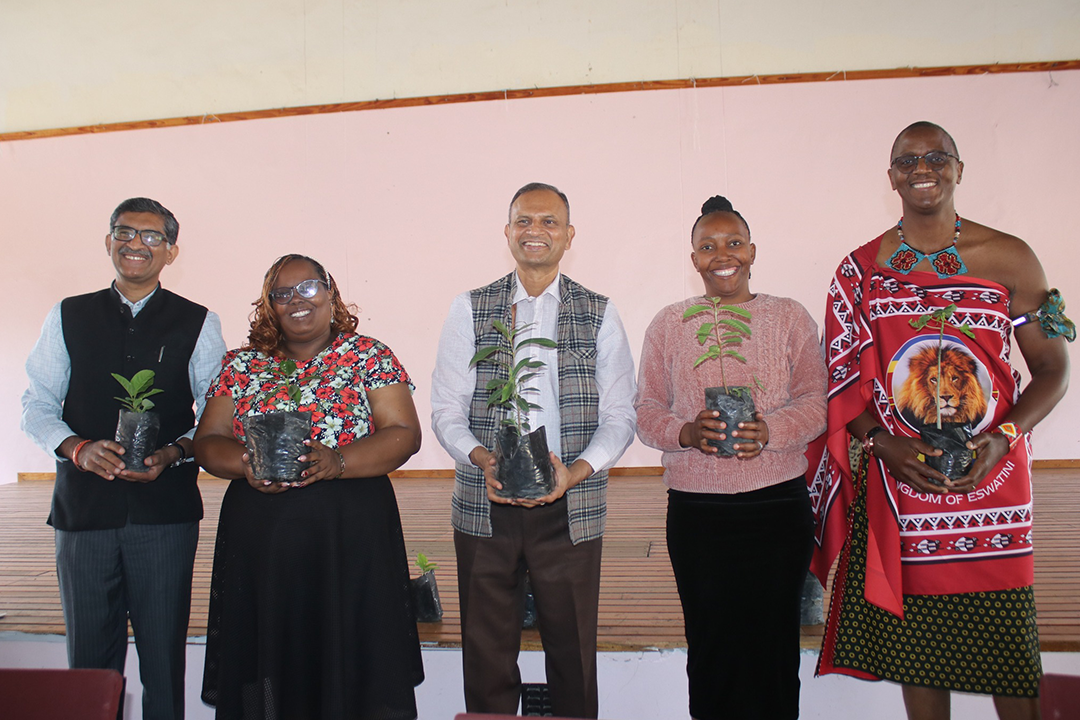
MBABANE – His Excellency Ram Prasad, the Indian High Commissioner to Eswatini, together with Acting Deputy Prime Minister representative Makhosi Simelane, on Tuesday led a tree-planting exercise at Matsetsa School for the Deaf High.
The initiative, part of India’s Project One Tree, seeks to promote sustainable living by encouraging schools and communities to plant fruit trees that provide nutrition, shade, and long term environmental benefits.
The donation included a variety of fruit trees such as mangoes, pawpaws, and berries, which are expected to secure a steady supply of fruits for the school in years to come. In addition, H.E. Ram Prasad also donated books to support the learners’ education.
Speaking during the event, the High Commissioner emphasised the long term impact of the initiative: “If one person plants a tree, future generations are secured and will benefit from such a noble act.”

Acting Deputy Prime Minister’s representative Makhosi Simelane applauded the gesture, noting both the environmental and nutritional benefits. He extended appreciation to India’s Prime Minister, Narendra Modi, for spearheading the Project One Tree movement. He further encouraged the school to nurture the trees so they multiply and reduce reliance on purchased fruits.
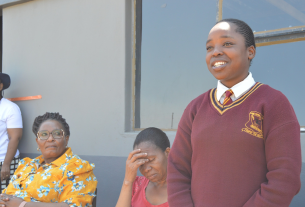
Headteacher Nomsa Maseko welcomed the contribution, highlighting that students had gained new agricultural skills which they can also apply at home. She thanked both the Indian High Commission and the Deputy Prime Minister’s Office for their continued support, assuring that the trees would be well cared for.
The event not only promoted sustainability but also strengthened relations between Eswatini and India, showcasing how practical initiatives can make a lasting difference in both education and the environment.