


By King’s Office Correspondents
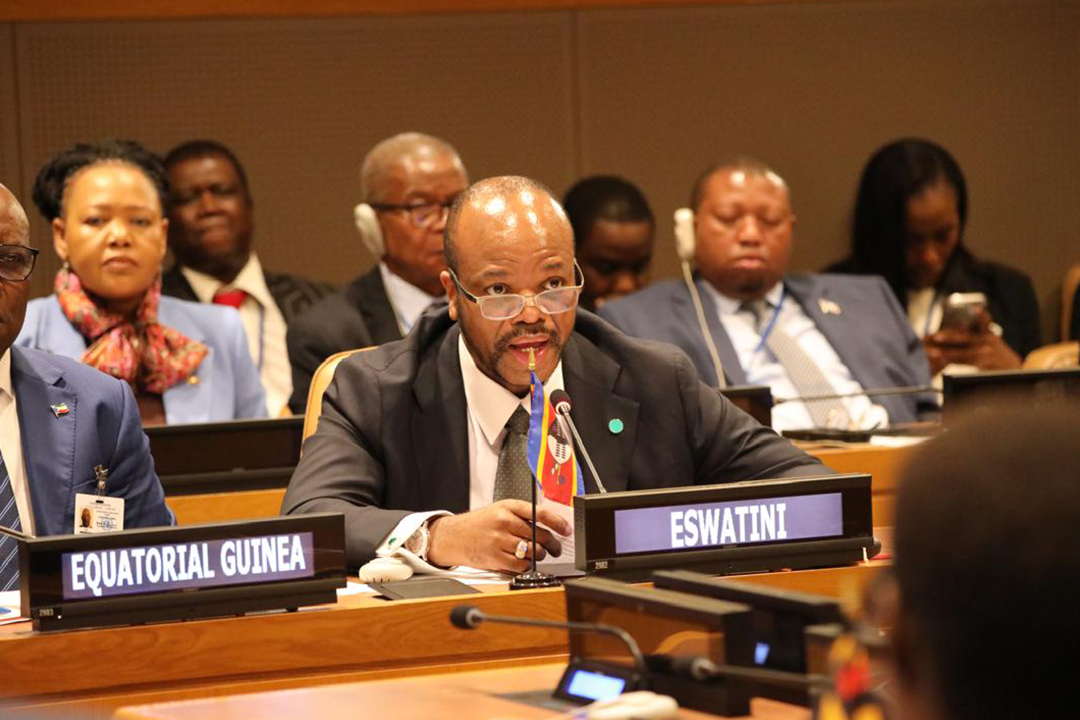
NEW YORK, USA – His Majesty King Mswati III has called for resolute rejection of coups and non-recognition of any governments installed through unconstitutional means.
Delivering his address at a special meeting of the African Union(AU) Peace and Security Council(PSC) here yesterday the King emphasised Africa’s firm stance against such power grabs stressing that no matter how popular a coup might seem it must face consequences rather than acceptance.
“We must reject any attempt to overthrow a legitimate government,” His Majesty declared. “Those who ascend to power through coups must face consequences not acceptance. The African Union and the United Nations have a responsibility to act decisively ensuring that no coup is legitimised or recognised. This is not merely a policy – it is a moral imperative.”
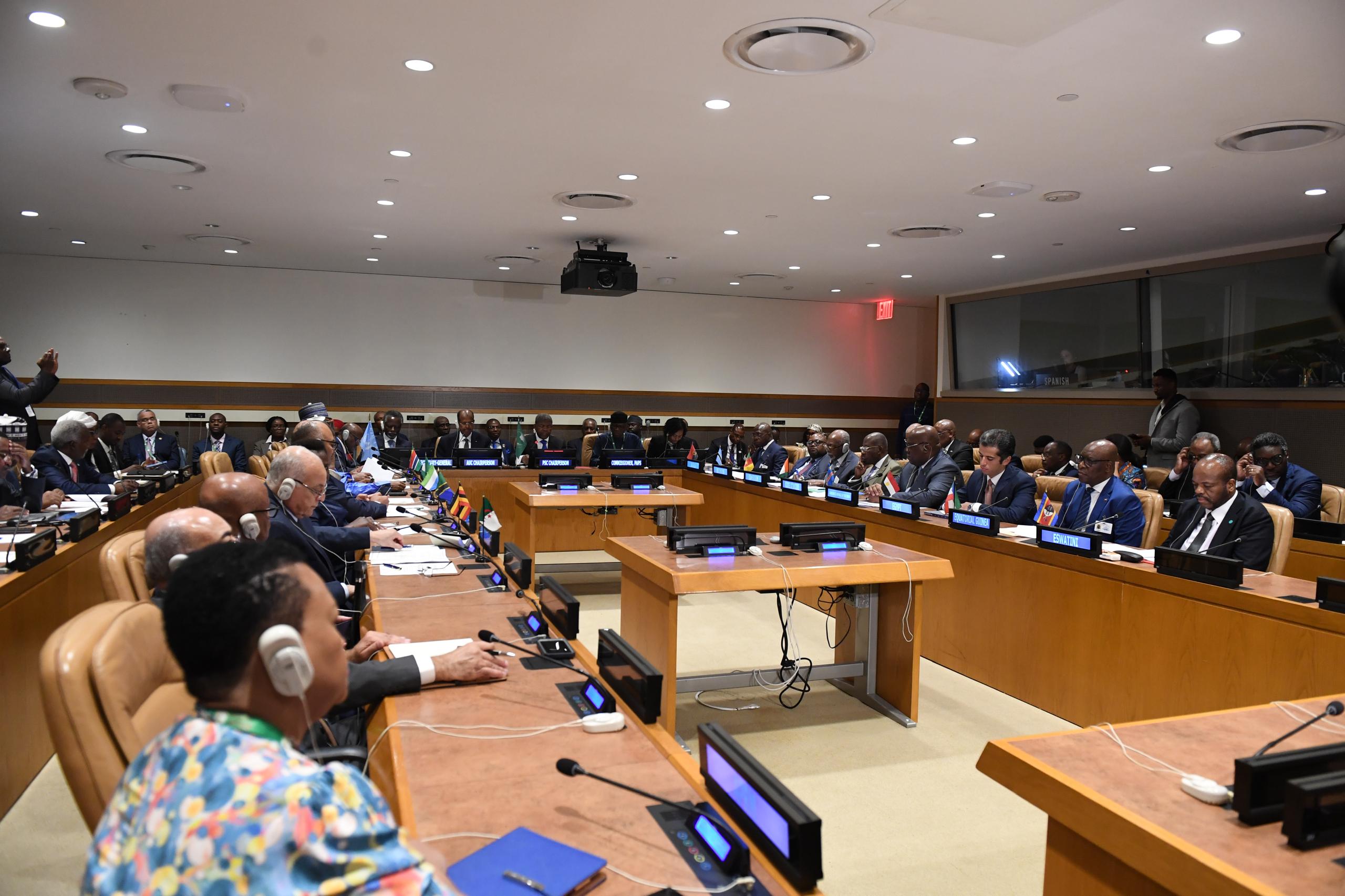
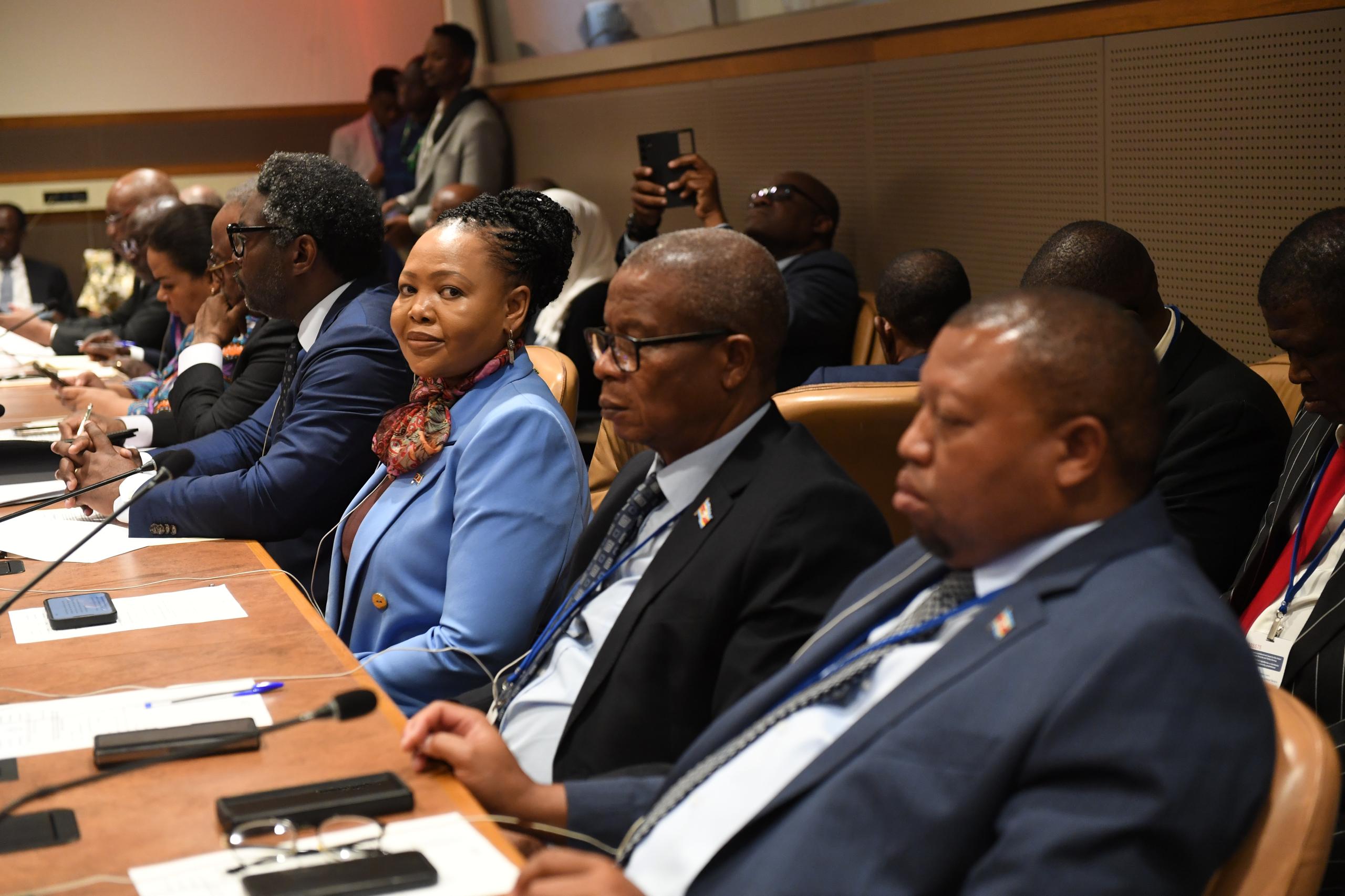
The King’s speech came during the AU Observer Mission’s gathering on the sidelines of the 80th United Nations General Assembly where leaders discussed pressing security challenges across the continent including resurgent violent conflicts, unconstitutional changes of government and emerging threats from climate-induced instability to transnational crime.
His Majesty highlighted the AU’s longstanding commitment to not tolerating coups or recognising regimes established by force drawing on the principles enshrined in the AU’s 50th Anniversary Solemn Declaration and Agenda 2063, which pledge to silence the guns by 2030.
As Eswatini assumes its role on the AU Peace and Security Council for the 2025-2028 term, the King called for a reassessment of the body’s conflict resolution efforts urging the codification of best practices from successful interventions and the establishment of a General Assembly-led compliance unit with clear timelines to transform resolutions into unbreakable commitments.
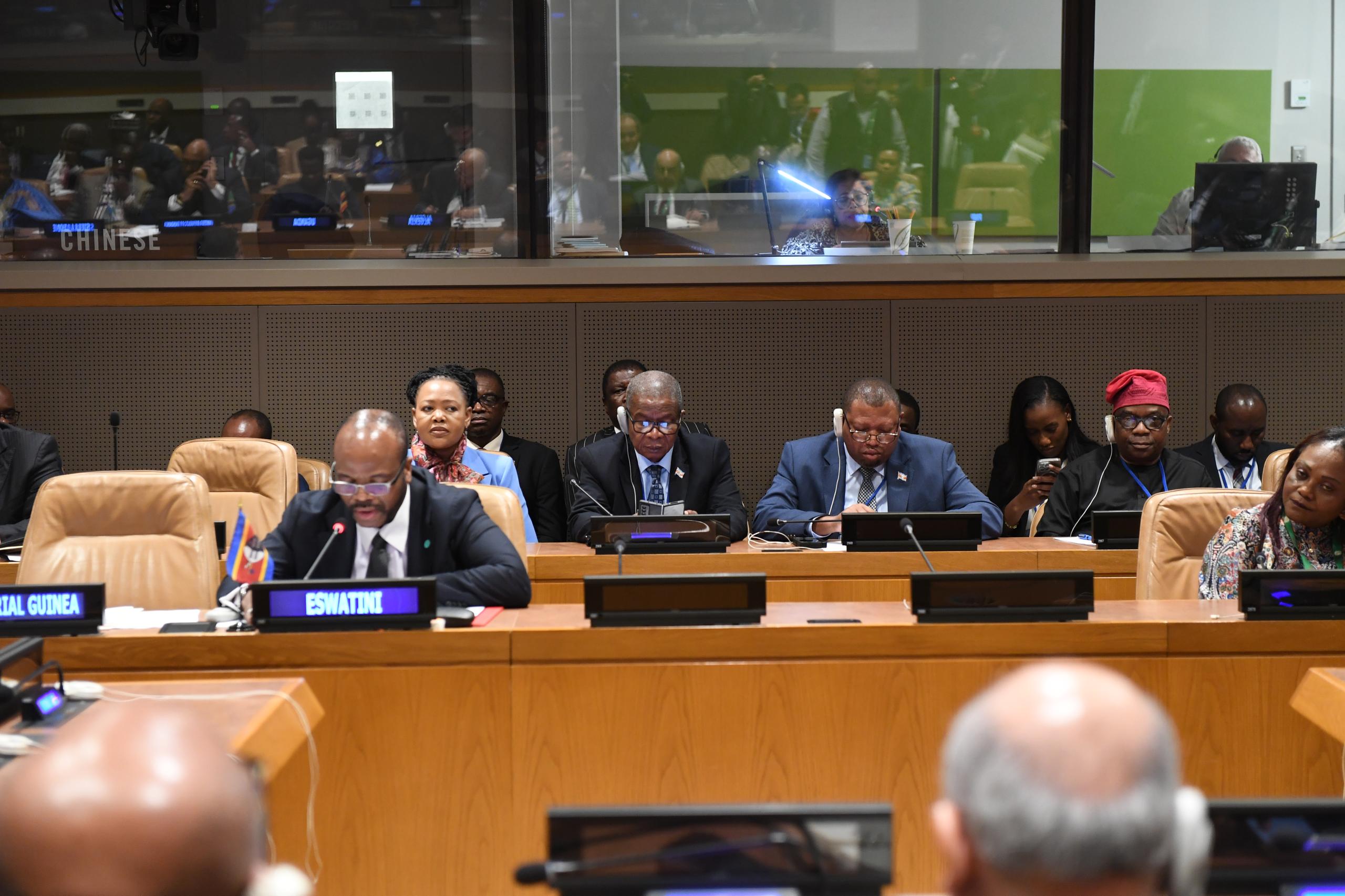
“We must safeguard the efficiency and legitimacy of African solutions to African problems the very essence of our Union,” he said advocating for the full operationalisation of the African Standby Force and bolstered financing through the AU Peace Fund and innovative partnerships.
His Majesty also stressed the need to review the PSC’s relations with partners including Regional Economic Communities the UN Security Council the European Union Peace and Security Committee and the League of Arab States Peace and Security Council proposing harmonised protocols for joint early warning shared intelligence and coordinated actions under African leadership.
In a broader call for structural reform the King advocated UN Security Council changes in line with the Ezulwini Consensus to ensure Africa’s equitable representation, to address the imbalances that hinder the continent’s global voice.
He urged intensified efforts to implement AU-facilitated peace agreements and complete political transitions swiftly, warning that fragmented collaborations have impeded progress.
Guided by Eswatini’s foreign policy principles of respect for sovereignty non-interference and dedication to multilateralism dialogue and unity, His Majesty framed the meeting as a call to action rooted in African wisdom and determination.
“We must as Heads of State and Government provide the space to reassess the African Union’s conflict resolution efforts, reflecting on critical lessons and best practices to enhance the PSC’s mandate,” he noted.
He said this generation bears the duty to turn vision into reality: beyond rhetoric with courage and unity. “ Let us silence the guns forever. May this meeting mark a turning point where Africa’s children inherit peace and a brighter future brimming with hope not challenges,” he concluded.
The gathering included the Chairperson of the AU the President of the Republic of Angola other Heads of State and Government, members of the AU Peace and Security Council and the Chairperson of the African Union Commission.
Examples of Coups and AU Actions
Recent coups in Africa include the 2020 coup in Mali where the military overthrew President Ibrahim Boubacar Keïta leading to the AU suspending Mali’s membership and imposing sanctions until a civilian-led transitional government was established. In Sudan the 2021 coup saw the military dissolve the transitional government prompting the AU to suspend Sudan’s participation in all activities until restoration of civilian rule. The 2023 coup in Niger ousted President Mohamed Bazoum resulting in the AU demanding a return to constitutional order and suspending Niger while calling for regional mediation. The AU consistently enforces its policy of non-recognition of unconstitutional governments often applying diplomatic pressure sanctions and suspension to uphold democratic principles.
HIV DRUG PRICE CUT HAILED
NEW YORK, USA – UNAIDS has announced a dramatic price reduction for lenacapavir, a revolutionary HIV prevention drug, described as a watershed moment for global health.
The announcement, made on Tuesday during the United Nations General Assembly, detailed two agreements slashing the cost of lenacapavir from USD 28 000 (approximately E504 000) per patient per year to just USD 40 (about E720).
“This is a watershed moment. A price of USD 40 per person per year is a leap forward that will help unlock the revolutionary potential of long-acting HIV medicines,” said UNAIDS Executive Director Winnie Byanyima.
Lenacapavir, produced by US company Gilead, prevents HIV infection with just two injections annually. The agreements, supported by UNITAID, the Clinton Health Access Initiative (CHAI), and Wits RHI, enable Indian generic manufacturer Dr Reddy’s Laboratories to offer the drug at USD 40 per year, with an initial oral dose costing no more than USD 17 (about E306). The Gates Foundation will support Hetero Drugs with funding and volume guarantees to maintain this price following a short pre-treatment oral regimen.
Byanyima noted that 1.3 million people were infected with HIV in 2024, far exceeding the 2025 target of 370 000. The PURPOSE 2 Trial, published in the New England Journal of Medicine, found lenacapavir 96 to 100 per cent effective in preventing new HIV infections. UNAIDS estimates that access for 20 million high-risk individuals, including men who have sex with men, sex workers, people who inject drugs, and young women and adolescent girls in sub-Saharan Africa, could significantly reduce infections and advance the goal of ending AIDS by 2030.
“UNITAID, Gates, CHAI, Wits RHI, Reddy, and Hetero have shown what is possible when companies prioritise equitable access to lifesaving medicines. Gilead must match this ambition by reducing its price for lenacapavir, being transparent on cost and pricing, expanding its generics licence to all low and middle-income countries, and enabling rapid access for more people in developing countries,” Byanyima said.
Health Minister Mduduzi Matsebula welcomed the development, calling it timely for Eswatini. “We support the reduced pricing for this important commodity in the fight against HIV. This ensures government can roll it out to all who need it. One of our vulnerabilities has been the persistently high rate of new infections among women of childbearing age, and this will help us turn this trend around,” he said.
NERCHA Executive Director Dr Nondumiso Ginindza-Ncube and Board Chairman Ntsika Fakudze, attending the UN General Assembly, described the breakthrough as a game changer for HIV prevention globally. “As a country, we are looking forward to its launch during World AIDS Day on December 1 and have it ready for roll-out in January. Through UNAIDS, we have been promised about USD 660 000 (approximately E11.8 million) for a start, which is likely to benefit about 16 000 Emaswati,” Dr Ginindza-Ncube said. She added that PEPFAR has pledged further funding to support the programme.
Dr Ginindza-Ncube noted that Eswatini has been prioritised for the drug, with roll-out guidelines being developed with the World Health Organisation. “Emaswati were either taking medications daily or monthly. Now, they will only need two injections per year at a lower cost per patient,” she said.
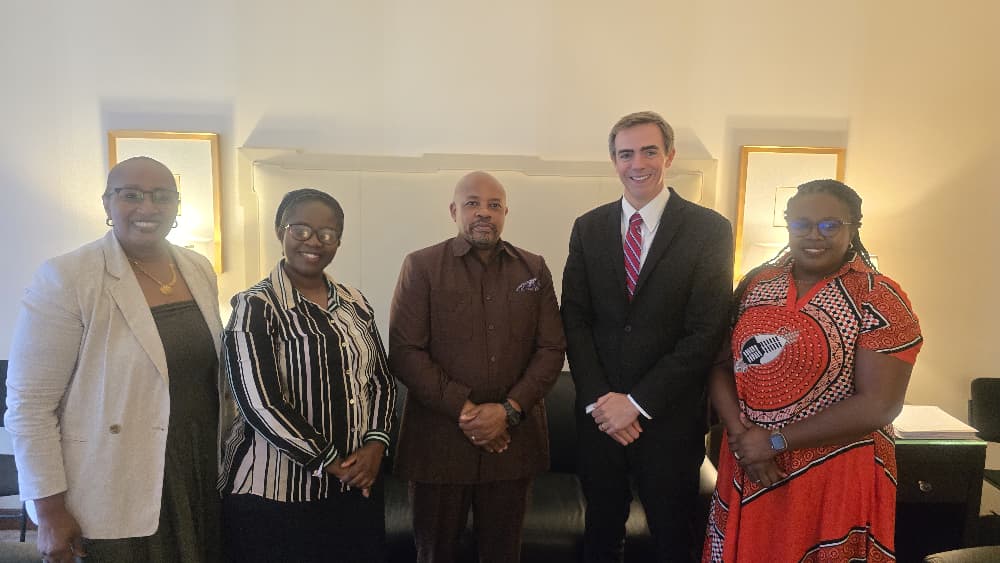
Health Minister Meets US Advisor
Health Minister Mduduzi Matsebula met United States Government Senior Advisor for Global Health Security and Diplomacy Brad Smith on Tuesday. Accompanied by NERCHA Executive Director Dr Nondumiso Ginindza-Ncube and other officials, Matsebula expressed gratitude for the US government’s support through PEPFAR, which has been pivotal in reducing HIV infections, expanding treatment, and advancing epidemic control.
“Eswatini is ready to work with the US on developing a compact that reflects mutual accountability, shared priorities, and sustainable health outcomes, and we are committed to building stronger, more resilient systems that reduce dependency over time while safeguarding gains in HIV and other health areas,” Matsebula said. Smith promised a draft agreement within weeks, addressing HIV commodities, human resources, supply chain, information systems, and laboratory systems. Matsebula thanked the US for including Eswatini among countries benefiting from lenacapavir support, affirming the government’s commitment to impactful partnership.
Hepatitis Poses Significant Threat
On Monday, Health Minister Mduduzi Matsebula attended his first UNGA health side meetings, highlighting the threat of hepatitis and its complications, despite its potential for elimination. “We must create awareness of the disease, its causes, and its double burden as a communicable disease that can lead to a non-communicable disease like liver cancer,” he said.
He stressed the need to strengthen prevention through vaccination, including introducing the birth dose, enhance laboratory capacity for diagnosis, ensure availability of lab commodities through improved supply chains, integrate the triple elimination of HIV, syphilis, and hepatitis into primary healthcare, and explore local drug manufacturing. “Some efforts require country-level action, while others need regional and global collaboration through forums like the UN Group of Friends to Eliminate Hepatitis,” Matsebula said.
ESWATINI GAINS UN CLIMATE FORUM OBSERVER STATUS
NEW YORK, USA – The Kingdom of Eswatini has been granted observer status at the United Nations Climate Vulnerability Forum (CVF-V20).
This is a coalition dedicated to tackling climate change challenges for vulnerable nations.
Agriculture Minister, Mandla Tshawuka, announced the development while delivering remarks on behalf of Prime Minister, Russell Dlamini, who was invited to participate in the forum during the UN General Assembly.
“For us, as the Kingdom of Eswatini, efforts to fight climate change and build resilience are vital international issues demanding global attention,” the Prime Minister said through the minister. “Climate change and vulnerability is not a distant story but a lived reality. We face its effects continuously through violent hailstorms, prolonged droughts and erratic rainfall patterns.”
He noted that these events lead to hunger, poverty, destruction of critical infrastructure and a regression of livelihoods.
“We therefore believe in the urgency of concrete global initiatives to halt the decimation of our production potential, retardation of our economic development and threats to our survival as a species,” Dlamini added.
The prime minister expressed support for the CVF leaders’ declaration, endorsed the request for UN observer status for the CVF-V20 and called for significantly increased contributions to the Adaptation Fund.
“As we drive these processes, it is imperative to act with urgency as nations to secure the future for posterity,” he said. “This requires dedication, collective responsibility, sharing of ideas and technologies, innovation, commitment to clear policies and programmes and equitable funding for execution. The time to act is now.”
The agriculture minister is accompanying His Majesty King Mswati III at the UN General Assembly alongside other ministers, including Foreign Affairs and International Cooperation Pholile Shakantu, Commerce Industry and Trade Manqoba Khumalo, Natural Resources and Energy Prince Lonkhokhela, Finance Neal Rijkenberg, ICT Savannah Maziya, Tourism Jane Mkhonta-Simelane, Economic Planning and Development Dr Thambo Gina and Health Mduduzi Matsebula.