BY MBONO MDLULI
MBABANE – The Incwala ceremony holds great significance as it is one of the cultural events that unite a king with his people.
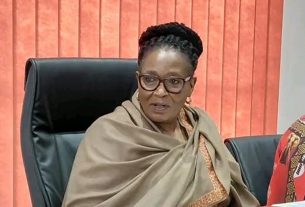
This was highlighted by His Majesty King Mswati III during the Incwala ceremony hosted by the Ngoni nation in Chipata, Zambia, over the past weekend. The king’s message was delivered by Deputy Prime Minister (DPM) Thulisile Dladla, who represented him at the event.
The ceremony aimed to bring together the Ngoni people under the leadership of King Mphezeni IV. The event was attended by Lizinyane Bandzile, Minister of Natural Resources and Energy Prince Lonkhokhela, and various regiments from Eswatini who performed traditional dances during the ceremony.Zambia’s President Hakainde Hichilema also graced the occasion.

Speaking on behalf of King Mswati III, Dladla emphasised that the Incwala ceremony fosters a strong bond between a king and his people. She expressed confidence that the Ngoni Incwala would strengthen the relationship between King Mphezeni and his subjects.

Dladla reminded attendees that African monarchs are not only political figures but also spiritual symbols, ensuring unity, continuity, and the preservation of their nations. She described Incwala as a moment of spiritual renewal and rejuvenation.
King Mphezeni, through his representative Dumisani Tembo, expressed gratitude for the Eswatini delegation’s participation. Tembo announced that some members of the Ngoni nation would attend Eswatini’s Umhlanga ceremony in the future.

President Hichilema encouraged the Ngoni people to continue preserving their culture and traditions. He noted that developed nations often succeed because they prioritise the preservation of their cultural heritage.
During the event, attendees were reminded of the history of the Ngoni people, who broke away from the AmaZulu nation in present-day KwaZulu-Natal, South Africa, during the early 19th century. The Ngoni were led by Zwangendaba, who headed the Jele clan.Zwangendaba’s journey began when he fled from King Shaka of the AmaZulu nation.
His first stop was Eswatini, during the reign of King Sobhuza I (King Somhlolo). Zwangendaba’s brother reportedly returned to parts of present-day KwaZulu-Natal, where he became known as Gumbi.
Zwangendaba continued his migration through Mozambique and Tanzania, eventually settling in Zambia, where he passed away in 1848. He is believed to have arrived in Zambia around 1835.The Incwala ceremony remains a powerful cultural tradition, symbolising unity and the enduring connection between a king and his people.