


BY SIFISO NHLABATSI
LOBAMBA – Government is expected to fully repay 18 existing external loans within the next five years, as the country takes on new financing to support the Digital Eswatini Project.
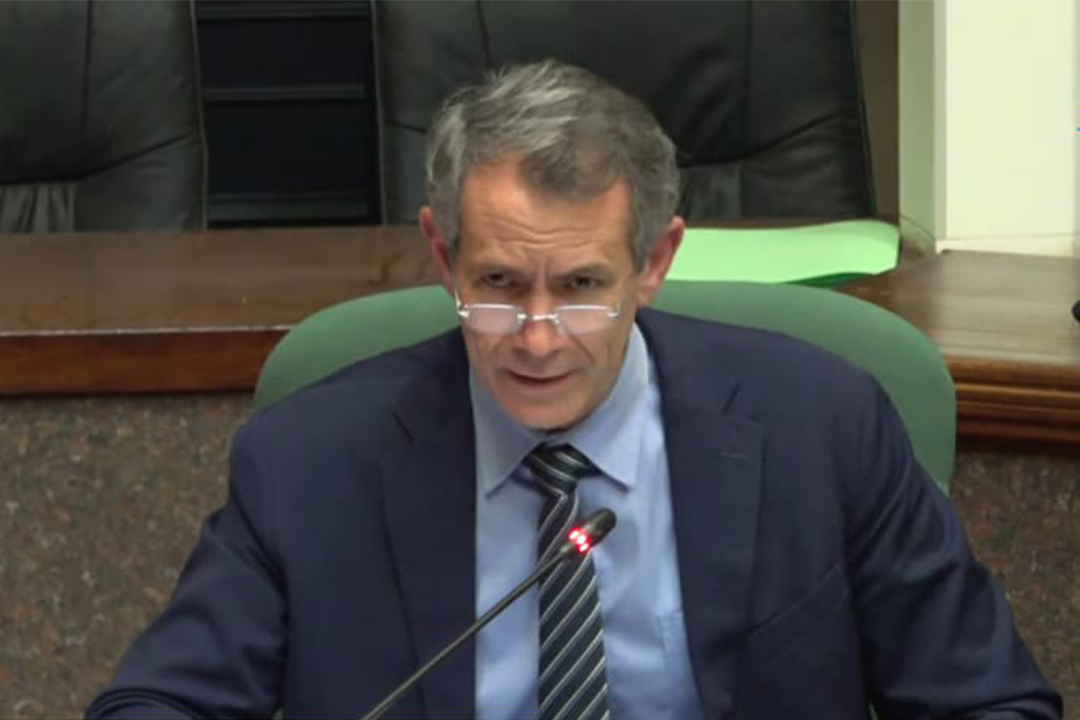
The development is contained in Minister of Finance Neal Rijkenberg’s preamble to the International Bank for Reconstruction and Development (IBRD) Digital Eswatini Project under the Inclusive Digitalisation in Eastern and Southern Africa Multiphase Programmatic Approach Loan Bill No. 15 of 2026, which was tabled in Parliament on Monday.
Rijkenberg stated that the 18 existing external loans would be fully repaid within the next five years, meaning Government’s obligations were progressively reducing.
He said this meant the new financing instruments would not add disproportionate pressure to the expenditure profile when repayments commenced.

As at March 31, 2025, total public debt stood at E36.03 billion, equivalent to 40.33 per cent of Gross Domestic Product (GDP), excluding arrears and contingent liabilities, according to the Minister’s preamble.
The Minister said contracting the two direct sovereign loans for the Digital Eswatini Project – a US$19.3 million IBRD loan and a US$19.7 million International Development Association (IDA) loan – would bring the total new borrowing to approximately US$39 million.
This is equivalent to approximately E710 million.
At full disbursement, Rijkenberg said, the new borrowing would increase the total debt stock to approximately E36.74 billion, or around 41.13 per cent of GDP.
The Minister said this remained within the prudent debt management threshold set out in the Medium-Term Fiscal Framework.
The proposed financing is intended to support the Digital Eswatini Project, which seeks to strengthen the country’s digital infrastructure, connectivity and access to digital services.
However, MPs raised concerns over the country’s debt position and the sustainability of the associated repayment obligations.
MPs noted that increased borrowing could place additional pressure on the debt-to-GDP ratio if economic growth and Government revenues did not increase sufficiently to offset the new liabilities.
Members also raised concerns about whether Government would have adequate and predictable fiscal resources to meet principal and interest payments over the full repayment period.
Among the issues highlighted were the loan’s interest rate, maturity period, grace period, repayment schedule and foreign-exchange exposure.
MPs and stakeholders also raised concerns about corruption and the potential impact of the misuse of public resources on the effectiveness of development programmes.
Another concern was the reported stagnation of some development projects, including MicroProjects, despite Government continuing to contract loans.
Stakeholders called for regular and comprehensive audits of existing and outstanding loans to strengthen accountability and ensure borrowed funds were used for their approved purposes.
Despite the concerns raised, the Committee recommended approval of the Loan Bill, saying the Digital Eswatini Project would support digital transformation, improve connectivity and promote innovation and economic development.
The Committee also found no substantive issues requiring amendments to the Bill and recommended that it proceed in its current form.
#Eswatini #Parliament #Government #Finance #PublicDebt #Loans #DigitalEswatini #DigitalTransformation #EconomicDevelopment #NealRijkenberg #IBRD #IDA