



BY THEMBA ZWANE
NTFONJENI– Minister of Health Mduduzi Matsebula has highlighted three key strengths within Eswatini’s public health system that enable the country to detect, respond to and manage health emergencies effectively.
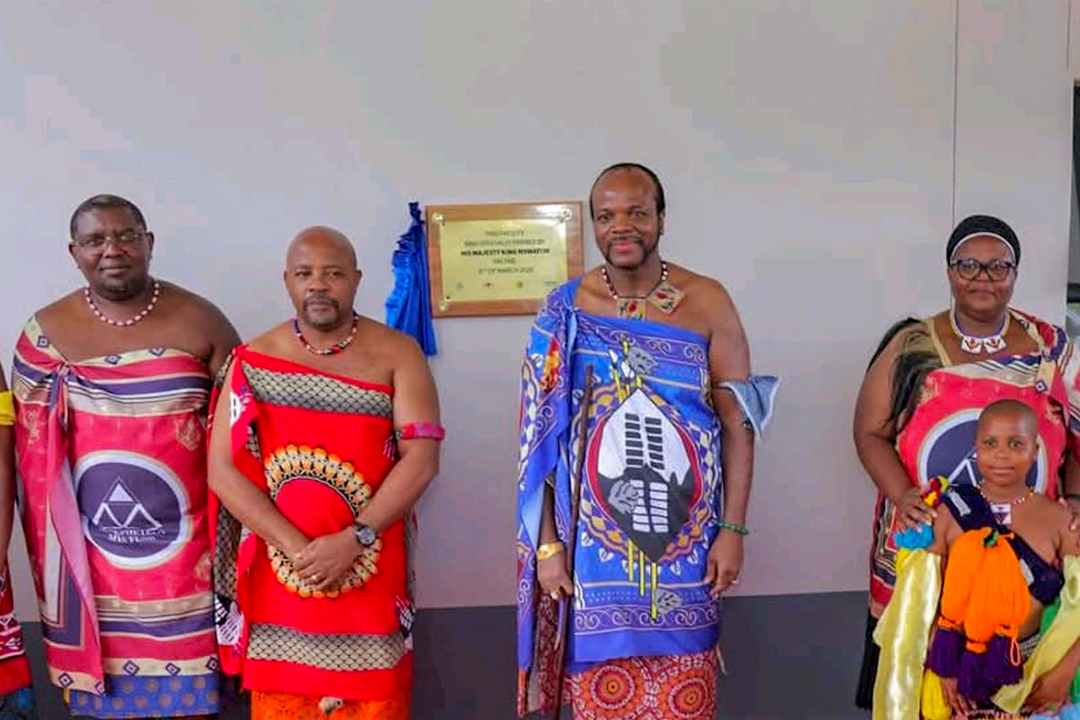
The minister made the remarks when His Majesty King Mswati III visited Ntfonjeni Inkhundla to tour and officially open the Esicancweni Setemphilo health facility. The visit marked an important milestone for healthcare development in the region and demonstrated government’s commitment to strengthening health services across the country.
During his address, Matsebula explained that Eswatini’s public health system has made notable progress in recent years, particularly through the adoption of a multi-sectoral approach to health security. This collaborative strategy brings together various sectors, including health, agriculture, security forces and environmental services, to ensure a coordinated and effective response to public health threats.
He said the approach allows different sectors to share expertise and resources, enabling the country to respond quickly and efficiently whenever health emergencies arise.

“Central to these efforts is the Eswatini Public Health Emergency Operations Centre (PHEOC), which was established following lessons learned from the COVID-19 pandemic,” said the minister. “The centre serves as the country’s primary hub for coordinating preparedness and response activities, ensuring real-time communication and effective decision-making during emergencies.”
Matsebula outlined three key strengths that support the country’s ability to manage public health emergencies.
The first is strong political will and legislative support. He noted that government has consistently demonstrated its commitment to health security by integrating emergency preparedness into national policies and budgets. Legislative frameworks such as the Health Act of 2023 further strengthen the country’s ability to prepare for and respond to public health threats.
The second strength is multi-sectoral coordination. Eswatini has developed a collaborative framework that enables various sectors to work together in addressing health emergencies. This coordination ensures that responses are comprehensive, efficient and aligned with national priorities.
The third strength is strong technical leadership through the International Health Regulations (IHR) Focal Point. The country has established a dedicated secretariat consisting of eight professionals drawn from sectors such as health, environment and veterinary services. The secretariat operates around the clock and is responsible for coordinating and reporting public health matters to the World Health Organisation.
Matsebula also highlighted ongoing efforts to strengthen the country’s emergency health workforce. Among the initiatives implemented by the ministry is the establishment of a three-tier emergency response system. This includes a 58-member internationally certified emergency response team known as AVoHC-SURGE, 96 trained field epidemiologists and 812 health workers equipped with basic training in public health emergencies.
The minister said these initiatives have significantly improved the country’s ability to respond quickly and effectively to public health crises.
He also praised the collaboration between the Ministry of Health and the Sincephetelo Motor Vehicle Accidents Fund (SMVAF), which resulted in the establishment of the country’s first Road Crash Stabilisation Centre at the Esicancweni facility.
Matsebula explained that a resilient emergency medical system requires more than infrastructure alone. It also depends on strong governance, reliable data systems and skilled healthcare professionals.
“Modern health systems recognise pre-hospital care as the first and most critical step in saving lives,” he said. “The concept of the ‘Golden Hour’ highlights the importance of immediate medical intervention after an injury, which significantly improves survival outcomes.”
He noted that stabilisation centres and advanced life support ambulances play a crucial role in ensuring that road accident victims receive timely care before reaching hospitals. The new facility therefore represents an important step in aligning Eswatini’s emergency medical services with international best practices.
Matsebula further informed His Majesty that government has adopted the Nkwe mandate, which promotes speed, efficiency and responsiveness in public service delivery. Rapid ambulance dispatch and coordinated emergency response systems, he said, are practical examples of the Nkwe approach in action.
The minister also commended SMVAF for its continued support in strengthening emergency response, medical care and rehabilitation services for accident victims. The organisation’s investment in ambulances and the stabilisation centre contributes significantly to the country’s healthcare infrastructure.
While emergency response systems are essential, Matsebula emphasised that prevention remains the most effective way to protect lives. He therefore encouraged motorists and pedestrians to exercise caution on the roads, avoid distractions such as using mobile phones while driving and always respect road safety regulations.
He concluded by assuring His Majesty that the Ministry of Health will ensure the facility is properly maintained and operated efficiently to serve communities and improve healthcare delivery in the region.
#MinistryOfHealth #SMVAF #ServiceDelivery #EswatiniGovernment


