


…Salary increases limit room for other priorities
BY MBONO MDLULI
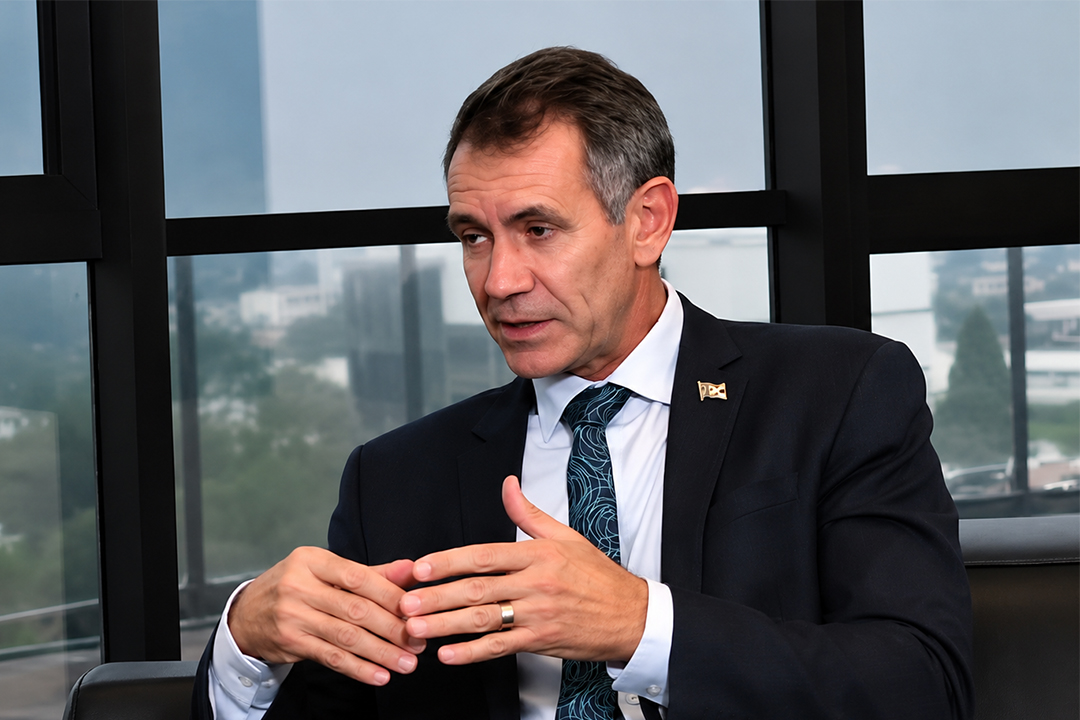
MBABANE– The Minister of Finance, Neal Rijkenberg, has revealed that the government’s decision to prioritise civil servants’ salary adjustments has placed significant pressure on the national budget, making it difficult to accommodate other critical needs, including increases in elderly grants and the implementation of notch two.
Speaking on the current fiscal outlook on Eswatini TV’s Asakhe Kwetfu programme, Rijkenberg indicated that while government recognises the importance of social support programmes such as elderly grants, the financial realities facing the country have forced difficult choices.
He explained that the salary review exercise required substantial financial commitment, including approximately E800 million for back pay, in addition to about E1.6 billion needed to implement the salary increases themselves.

Elderly grants remain unchanged
Rijkenberg acknowledged that elderly grants remain a priority for many emaSwati, particularly as they support vulnerable households and often provide for extended families.
However, he stated that due to the significant allocation towards civil servants’ salaries, government has not been able to increase these grants.
“We would have loved to increase things like elderly grants, because they are critical. But we simply do not have the fiscal space this year,” he said.
The minister stressed that the decision was not taken lightly, but was necessary to meet existing financial obligations.
Notch two deemed unaffordable
The minister further indicated that the same budgetary constraints have made it nearly impossible to implement the much-anticipated notch two salary adjustments.
He explained that after allocating funds for the current salary review and back pay, there are no additional resources available to support further increases.
“From a financial perspective, we really cannot afford more this year. The budget is extremely tight, and notch two is almost impossible under the current circumstances,” he said.
Rijkenberg urged civil servants and the public to understand the scale of the financial pressures facing government.
Introduction of IFMS strengthens oversight
Amid these challenges, the minister highlighted the introduction of the Integrated Financial Management System (IFMS) as a major reform aimed at improving financial discipline and transparency across government.
He described the system as a “game changer” that enhances control over budget processes, reduces the risk of manipulation and ensures timely processing of transactions.
“The system is fully online and highly transparent. It flags delays, escalates issues and ensures accountability throughout the process,” he said.
According to the minister, IFMS introduces strict monitoring mechanisms, where delays in processing are automatically flagged and escalated to senior officials if not addressed within set timelines.
Managing limited resources across sectors
Rijkenberg emphasised that the financial strain extends across all sectors, with insufficient resources to meet growing demands in areas such as healthcare, education, infrastructure and social support.
He noted that government is facing a situation where “there is not enough money for anything,” requiring careful prioritisation of limited resources.
Focus on economic growth and employment
Despite the constraints, the minister reiterated that government’s primary focus remains on addressing unemployment and poverty, which he described as the country’s most pressing challenges.
He explained that tackling unemployment would have a ripple effect, helping to reduce poverty and improve overall living standards.
“Our main priority is to grow the economy and create jobs. If we can address unemployment, we will naturally deal with poverty,” he said.
Rijkenberg pointed to infrastructure development, particularly road construction, as a key driver of economic activity and job creation.
“A tarred road is not just infrastructure. It stimulates economic development and creates employment opportunities along its route,” he added.
Budget formulation process explained
The minister also outlined how government determines spending priorities through the Programme Budgeting Committee (PBC), which includes the Ministry of Finance, the Ministry of Economic Planning and Development, and the Ministry of Public Service.
He explained that the committee sets budget ceilings and reviews submissions from ministries, which present their priorities and funding needs.
“These proposals are carefully assessed to determine where the highest priorities lie, given the limited resources available,” he said.
Cabinet finalises national priorities
Following this process, the budget is presented to Cabinet, where ministers deliberate and refine allocations before final approval.
Rijkenberg noted that Cabinet discussions play a crucial role in balancing competing priorities and ensuring that the most critical needs are addressed.
Balancing expectations with fiscal realities
The minister acknowledged that while expectations remain high, the current fiscal environment requires difficult trade-offs.
He emphasised that government is doing its best to balance competing demands while maintaining economic stability.
“As much as resources are limited, we are trying to prioritise as best as possible. But this year, the financial pressure is significant, and we must work within those constraints,” he said.
Rijkenberg concluded by expressing hope that future fiscal conditions may allow for greater flexibility, but cautioned that for now, careful management of resources remains essential to sustaining government operations and supporting national development.
(Courtesy Pic)