


- Legislators argue greater autonomy would strengthen oversight and project implementation
BY MBONO MDLULI
LOBAMBA – The Public Accounts Committee (PAC) has emphasised the importance of Parliament’s independence, arguing that greater autonomy would enable the Legislature to exercise direct oversight over projects linked to its operations, including the long-awaited Parliament Building Project.
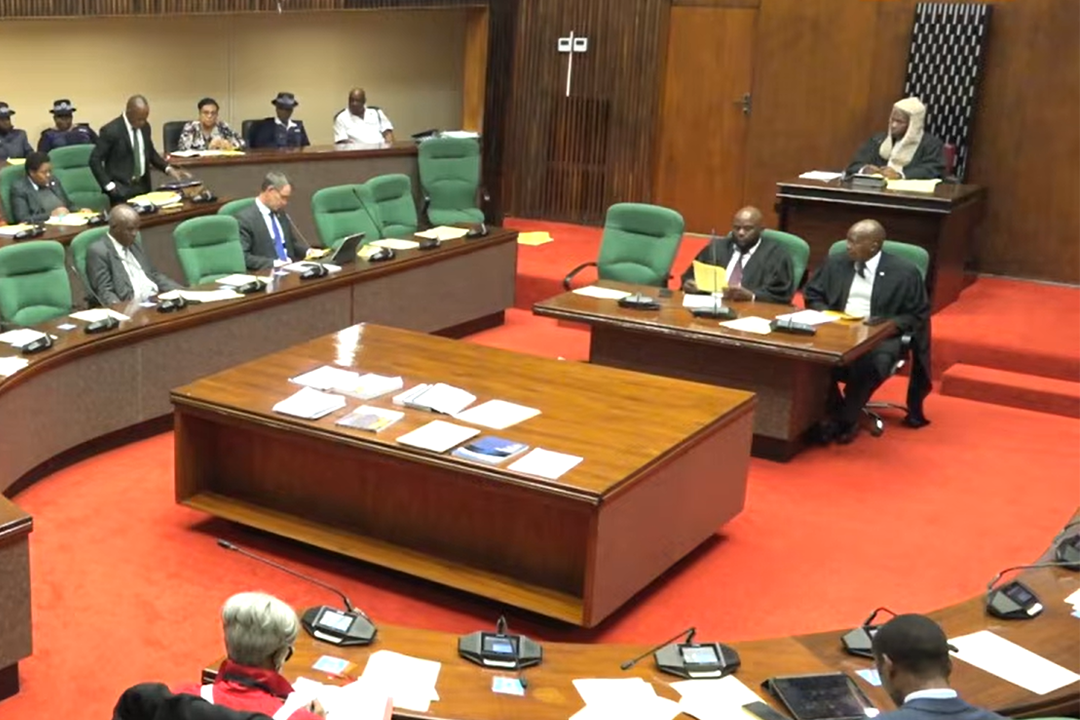
The issue was raised on Wednesday, June 3, 2026, when the Ministry of Economic Planning and Development appeared before the PAC in the House of Assembly.
PAC Deputy Chairperson Manzi Vincent Zwane told Principal Secretary (PS) Thabisile Mlangeni that Parliament’s independence was crucial in ensuring that projects intended for the Legislature are planned, managed and monitored by Parliament itself.
According to Zwane, an independent Parliament would allow the Parliamentary Service Board to take direct responsibility for the implementation and oversight of projects affecting the institution.

Strengthening Oversight
Zwane argued that such an arrangement would improve accountability and ensure that projects are implemented in accordance with Parliament’s priorities and expectations.
He said the current arrangement places responsibility for Parliament-related projects within the Executive arm of Government, limiting the Legislature’s direct involvement in project implementation and monitoring.
“The independence of Parliament is important because it would enable the Parliamentary Service Board to take full responsibility for projects linked to Parliament. This would allow Parliament to closely monitor the implementation of its own projects,” he said.
The comments came amid ongoing discussions about the delayed Parliament Building Project, which recently came under scrutiny by the PAC over expenditure and funding challenges.
Separation of Powers
Zwane further linked the issue to the constitutional principle of the separation of powers, which recognises the Executive, Legislature and Judiciary as distinct arms of Government.
He suggested that Parliament should have greater control over matters directly affecting its operations in order to strengthen institutional independence and accountability.
Under such a framework, Parliament would be better positioned to make decisions regarding infrastructure development, budgeting and project oversight without relying entirely on the Executive.
Advocates of parliamentary independence argue that this approach enhances transparency and allows the Legislature to exercise its constitutional mandate more effectively.
Parliament Building Project under Spotlight
The discussion comes at a time when MPs are seeking answers regarding delays affecting the proposed Parliament Building Project.
The PAC recently questioned the Ministry of Economic Planning and Development over expenditure incurred on preliminary works despite the project’s failure to progress to the construction phase because of funding challenges.
Committee members have demanded supporting documents and indicated that they may conduct an inspection-in-loco to assess work completed at the site.
The project has long been viewed as a strategic national development initiative aimed at providing Parliament with modern facilities comparable to those found in other countries within the Southern African Development Community (SADC).
Call For Institutional Reform
Zwane’s remarks add to growing discussions about strengthening Parliament’s operational independence and enhancing its capacity to manage its affairs.
Supporters of parliamentary autonomy believe that allowing Parliament to directly oversee its own projects would improve efficiency, accountability and long-term planning.
While no formal proposal was tabled during the PAC session, the discussion highlighted the importance lawmakers place on institutional independence as a foundation for effective governance.
As the debate continues, the issue is likely to remain part of broader conversations on governance reforms and the relationship between the Executive and Legislature in Eswatini.