



BY LINDELWA MYENI
MBABANE – Disability inclusion should no longer remain a policy commitment on paper, but must be backed by actual Government budgets, programmes and resources capable of improving the everyday lives of persons with disabilities.
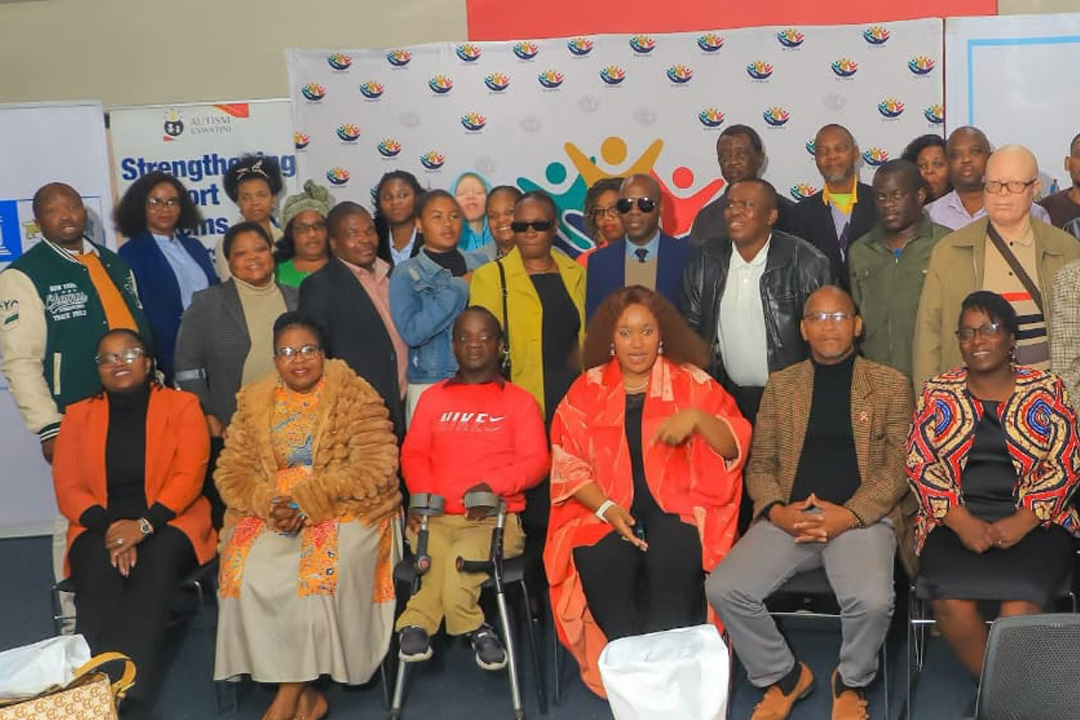
This was the central message delivered to Government ministries and key stakeholders during sensitisation workshops on the Costed Eswatini National Disability Action Plan 2024–2026.
Hosted by the Deputy Prime Minister’s Office and the Federation Organisation of Disabled People in Eswatini (FODSWA), with support from UNESCO, the workshops sought to strengthen understanding of the national plan and help ministries translate its commitments into practical action.
Participants were encouraged to ensure that disability inclusion is considered from the earliest stages of Government planning instead of being treated as an afterthought once programmes and budgets have already been finalised.

At the heart of the discussions was disability-responsive budgeting — ensuring that Government ministries deliberately allocate resources towards removing barriers that may prevent persons with disabilities from accessing services, opportunities and participating fully in society.
UNESCO Regional Office for Southern Africa Officer for Social and Human Sciences Memory Zulu stressed that disability inclusion requires financial commitment across Government.
“Disability budgeting and financing needs to be adopted by all government ministries,” Zulu said.
She explained that the Costed National Disability Plan of Action provides a framework through which Government institutions can respond more effectively to the needs of persons with disabilities.
The workshops also focused on equality and non-discrimination, reasonable accommodation and budgeting that complies with the principles of the Convention on the Rights of Persons with Disabilities (CRPD).
Zulu emphasised the importance of moving beyond policy declarations and ensuring that practical interventions are implemented to eliminate barriers faced by persons with disabilities.
This means ministries must look at their programmes, services and expenditure plans through an inclusion lens and determine whether persons with disabilities are being adequately catered for.
Disability-responsive budgeting is particularly important because policies and programmes can only make a meaningful difference when adequate resources are provided for implementation.
The sensitisation programme therefore seeks to strengthen institutional ownership and accountability by equipping officials and stakeholders with the knowledge needed to incorporate disability inclusion into planning, programming, budgeting and implementation.
It also promotes stronger coordination among Government institutions and other stakeholders, recognising that disability inclusion cannot be left to one ministry or organisation alone.
Instead, inclusion should become part of the wider Government development agenda, with every ministry considering how its mandate, programmes and resources affect persons with disabilities.
The approach is expected to help turn the objectives contained in the National Disability Action Plan into measurable interventions that can improve access, participation and opportunities for persons with disabilities.
Ultimately, the workshops reinforce a simple but important message — meaningful inclusion requires more than good intentions. It requires planning, accountability and money being deliberately allocated to ensure that no section of society is left behind.
(Courtesy Pic)


