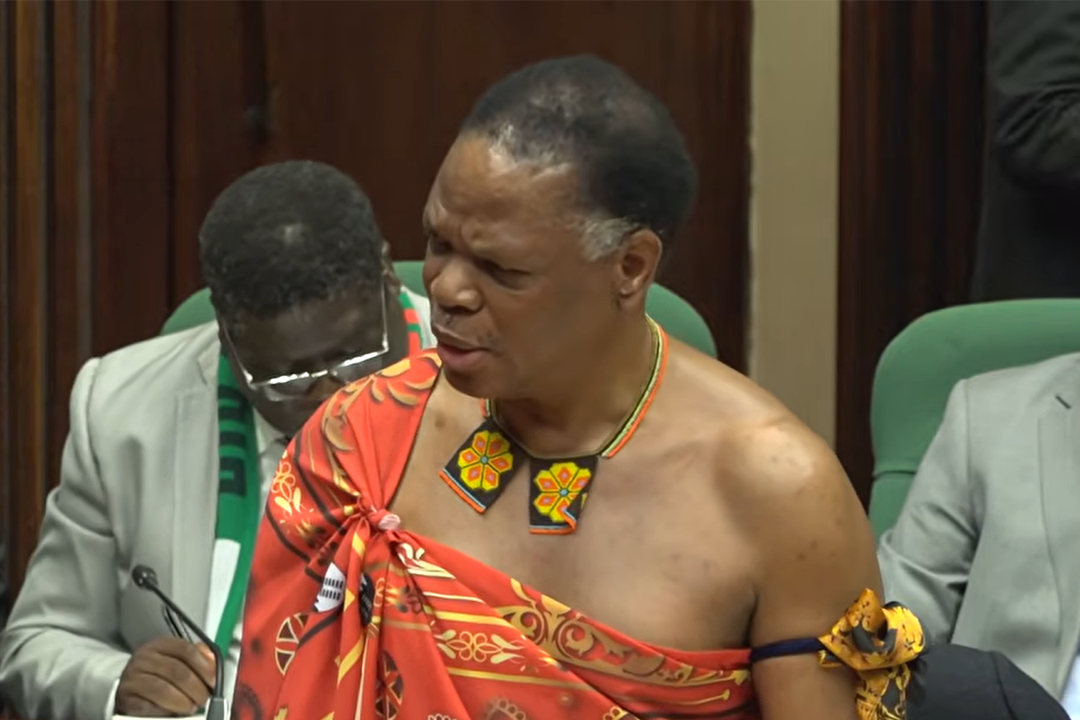



- Government targets energy self-sufficiency between 2028 and 2030
BY MBONO MDLULI
LOBAMBA – Government is working towards producing enough electricity locally in a move aimed at reducing electricity costs by as much as half while strengthening the country’s energy security.
This was revealed by Minister of Natural Resources and Energy Prince Lonkhokhela during the House of Assembly sitting on Wednesday, June 3, 2026.
The Minister was responding to a question for oral answer from Ngudzeni Member of Parliament (MP) Charles Ndlovu, who sought an update on Government’s efforts to ensure adequate electricity supply for the country.
Prince Lonkhokhela said Eswatini’s current challenge is that a significant portion of the electricity consumed locally is imported from neighbouring countries, making supply more expensive and exposing the country to external market pressures.

He explained that Government, through the Eswatini Electricity Company (EEC), is implementing strategies aimed at increasing local electricity generation capacity.
Reducing Dependence On Imported Electricity
According to the Minister, Eswatini’s current electricity demand stands at approximately 260 megawatts.
While the country already generates some electricity through facilities such as the Maguga Hydroelectric Power Station, local production remains insufficient to meet national demand.
Prince Lonkhokhela said increasing domestic generation is critical to reducing the country’s reliance on imported electricity.
He noted that imported electricity is considerably more expensive than locally generated power and that Government’s long-term objective is to significantly lower electricity costs for consumers.
“It is known that electricity imported into the country is very expensive. Our goal is to reduce those costs substantially, potentially by as much as half,” he said.
Independent Power Producers Seen As Practical Solution
The Minister explained that although Government remains committed to increasing generation capacity, constructing large-scale power stations requires substantial financial resources.
He revealed that establishing a coal-fired power plant capable of producing 300 megawatts of electricity would cost an estimated E13 billion.
Given the scale of such an investment, Government has opted to work closely with Independent Power Producers (IPPs) as a more practical and cost-effective solution.
Under this model, private sector companies invest in electricity generation projects and enter into agreements with EEC to supply power to the national grid.
Prince Lonkhokhela said this approach would allow Eswatini to increase generation capacity without placing the full financial burden on Government.
Concerns Over IPPs Addressed
The issue of Independent Power Producers was raised by Mafutseni MP Sabelo Mtsetfwa, who expressed concern that reliance on private producers could eventually place the country in a situation similar to its current dependence on imported electricity.
Mtsetfwa questioned why Government was not simply investing more resources directly into EEC to enable the utility to produce sufficient electricity on its own.
In response, Prince Lonkhokhela assured Parliament that safeguards would be built into agreements between EEC and the Independent Power Producers.
He said the agreements would be structured in a manner that protects national interests and ensures affordable and reliable electricity supply.
“We are aware of those concerns, but proper agreements will be put in place to ensure that the country benefits from these arrangements,” he said.
Energy Self-Sufficiency Within Reach
Mbabane East MP Welcome Dlamini wanted to know when Eswatini could realistically expect to produce enough electricity to meet its domestic demand.
The Minister responded that Government’s target is for the country to achieve adequate electricity generation capacity between 2028 and 2030.
He said ongoing investments in energy infrastructure and partnerships with Independent Power Producers were expected to contribute significantly towards achieving that goal.
Supporting Economic Growth
Reliable and affordable electricity remains one of the key pillars of economic growth, industrialisation and improved living standards.
Government believes that increasing local generation capacity will not only reduce electricity costs for households and businesses but will also strengthen the country’s ability to attract investment and support economic development.
The Minister’s remarks signal Government’s determination to reduce dependence on imported electricity and move towards greater energy security.
If the plans are successfully implemented, Eswatini could significantly improve its electricity supply position over the next few years while easing the financial burden on consumers through lower energy costs.