


… Central Bank Builds Strategic Gold Reserve
… Local Gold Purchases Targeted for Reserve Growth
….Reserve Diversification Key to Economic Stability
BY MBONGENI NDLELA
MBABANE– The Central Bank of Eswatini has revealed that it currently holds 2 500 ounces of gold valued at approximately E195 million, marking a strategic shift towards diversifying national reserves and strengthening the country’s resilience against global economic uncertainties.

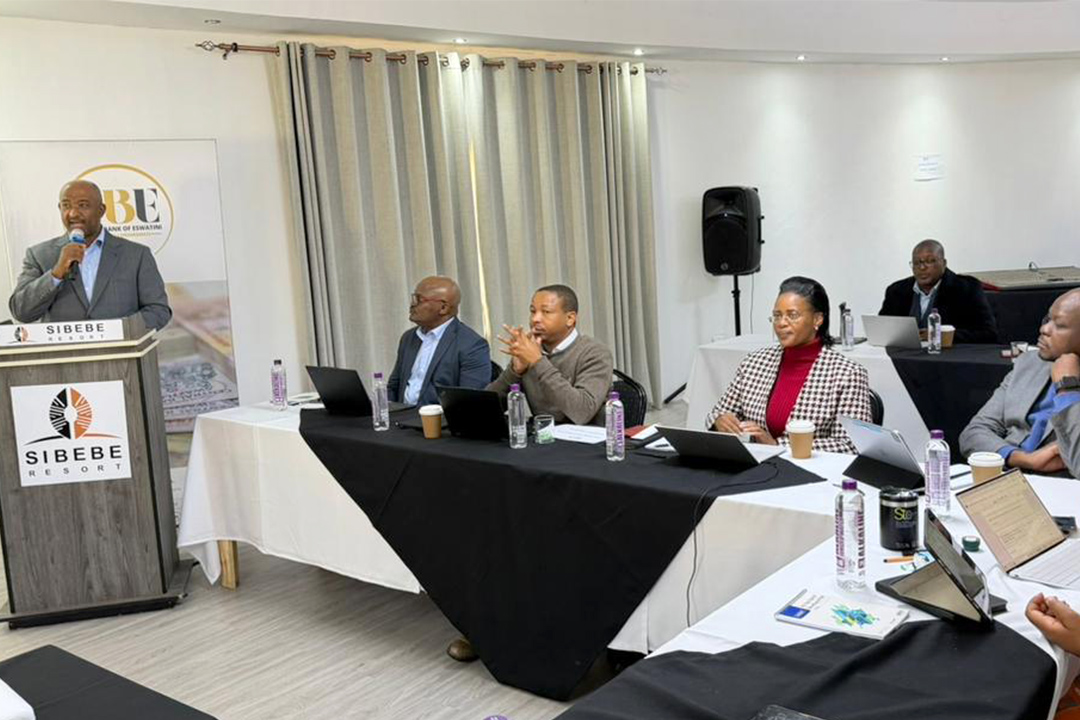
Speaking during the Central Bank Governor’s Annual Media Engagement Session at Sibebe Resort, Governor Dr. Phil Mnisi described the acquisition of gold as a deliberate move aimed at protecting the country’s economy and currency while improving reserve management efficiency.
“Currently, the bank holds 2 500 ounces of gold, which is equivalent to about E195 million as part of its reserve assets,” said Dr. Mnisi.
The Governor disclosed that the gold was acquired in July 2025 as part of broader efforts to diversify the Central Bank’s reserve portfolio and hedge against global risks.
“I am mentioning this figure publicly so that it is not like it’s a hidden agenda. Gold is one asset class that several central banks hold as part of protecting their economy and protecting their currencies,” he said.
Dr. Mnisi explained that while the current gold holdings were purchased using foreign currency, the Central Bank is now exploring opportunities to increase its gold reserves through local production.
“Going forward, the bank is exploring avenues of increasing its gold holdings through purchases from local production,” he said.
He noted that purchasing gold from local miners presents a significant economic advantage because the transactions would be conducted in local currency while simultaneously adding a foreign exchange-generating asset to the country’s reserves.
“When you buy gold locally produced, you pay with Emalangeni. Referencing the global gold market price, you are already pulling in a foreign exchange-generating asset. That is how you develop your stock of reserves,” explained the Governor.
According to Dr. Mnisi, buying gold internationally mainly serves diversification purposes, while local purchases can directly strengthen national reserves.
“When you buy gold using foreign currency, you are diversifying your portfolio. But when you are buying from local mining, that is how you build gold reserves,” he said.
The Governor emphasized that the Central Bank does not intend to become a mining company but is seeking legislative support that would enable it to participate in the beneficiation and refining value chain of precious metals.
“It would be very inappropriate for the Central Bank to become a mining agent. However, it can participate in beneficiation and refinery because that is where the optimisation of this natural resource is converted into reserves,” he said.
Dr. Mnisi further revealed that the Bank is building internal capacity to support this strategic initiative and is engaging Government structures, including Cabinet and Parliament, to strengthen the legal framework that would support precious metals participation.
The Governor linked the gold strategy to broader reserve management efforts. He noted that Eswatini’s reserves peaked at E11.5 billion in November 2025 and averaged E15.5 billion during the year. However, global economic pressures and capital outflows have since reduced reserves.
“As of May 29, 2026, our reserves are standing at E8.8 billion, which only covers two months of imports,” he said.
Despite the decline, Dr. Mnisi expressed optimism that reserves would improve in the medium term, supported by projected increases in Southern African Customs Union (SACU) receipts and ongoing reserve management reforms.
He stressed that gold accumulation remains a critical component of the country’s long-term economic resilience strategy.
“That is how great economies have sustained themselves over the years,” said Dr. Mnisi.
The Governor’s remarks signal a growing recognition of gold as a strategic national asset capable of enhancing reserve stability, strengthening the external sector, and positioning Eswatini for greater economic resilience amid an increasingly uncertain global environment.
(Courtesy Pic)