



BY MFANUFIKILE KHATHWANE
NGABEZWENI– His Majesty King Mswati III urges Emaswati to uphold and preserve traditions and customs for generations to come.
The King emphasized the need to ensure that future generations inherit a nation that continues to observe and celebrate its rich cultural customs and heritage. He stressed the importance of passing down cultural values and traditions from generation to generation.
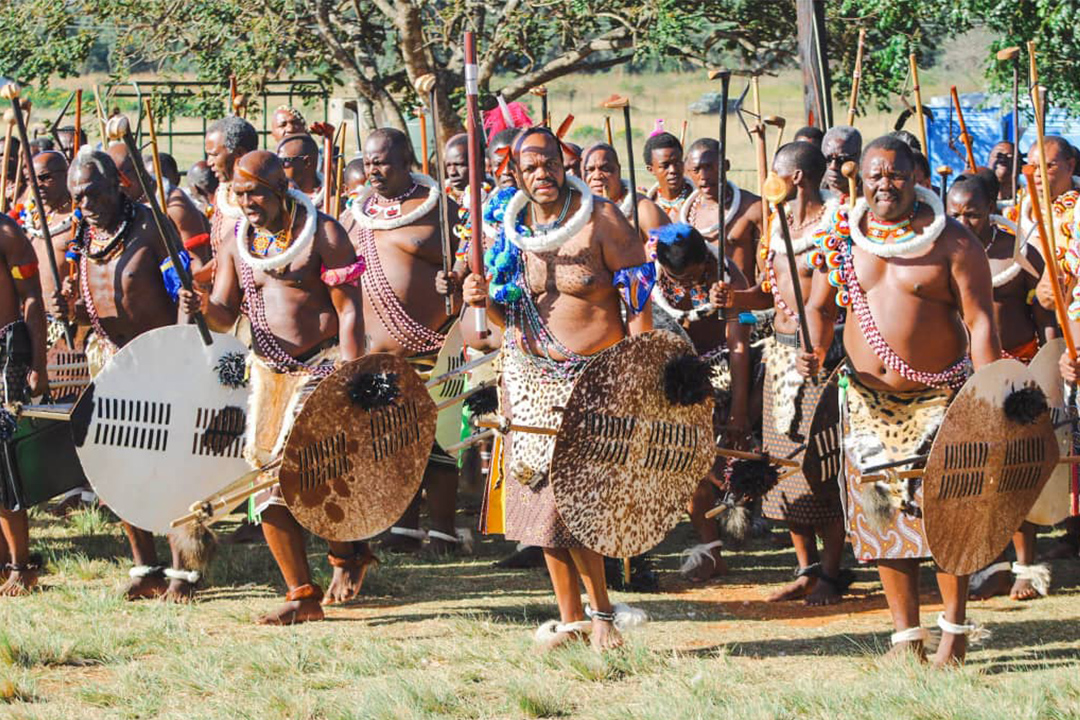
He shared these remarks during the kucitfwa kwelibutfo at Ngabezweni Royal Residence following the completion of the harvesting of the royal fields, which started in early May.
The King thanked the warriors for their hard work, discipline, and dedication demonstrated throughout the royal harvesting season, and strongly called on Emaswati to continue safeguarding, practising, and transmitting the country’s traditions and customs as a living foundation of unity, identity, and national strength.

Eswatini is widely known for its rich cultural heritage, which is expressed through national ceremonies such as the Umhlanga Reed Dance, where young women gather annually to celebrate unity, dignity, and cultural pride. Another key tradition is the Incwala Ceremony, a deeply spiritual national event that symbolises renewal, unity, and the strengthening of the nation’s cultural identity under the monarchy. These ceremonies, together with everyday practices such as communal cooperation and respect for elders, continue to reinforce Eswatini’s strong cultural identity.
His Majesty King Mswati III emphasized that traditions are not symbolic remnants of the past but active systems that shape behaviour, strengthen communities, and sustain collective responsibility.
He highlighted that cultural practices such as communal agricultural cooperation, particularly Lilima, remain essential in ensuring that communities support one another in ploughing, planting, weeding, and harvesting. The King also noted that this spirit of cooperation reflects the values of solidarity and shared responsibility, ensuring that no household is left behind.
He further stressed that such traditions must be revived and strengthened at community level, as they not only promote food security but also reinforce discipline, unity, and cultural identity among Emaswati.
The remarks were made during the regimental dispersal ceremony held after the completion of the royal harvesting season, where regiments from across the Kingdom participated in the harvesting of sorghum at the Mfabantfu Royal Fields and other designated royal fields under a highly coordinated system of communal labour.
Throughout the harvesting period, regiments worked in structured formations with clearly defined roles that ensured efficiency and discipline. Teams engaged in cutting, collecting, transporting, and storing the harvested sorghum in traditional cribs, while coordinated chants and movement reinforced unity and pace across the vast fields.
The harvesting programme forms part of the Kingdom’s annual agricultural and cultural calendar, with regiments moving between royal fields such as Mfabantfu, Lozitha, Lukhutseni, Echibini, and Mazibeke depending on crop readiness and traditional instruction.
The season traditionally concludes at Ngabezweni with the dispersal ceremony, where regiments are formally released after completing their national service duties in the fields. The occasion marks both the end of the agricultural cycle and a renewed affirmation of cultural continuity.
The King’s message underscored that preserving traditions and customs is essential for building a strong, united, and self-reliant nation, urging Emaswati to ensure that these values are not only remembered but actively lived and passed on to future generations.
#KingMswatiIII #KucitfwaKwelibutfo #NgabezweniRoyalResidence