


BY SIFISO NHLABATSI
MBABANE– Eswatini has joined fellow Southern African Development Community (SADC) member states in committing to strengthen regional anti-money laundering and counter-terrorism financing measures.
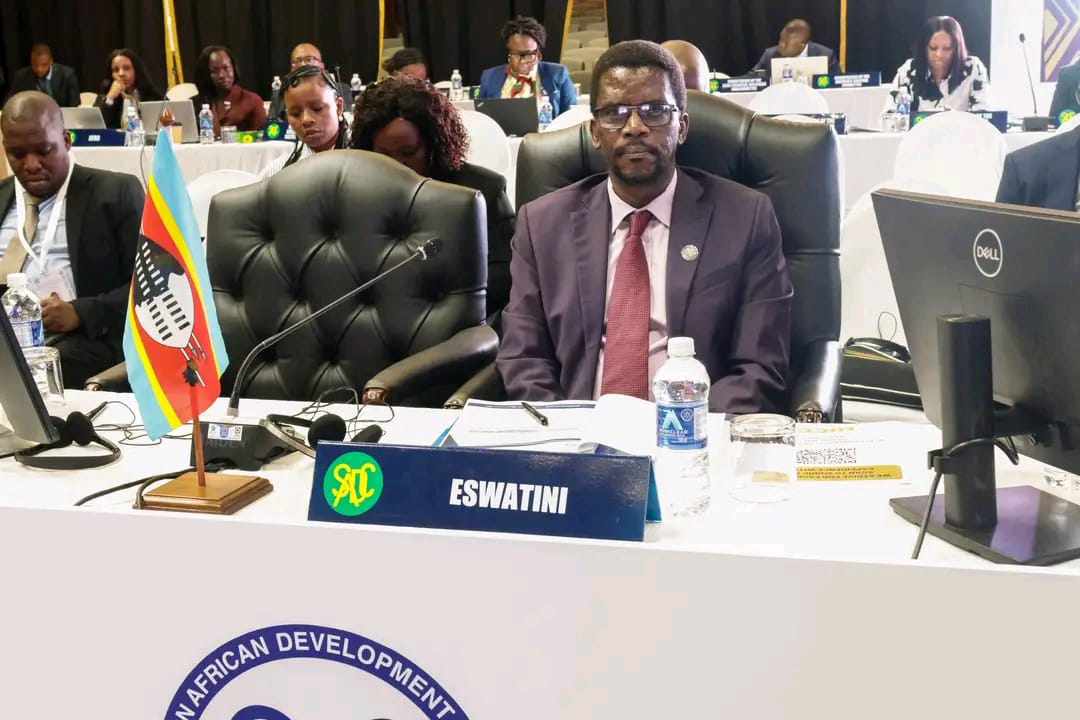
The commitment was made during the SADC Committee of Ministers of Finance and Investment and Peer Review Panel meeting held in Harare, Zimbabwe, where Eswatini was represented alongside other member states in discussions on strengthening financial integration, investment, and macroeconomic stability across the region.
One of the major resolutions adopted during the meeting was an agreement by ministers to reinforce Anti-Money Laundering and Combating the Financing of Terrorism (AML/CFT) frameworks to better detect, prevent and combat illicit financial flows, money laundering and terrorist financing.
The ministers noted that stronger financial crime prevention systems are critical to safeguarding the integrity of regional financial institutions, improving investor confidence and protecting economic growth.

The meeting came at a time when many African countries are strengthening compliance with international financial standards amid growing concerns over illicit financial flows, organised crime and cross-border financial transactions.
Beyond combating financial crime, ministers acknowledged that the Southern African region continues to face significant economic headwinds, including geopolitical tensions, global trade disputes, climate-related disasters, tightening financial conditions and energy insecurity.
Speaking during the meeting, Chairperson of the SADC Committee of Ministers of Finance and Investment and South African Finance Minister Enoch Godongwana said declining international development assistance requires Southern African countries to fundamentally rethink how development is financed.
He urged member states to move beyond dependence on donor funding by embracing blended finance models, public-private partnerships and increased private sector participation.
According to Godongwana, the region must adopt coordinated and forward-looking economic policies capable of cushioning member states against external economic shocks while positioning SADC as a competitive regional production hub.
He further said finance ministers have a responsibility to strengthen financial resilience while encouraging innovation, improving climate resilience and building stronger partnerships with the private sector.
SADC Executive Secretary Elias Magosi called for greater policy coordination across governments, saying sustainable development would require a whole-of-government approach rather than isolated interventions.
Magosi stressed the need for industrialisation driven by value addition, stronger regional value chains, reliable and affordable energy, harmonised mineral development policies and a modernised agricultural sector capable of increasing productivity and agro-processing.
He said such interventions would increase intra-SADC trade, improve border connectivity and strengthen the region’s collective economic resilience.
Zimbabwe’s Minister of Finance, Economic Development and Investment Promotion, Professor Mthuli Ncube, reminded delegates that no SADC member state can realise its full economic potential in isolation.
He said the region’s economies are interconnected through infrastructure, trade corridors, financial systems and shared development aspirations, meaning progress in one country benefits the entire region.
Besides strengthening anti-money laundering frameworks, ministers adopted a wide range of measures aimed at deepening regional financial integration.
These include accelerating domestic resource mobilisation, promoting industrialisation and value addition, strengthening regional value chains, improving food and energy security, and enhancing mineral resource management.
The ministers also endorsed initiatives to deepen SADC capital markets by improving liquidity, expanding financial products, including sustainable and Islamic finance, and strengthening legal and regulatory frameworks.
Recognising the growing importance of digital finance, member states were urged to accelerate the development of inclusive digital financial ecosystems by investing in digital public infrastructure, strengthening regulatory frameworks and improving access to financial services for women, youth and rural communities.
The meeting further called on member states to expedite the onboarding of national currencies onto the SADC Regional Real Time Gross Settlement System to facilitate faster and more efficient cross-border payments.
Ministers also encouraged countries to fast-track the signing and ratification of key SADC legal instruments, including agreements relating to the Regional Development Fund, tax cooperation and the SADC Protocol on Finance and Investment.
The meeting reaffirmed SADC’s commitment to deeper regional cooperation in finance and investment as member states seek to build more resilient economies, enhance financial stability and create an environment that attracts sustainable investment while protecting the region from financial crimes such as money laundering and terrorist financing.
#Eswatini #SADC #AntiMoneyLaundering #AML #CounterTerrorismFinancing #FinancialCrime #FinancialIntegrity #RegionalIntegration #SADCFinance #EconomicDevelopment #FinancialStability #Investment #AfricaRising #SouthernAfrica #IllicitFinancialFlows
(Courtesy Pic)