


BY MFANUFIKILE KHATHWANE
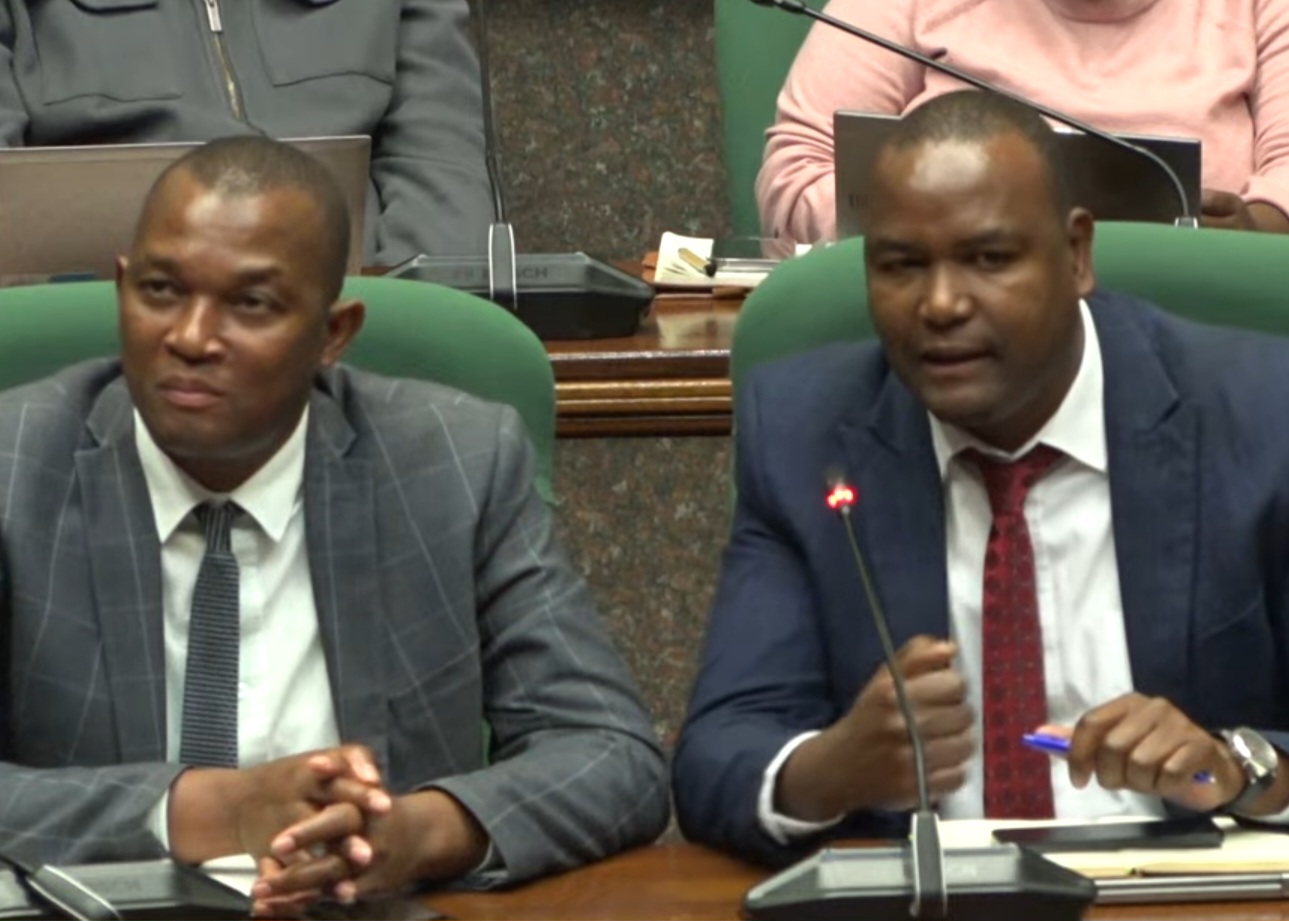
LOBAMBA – Government of Eswatini through the Ministry of Health spent more than E4.8 million on medicines that were later recalled, with no evidence that suppliers replaced the drugs or refunded the State, Fundudzi Forensic Services Executive Director Zakhele Dlamini told the Public Accounts Committee (PAC) on July 13,2026.
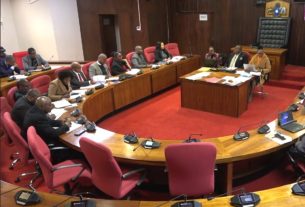
The revelations emerged during a PAC sitting with Ministry of Health parastatals, where members scrutinised the Fundudzi Forensic Services investigation into recalled medicines, procurement practices and the country’s medicine quality assurance system.
The meeting, chaired by Deputy Speaker and PAC Chairperson Madala Mhlanga, heard that the recalled medicines were purchased between 2023 and 2024, raising concerns over public funds and patient safety.
Auditor General Timothy Matsebula told the committee the report was an extension of investigations into the recall of medicines across government health facilities following widespread concern that Eswatini had procured substandard drugs. He described the findings as significant because the earlier investigation had shocked the nation by revealing that some medicines bought by Government failed to meet the required standards.

Before the report was presented, PAC member Sabelo Ndlangamandla (Matsanjeni South) sought clarity on media reports that the earlier Fundudzi report had been challenged in court. Mhlanga clarified that the committee was considering a new report, separate from the matter before the courts.
Presenting the findings, Fundudzi Forensic Services Executive Director Zakhele Dlamini said Government commissioned the investigation after the initial report, tabled in Parliament in November 2024, raised serious concerns over the increasing trend of drug recalls.
He said the forensic investigation uncovered several weaknesses in the procurement, labelling, supply and distribution of medicines within the Kingdom of Eswatini.
Dlamini said the investigation sought to establish why medicines were being recalled, who supplied them, the implications for patients, and whether Government had adequate systems to detect poor-quality medicines before they reached health facilities.
According to the report, the main reasons for medicine recalls between 2023 and 2025 included misleading or incorrect labelling, unusual changes in colour or chemical reactions, and medicines with short shelf lives or nearing expiry.
He said some medicines supplied by Swazi Pharmacy Wholesalers were recalled after complaints that they failed to dissolve properly or changed colour, while others were recalled because they were incorrectly labelled.
Dlamini said correspondence between suppliers and the Central Medical Stores (CMS) showed that suppliers had advised Government to recall some of the affected medicines.
He stressed that incorrect or misleading labelling of medicines was treated as a serious offence by the World Health Organization and other international medicines regulatory bodies because it posed a direct risk to patients.
The report further revealed that Government spent over E4 821 125 on recalled medicines during the review period, with investigators finding no evidence that the affected drugs were replaced or that suppliers reimbursed Government for the losses.
An estimated E1 928 742 worth of recalled medicines also remained unresolved, with no proof of replacement or refunds, resulting in what investigators described as fruitless and wasteful expenditure.
Dlamini said existing legislation already empowered Government to act against suppliers who delivered defective or expired medicines, adding that the Ministry of Health simply needed to invoke the relevant legal provisions when dealing with offending suppliers.
He also highlighted another major weakness in the country’s pharmaceutical system, revealing that Eswatini has no laboratory facilities to independently test medicines before they are distributed to patients.
He said officials at the Central Medical Stores told investigators they relied mainly on documentation supplied with medicines instead of scientifically testing whether the products matched what had been ordered.
“You may order Panado based on the paperwork, but without testing facilities, you may only discover later that the product is not what it claims to be,” Dlamini told the committee.
The PAC is expected to complete its scrutiny of the report before recommending its adoption by the House of Assembly.
#PublicAccountsCommittee #PAC #MinistryOfHealth #FundudziForensicServices #DrugRecalls #MedicineSafety #PublicFunds #GovernmentAccountability #Eswatini