



BY SIFISO NHLABATSI
LOBAMBA – A Parliamentary committee has recommended that the Board of Directors of the Eswatini National Provident Fund (ENPF) be reconfigured within seven days of the adoption of its report, including the nullification of the current appointment of the Board Chairperson Derrick Shiba, after concluding that the appointment lay at the centre of the governance crisis that has paralysed the country’s largest social security institution.
The recommendation is contained in the committee’s report into the governance impasse at the ENPF, which found that the dispute over the appointment of the Board Chairperson triggered the prolonged dysfunction that undermined the Fund’s governance and eroded stakeholder confidence.
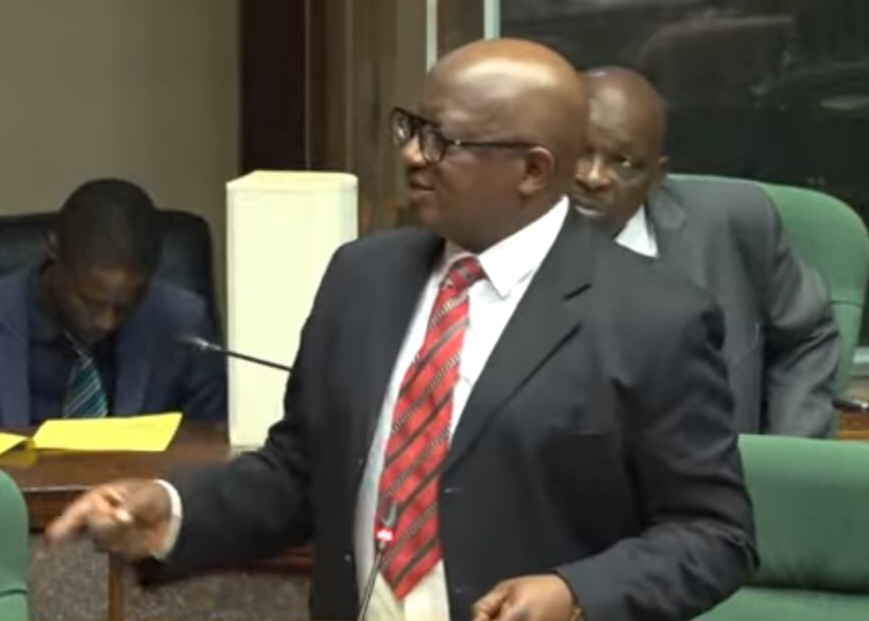
The Committee is led by Lobamba Lomdzala MP Marwick Khumalo.
In its first recommendation, the committee directed that the Minister for Labour and Social Security should reconstitute the Board in full compliance with the ENPF Order No. 23 of 1974, as amended in 1995. The committee specifically recommended that the Minister regularise the composition of the Board by nullifying the current appointment of the Chairperson because the position occupied under the category of “specialised skills” has no statutory basis in the governing legislation.

It further recommended that, once the Board has been lawfully constituted, the Minister should appoint a Chairperson from among the existing Board members in line with both the provisions of the First Schedule of the ENPF Order and the long-established governance convention under which the chairmanship rotates among representatives of government, employers and employees.
The committee concluded that the immediate cause of the impasse was the Minister’s decision to depart from the longstanding rotational arrangement when appointing the current Chairperson.
Although it acknowledged that the ENPF Order gives the Minister statutory authority to appoint both the Chairperson and Vice Chairperson, the committee found that successive Ministers had consistently exercised those powers in accordance with an accepted rotational arrangement among the three social partners represented on the Board.
Evidence presented during the inquiry showed that this practice had been followed over many years and was supported by correspondence from organised labour as well as previous Board records.
According to the report, the current Minister exercised the legal power of appointment but departed from the established governance convention by appointing a Chairperson during a period when, under the rotational arrangement, it was not government’s turn to occupy the position.
The committee found that this unilateral departure from an accepted governance practice, without prior consultation with stakeholders, triggered the dispute that eventually rendered the Board dysfunctional.
It also found that the justification that the Chairperson possessed “specialised skills” had no legal foundation because neither the ENPF Order nor its First Schedule provides for the appointment of a Board member on that basis.
The inquiry further established that recognised social partners remained firmly opposed to any arrangement in which the Chairperson is appointed from outside the constituencies representing government, employers and employees.
The committee said evidence before it showed that the rotational arrangement had evolved over many years into an accepted governance convention that promoted trust, confidence and balance within the Fund’s tripartite governance structure.
While noting that the practice had never been incorporated into legislation, the committee said governance arrangements that had consistently contributed to institutional stability should be formalised through law to ensure certainty and continuity.
The report also identified several weaknesses in the ENPF’s legal framework, finding that the governing legislation, enacted in 1974 and last amended in 1995, no longer reflects the current structure of government.
The committee said references in the law to Ministers responsible for Labour and Public Service, as well as Local Administration, have created uncertainty over who is the lawful appointing authority following successive government restructuring exercises.
It further found that there was no legal basis for the involvement of the Ministry of Housing and Urban Development in the nomination or appointment of Board members.
During the inquiry, the Minister responsible for Housing and Urban Development acknowledged that he had neither nominated Board member Derrick Shiba nor issued any written instrument confirming such a nomination.
Mr Shiba also testified that he regarded himself as having been appointed by the Ministry of Labour and Social Security and had never engaged with the Housing Ministry regarding his appointment.
The committee concluded that appointments to statutory bodies should always be supported by clear legal authority and appropriate documentary instruments to avoid governance disputes.
The report also criticised the absence of meaningful engagement between the Minister and recognised social partners after the disputed appointment.
While both sides differed on whether attempts had been made to hold meetings, the committee found that no structured consultation took place despite the seriousness of the governance concerns.
It said the absence of institutional mechanisms for dialogue allowed mistrust to deepen, positions to harden and the dispute to escalate into a governance crisis.
The inquiry also considered allegations raised by social partners concerning the suitability of the current Chairperson, including claims relating to indebtedness to the Fund and potential conflicts of interest.
Although the Chairperson denied the allegations and the committee stressed that it was not determining civil or criminal liability, it found that the unresolved concerns had significantly eroded stakeholder confidence and contributed to the governance impasse.
The committee further criticised the appointment process after finding that mandatory Fit and Proper assessments by the Financial Services Regulatory Authority (FSRA) were conducted only after the Board had already been appointed.
It said such assessments should always precede appointments because they serve as an important safeguard for ensuring the competence, integrity and suitability of persons entrusted with fiduciary responsibilities.
More broadly, the committee concluded that the ENPF’s governance framework requires urgent modernisation to align with contemporary corporate governance standards and international principles governing social security institutions.
Among its broader recommendations, the committee urged Parliament to prioritise the enactment of the ENPF Bill, 2025, saying the proposed legislation should address the governance deficiencies identified during the inquiry.
It said the Bill should formally entrench tripartite governance, codify the rotational chairmanship, clarify the identity of the responsible Minister, strengthen appointment procedures, make Fit and Proper assessments mandatory before appointments and establish mechanisms for resolving future appointment disputes.
The committee also called on the Minister for Finance to expedite amendments to the Public Enterprises (Control and Monitoring) Act, 1989, within three months to ensure the legislation recognises the ENPF’s unique tripartite governance structure and eliminates overlapping governance responsibilities.
In its conclusion, the committee said the governance impasse resulted from legislative ambiguities, departure from an established rotational governance practice, inadequate stakeholder consultation and weaknesses in the existing legal framework.
It said implementing its recommendations would restore effective governance at the ENPF, modernise the legal framework, preserve the Fund’s tripartite character and rebuild public confidence in one of Eswatini’s most important public institutions.
#ENPF #ENPFBoardCrisis #ENPFGovernance #PensionFundReform #EswatiniParliament #ParliamentaryInquiry #BoardReconfiguration #GovernanceReform #SocialSecurity #TripartiteGovernance #LabourAndSocialSecurity #PublicAccountability #InstitutionalReform