


…fertility rate falls from six to 3.2 children per woman
BY LINDELWA MYENI
EZULWINI –Eswatini’s population has almost doubled over the past 40 years, rising from 681 059 people in 1986 to 1 232 154, in a major demographic shift that is reshaping the country’s development needs and priorities.
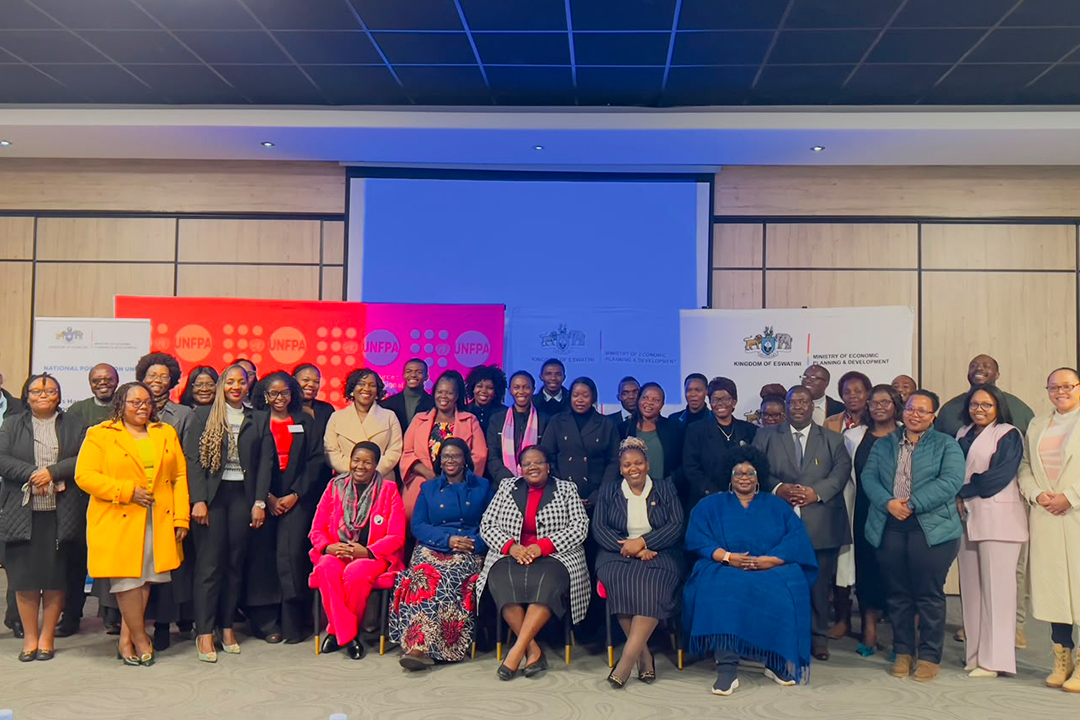
The figures were highlighted by Principal Secretary in the Ministry of Economic Planning and Development Thabsile Mlangeni during the launch of the Call for Research Papers for the Eswatini Population and Development Summit 2026 in Ezulwini.
While the sharp rise in population tells one part of Eswatini’s story, Mlangeni said the past four decades have also brought significant changes in how families are growing and how long children are surviving.

One of the most striking changes has been the decline in the country’s total fertility rate from six children per woman in 1986 to 3.2 children per woman in 2017.
Over the same period, infant mortality dropped from 105 deaths per 1 000 live births to 60 deaths per 1 000, reflecting another major change in the country’s demographic profile.
The figures show a country that has not only grown in population size, but has also undergone significant changes in fertility and mortality patterns.
For Government, the transformation presents both opportunities and important planning demands.
A population of more than 1.23 million means greater demand for schools, healthcare services, employment opportunities, housing, social protection programmes and other public services.
At the same time, understanding the changing structure of the population could help Eswatini better plan investments in human capital and position its people to contribute meaningfully to economic and social development.
Mlangeni stressed that reliable statistics and research would be critical in ensuring that Government understands emerging population trends and incorporates them into national development planning.
This is expected to be one of the major areas of discussion during the Eswatini Population and Development Summit, scheduled for November 2026.
The summit will be held under the theme: “Eswatini’s 40 Year Demographic Transition and Emerging Issues for Sustainable Development.”
Ahead of the gathering, researchers and academics have been invited to submit research papers examining how Eswatini’s population has changed and what those changes mean for the country’s future.
Eight thematic areas have been identified for research.
These include demographic transition and population dynamics; population and poverty reduction; health and social protection; education and human capital development; agriculture and food security; housing and migration; artificial intelligence and data governance; and indigenous knowledge and community resilience.
The summit is expected to bring together Government, researchers, academics, civil society organisations and development partners to analyse the Kingdom’s demographic journey and explore ways population trends can be turned into opportunities for sustainable development.
Beyond the headline figure of 1.23 million people, the statistics provide an important picture of a changing Eswatini.
They show a country with more people than four decades ago, but also smaller average family sizes and improved child survival outcomes.
The challenge now is to ensure that national planning keeps pace with those changes so that population growth can be matched by investments in education, jobs, healthcare, housing and social development.
As Eswatini reflects on four decades of demographic transformation, the upcoming summit is expected to help policymakers and researchers answer an increasingly important question: how can the country turn its changing population into a stronger foundation for sustainable economic and social development?