

BY SIFISO NHLABATSI
MBABANE – The Eswatini Youth Enterprise Revolving Fund (YERF) is sitting on about E40 million in available funding and is calling on young people with viable business ideas to come forward and access the money.
YERF Chief Executive Officer and Fund Manager Mandla Nkambule said the Fund did not want the money to remain unused while young emaSwati continued struggling with unemployment and lack of capital to start or expand businesses.
“We are sitting around E40 million and we want that money to be used in helping the youth. Sifuna isebente lemali,” Nkambule said.
He was speaking in an interview at the end of a tour of youth-owned businesses that have received financial assistance from YERF.
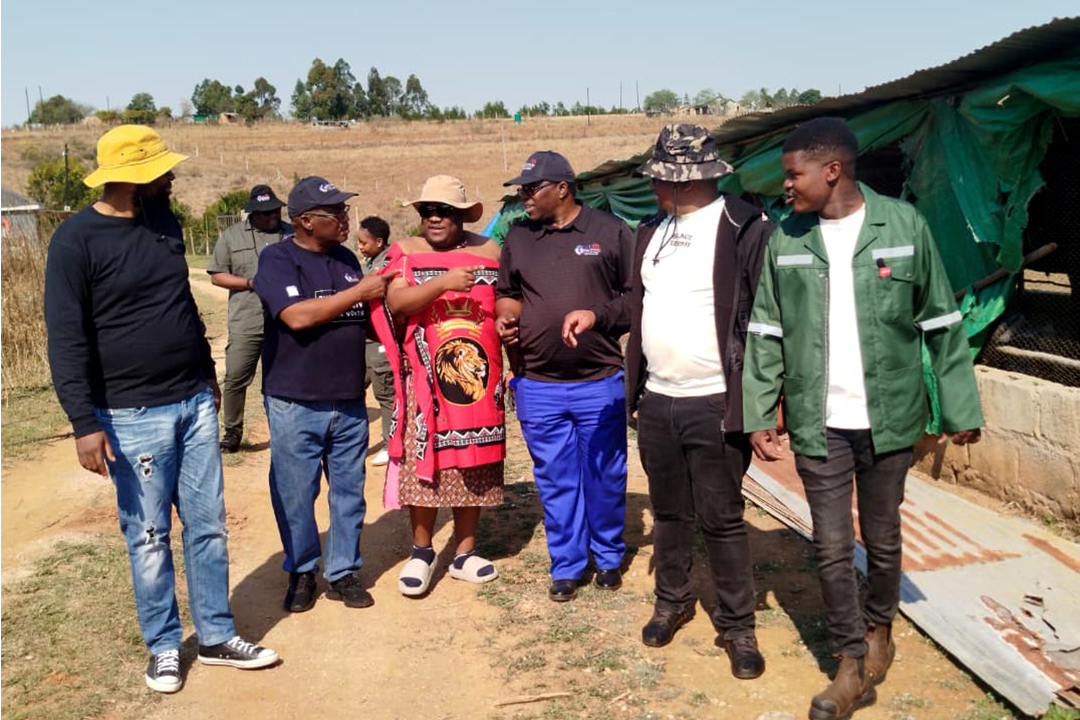
The tour, which took place on Saturday, was led by Nkambule and included Board members Banele Manyatsi, Zibuse Simelane, Mncedisi Nxumalo, Tebesuthu Magagula and Simphiwe Ndabezitha.
Nkambule urged young people to come forward with their applications, saying the Fund had money available to support viable enterprises.
He said YERF would also be at the Eswatini International Trade Fair, where young people would have an opportunity to interact with the Fund and obtain information about its programmes.
“We encourage young people to come forward with their applications so that we can look at them and give them the funds. We will also be at Trade Fair and we encourage young people to visit us and follow us on all our social media platforms,” he said.
The CEO acknowledged that many young people were struggling, but said Government had provided the Fund with resources specifically meant to help them move forward economically.
“What Government has given us will help the young people go forward,” he said.
The E40 million call comes as the Fund is also reviewing some of the concerns raised by beneficiaries during the tour, including loan sizes, repayment arrangements and lengthy application processes.
Nkambule said the Board had noted that the current one-size-fits-all approach to financing was not suitable for the different businesses operated by young people.
He said businesses operated in different sectors and therefore required financing models suited to their individual needs.
“We want our payments to be flexible so that we can ease the pressure on entrepreneurs. Businesses are not the same, so our generic approach is not helping us. We need to change it by looking at the businesses, their needs and the sectors they operate in,” he said.
Nkambule said some beneficiaries had told the Board that they were not adequately funded to meet the real capital requirements of their businesses.
This was particularly a concern for sole traders who, according to the CEO, said they sometimes received less than what they actually needed to establish or meaningfully grow their enterprises.
The Board, he said, had taken note of the concerns and was now considering a review of loan amounts.
“The issue is that sole traders have raised concerns that they are receiving little funding when we ourselves have seen that they need more money than what we have set as a maximum. We will also be reviewing our loan amounts or loan sizes so that we meet the demands of the bare minimum funding,” Nkambule said.
He said it did not make sense to underfund an entrepreneur whose business required more capital, only for that person to later be forced to seek additional financing through refinancing products.
“We do not want them to end up being forced to do a refinancing product because this means we are delaying that person,” he said.
The CEO said the tour had given the Board an opportunity to see first-hand how funding was translating into businesses on the ground.
Among the businesses visited was Groening and Associates, owned by Sphesihle Groening, who received an E19 000 loan from YERF.
Groening’s business offers tutoring services for high school and tertiary students, research services and assistance with company registrations, among other services.
The entrepreneur said his company had grown to serve clients in Eswatini, Tanzania, Kenya, Taiwan and other countries.
He said the business now employed about 19 people and had assisted approximately 1 210 people, some of whom had gone on to work in the corporate sector.
Groening called for a stronger strategic partnership between YERF and its beneficiaries and suggested that the Fund should introduce a customer journey to follow young entrepreneurs from their first enquiry through the growth of their businesses.
He also encouraged young people to change their mindset and become more alert to opportunities around them.
Another beneficiary, Sebe Thwala, received E10 000 from the Fund and established AGAPE Mobile, a Mobile Money business offering both MTN Mobile Money and Eswatini Mobile’s eMali services.
Located near Mbabane Government Hospital and the UNESWA Mbabane Campus, the business became Thwala’s alternative after she completed school and struggled to find employment.
At Nkhanini, the Board also visited Phetsile Hlatjwako, who received E42 000 and now runs Vezokuhle Grocery.
Hlatjwako started her entrepreneurial journey with a Mobile Money business before moving into a salon and later a fish-and-chips venture.

With assistance from YERF, she bought stock for her grocery shop.
She told the Board that business was progressing well and that she was able to repay her loan, while already looking towards further expansion.
Her plans include opening another salon and venturing into additional businesses.
The delegation also visited Sibusiso Fakudze, who lost his job in 2020 but refused to allow the setback to end his journey.
Fakudze, who runs Nkosibona Finger Fried and Baking at Nkhanini, used skills acquired while working in the hotel industry to start his own business.
He initially started with Mobile Money before receiving E15 000 from YERF.
The business has since expanded into baking, food, shisanyama and pizza, with Fakudze saying the financial assistance helped him pursue opportunities when his own capital was insufficient.
One of the most striking examples of growth was that of 28-year-old Malungelo Simelane, who runs Malu’s Poultry at Hhukwini.
After graduating and failing to find employment, Simelane turned to poultry farming and approached YERF for financial assistance.
He started in 2023 with just 500 broilers after receiving an initial E50 000 injection from the Fund.
Through disciplined reinvestment and a further E60 000 in funding, the business has expanded to three poultry houses with a production capacity of about 6 400 broilers per cycle.
At full capacity, Simelane said the operation could generate gross revenue of approximately E380 000 per cycle.
However, he stressed that gross revenue was not profit as major production costs, including feed, chicks, medication, electricity, labour and transport, still had to be paid.
His growth has been driven by starting small, understanding the market, maintaining hygiene and biosecurity, keeping records, controlling costs and reinvesting.
Nkambule said such businesses demonstrated why young people should not be discouraged from approaching the Fund.
He said the Board was also concerned about lengthy internal processes, which sometimes discouraged applicants before their applications could be completed.
“We are working on our regulations and looking at reviewing them and doing away with the processes that lead to in-house delays,” he said.
Nkambule appealed for patience from young people while the Fund worked on improving its systems.
The aim, he said, was to process and complete loan applications within 30 days.
“We are working on something and we have new programmes, including agriculture loans and infrastructure. We want the process to be done within a month,” he said.
He added that interaction with beneficiaries was part of the Board’s efforts to improve its understanding of the challenges facing young entrepreneurs.
One major challenge identified during the tour was access to suitable infrastructure.
“We have seen that the youth are struggling with infrastructure. Hence, we will be launching a fund which will focus on infrastructure,” Nkambule said.
The YERF CEO said the message from the Board was therefore clear: the money is available, but young people must come forward with their ideas and applications.
With about E40 million still available, the Fund wants to see more young people turning ideas into businesses, businesses into employers and ambition into sustainable economic participation.
#EswatiniPositiveNews #YERF #E40MillionForYouth #YouthEmpowerment #YouthEntrepreneurship #EswatiniYouth #BusinessFunding #AccessToFinance #StartYourBusiness #GrowYourBusiness #EconomicEmpowerment #YouthInBusiness


