


BY SIFISO NHLABATSI
MBABANE – As thousands of maidens prepare to take part in Eswatini’s annual Umhlanga Reed Dance, the reeds at the centre of the nation’s celebrated cultural ceremony are putting biodiversity firmly in the spotlight.
The draft National Biodiversity Strategy and Action Plan (NBSAP 3.0) identifies biodiversity as a crucial part of Eswatini’s cultural identity, saying wetlands, indigenous plants and other natural resources are directly linked to traditional ceremonies, sacred places and customary practices.
For Umhlanga, biodiversity is not a background issue.
The ceremony depends on reeds harvested from natural ecosystems, making the protection of wetlands and reed-growing areas essential to preserving one of Eswatini’s most recognised cultural traditions.
The strategy notes that wetland and riparian plants used for reeds, mats, thatching, medicines and food are not only economic resources but also cultural resources.
This means the degradation of wetlands could affect far more than water quality and biodiversity. It could also threaten resources that have cultural significance and are used in traditions passed down through generations.

The NBSAP 3.0 says biodiversity is deeply embedded in Eswatini’s identity, customary systems, ceremonies, sacred places and traditional ecological knowledge.
It further calls for biodiversity governance that respects traditional knowledge, local rights, gendered resource-use practices and community stewardship.
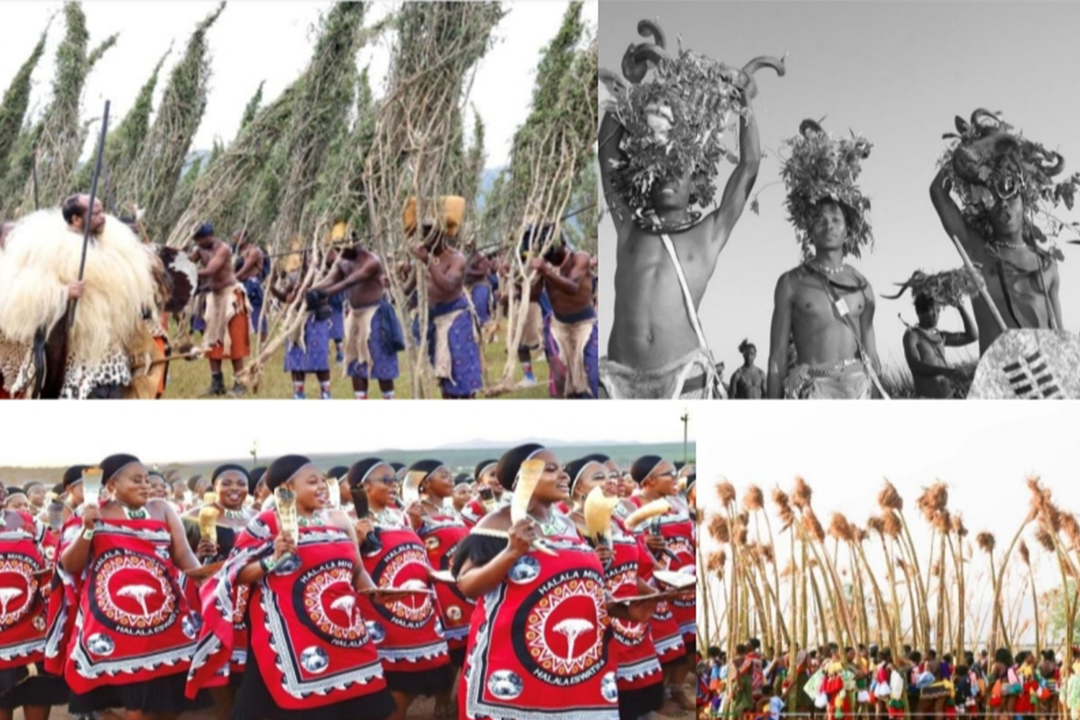
Umhlanga is one of the strongest examples of this connection between nature and culture. Before the colourful dancing and celebration, maidens collect reeds, which are presented at the royal residence as part of the ceremony.
The reeds therefore connect thousands of young women directly to Eswatini’s natural environment and demonstrate how the survival of cultural traditions can depend on healthy ecosystems.
The same relationship exists in the sacred Incwala ceremony.
A key natural resource is Lusekwane, a sacred shrub harvested annually for use during the traditional rituals associated with Incwala. Young men are traditionally commissioned to collect the Lusekwane, highlighting another direct connection between indigenous vegetation and the country’s cultural practices.
The NBSAP 3.0 warns that biodiversity value and vulnerability are not evenly distributed across the country.
Wetlands and river corridors, which occur across Eswatini, have been identified as a cross-cutting priority because they connect uplands, agricultural areas, towns and conservation landscapes.
Their degradation can have cascading consequences for water quality, aquatic biodiversity, agriculture, flood risk and local livelihoods.
But the impact could also be cultural.
The draft strategy argues that biodiversity should not be viewed only as an environmental concern. It supports livelihoods, tourism, water security and the national economy while also providing the natural resources that sustain cultural ceremonies and traditional knowledge.
As Eswatini finalises its biodiversity strategy for 2026 to 2035, the protection of wetlands, indigenous plants and culturally important landscapes could become increasingly important.
For Umhlanga, that means protecting the ecosystems that produce the reeds central to the ceremony. For Incwala, it means ensuring the continued availability of culturally significant plants such as Lusekwane.
The strategy’s message is that conserving biodiversity is also about protecting Eswatini’s cultural identity.
Without healthy wetlands, forests, rangelands and indigenous vegetation, some of the natural foundations of the country’s most important traditions could come under increasing pressure.
#Eswatini #Umhlanga #ReedDance #Biodiversity #Incwala #Lusekwane #CulturalHeritage #EswatiniCulture #NBSAP3 #Wetlands #NatureAndCulture #BiodiversityConservation #ProtectOurHeritage #EswatiniPositiveNews