


BY THEMBA ZWANE
MBABANE— The Kingdom of Eswatini has proposed eight global responses to the growing challenges of desertification, land degradation and drought, calling for a coordinated international approach that links environmental protection with food security, economic growth and improved livelihoods.
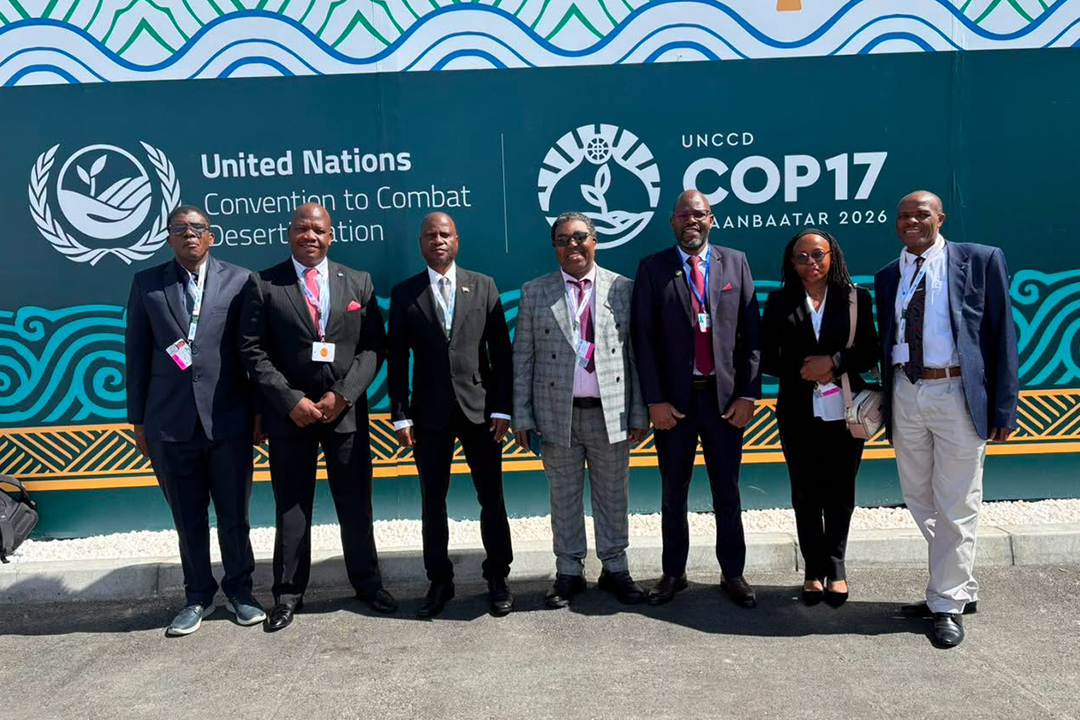
Minister for Agriculture Mandla Tshawuka made the proposals when delivering Eswatini’s statement at the 17th Session of the Conference of the Parties to the United Nations Convention to Combat Desertification (UNCCD COP17) in Ulaanbaatar, Mongolia.
Tshawuka said land degradation and drought could no longer be regarded as distant environmental concerns, but were now lived realities affecting communities and economies.
He cited Eswatini’s experience during the last cropping cycle, when the country endured a six-week drought at the peak of the growing season, severely affecting the crop that forms the staple diet.

The Minister warned that such climate-related disruptions threaten food and water security, livelihoods, economic growth, poverty reduction and human dignity.
For Eswatini, he said, the stakes were particularly high because communities depend heavily on productive land, while agriculture supports rural livelihoods and food security, rangelands support livestock production, forests provide environmental and economic services, and water resources sustain communities, agriculture and industry.
Against this background, Eswatini has put forward eight key proposals for a global response.
1. Treat land restoration as an investment
Eswatini wants land restoration to be regarded as an investment in national and global development rather than merely an environmental expense.
The country argues that restoring degraded land has direct benefits for food security, livelihoods, economic growth and poverty reduction.
2. Invest in land productivity and water conservation
Eswatini is calling for increased investment in improving land productivity while strengthening water conservation.
The proposal recognises the close relationship between productive land, reliable water resources and the ability of communities to withstand drought and climate shocks.
3. Strengthen climate resilience while protecting livelihoods
The country has called for climate-resilience measures that protect the people whose livelihoods depend directly on natural resources.
For Eswatini, strengthening resilience must go hand in hand with protecting agriculture, livestock production and rural livelihoods.
4. Make environmental sustainability and economic development work together
Eswatini wants environmental sustainability and economic development to reinforce each other rather than compete.
Tshawuka said the fight against desertification, land degradation and drought should be regarded as a fundamental part of sustainable development and economic transformation.
5. Develop a global approach to a global problem
Eswatini has called for countries to abandon silo approaches and work collectively against environmental challenges that cross national boundaries.
“Climate change, which is a primary driver of these phenomena, knows no territorial or continental boundaries,” Tshawuka said.
He stressed that a collaborative framework was essential for collective success.
6. Put science, technology and innovation at the centre
Eswatini is also advocating for science, technology and innovation to play a central role in responding to land degradation and climate change.
Tshawuka said the world is living through the Fourth Industrial Revolution and should harness its opportunities to shape a more resilient future.
7. Integrate the global environmental agendas
Eswatini wants greater coherence between international efforts addressing land degradation, climate change, biodiversity loss, food insecurity and water insecurity.
Tshawuka said these challenges were deeply interconnected and therefore required integrated responses rather than isolated interventions.
8. Put vulnerable communities at the centre
The eighth proposal is for greater inclusivity in problem-solving, designing solutions and rolling out benefits.
Tshawuka said vulnerable communities, women, youth and people living with disabilities should be at the core of environmental and development processes.
“There can be nothing for them without them,” he said.
Eswatini wants commitments turned into action
Tshawuka said Eswatini welcomed COP17’s focus on translating commitments into practical action, stressing that the success of governments should ultimately be measured by the positive changes they bring to people’s lives.
“Talk alone will not bring those changes but concrete actions on the ground will,” he said.
He further highlighted finance as critical, particularly for vulnerable developing countries seeking to implement drought-resilience and land-restoration programmes.
According to Tshawuka, COP17 should ensure that vulnerable developing countries can access predictable, affordable and additional financial resources to implement their programmes.
He said the commitments emerging from the Riyadh Global Drought Resilience Partnership presented an important opportunity to move from plans to implementation.
Eswatini already taking action
The Minister said Eswatini was already implementing measures aimed at strengthening its resilience to land degradation and climate change.
These include restoring degraded land and rangelands, planting 10 million trees, constructing dams for climate resilience, implementing water-conservation initiatives and adopting climate-smart technology.
However, Tshawuka stressed that Eswatini could not address the challenges alone.
“We need the global community,” he said, calling for cooperation among governments, development partners, financial institutions, the private sector and communities.
He concluded by reinforcing Eswatini’s position that restoring land should be viewed not as a drain on resources, but as an investment in the future.
“Land restoration is not an environmental expenditure; it is an investment in food security, livelihoods and economic growth.”
#Eswatini #UNCCD #COP17 #LandRestoration #Desertification #Drought #ClimateChange #FoodSecurity #WaterSecurity #Agriculture #MandlaTshawuka
(Courtesy Pic)