
BY SIPHOSETHU MABUZA
MANZINI– Music does not stop making money when an artist leaves the stage. For creatives, a song can find another life in films, television, advertisements, video games and social media content — but understanding how to get paid for that use is where the business of music comes in.
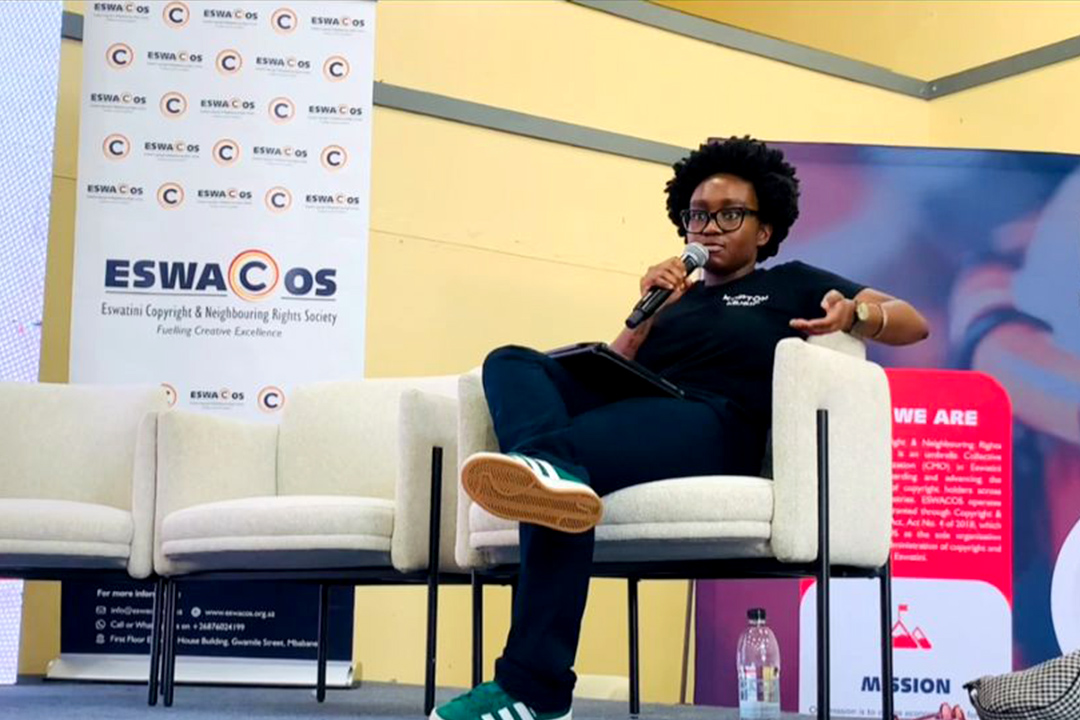
This was among the key lessons shared by music supervisor, music publisher, creative entrepreneur and Kopton Music founder Nikilitha Mantungwa during the ESWACOS Business Seminar at the Eswatini International Trade Fair (EITF) 2026.
Mantungwa used her session to unpack music licensing and publishing, giving creatives a look at the structures behind the use of music in visual media and the opportunities available to independent artists.

A major focus of the presentation was sync licensing, short for synchronisation licensing, which deals with the use of music alongside visual content. Mantungwa explained that a song cannot simply be taken and placed in a commercial, film, television production or social media advertisement without the necessary permissions.

The same principle applies when music is used to promote a product. According to Mantungwa, such usage requires licensing, with the process helping protect the intellectual property of artists, writers, composers and other rights holders.
The discussion also introduced the role of the music supervisor, a professional responsible for handling the music that forms part of a production. Mantungwa explained that music supervisors listen to large amounts of music to determine what works for particular scenes and projects before navigating the licensing process with record labels, publishers and rights holders.
For independent artists, she stressed the importance of understanding ownership before entering agreements. The licensing process can involve both the master recording and the publishing rights, meaning artists need to know who owns each side of their music before granting permission for its use.
Mantungwa also warned creatives against signing away their rights without fully understanding what they are agreeing to. The financial opportunities can be significant, depending on the production, brand and scope of use. However, the presentation made it clear that payment is only one part of the equation proper contracts and clear ownership are equally important.
For Mantungwa, understanding the business side of music allows creatives to make better decisions about where and how their work is used. Her presentation ultimately shifted the conversation from simply creating music to understanding what happens after the song has been created and how creatives can turn their intellectual property into sustainable opportunities.
#ESWACOS #EITF2026 #NikilithaMantungwa #KoptonMusic #MusicLicensing #MusicPublishing #SyncLicensing #EswatiniCreatives #SwatiMusic #CreativeEconomy #MusicBusiness #EswatiniEntertainment