



BY SIFISO NHLABATSI
MATSAPHA- Eswatini Nazarene Health Institutions (ENHI) has called for sustained investment in healthcare workers, saying skilled, confident and compassionate professionals remain at the heart of efforts to transform the country’s healthcare system.
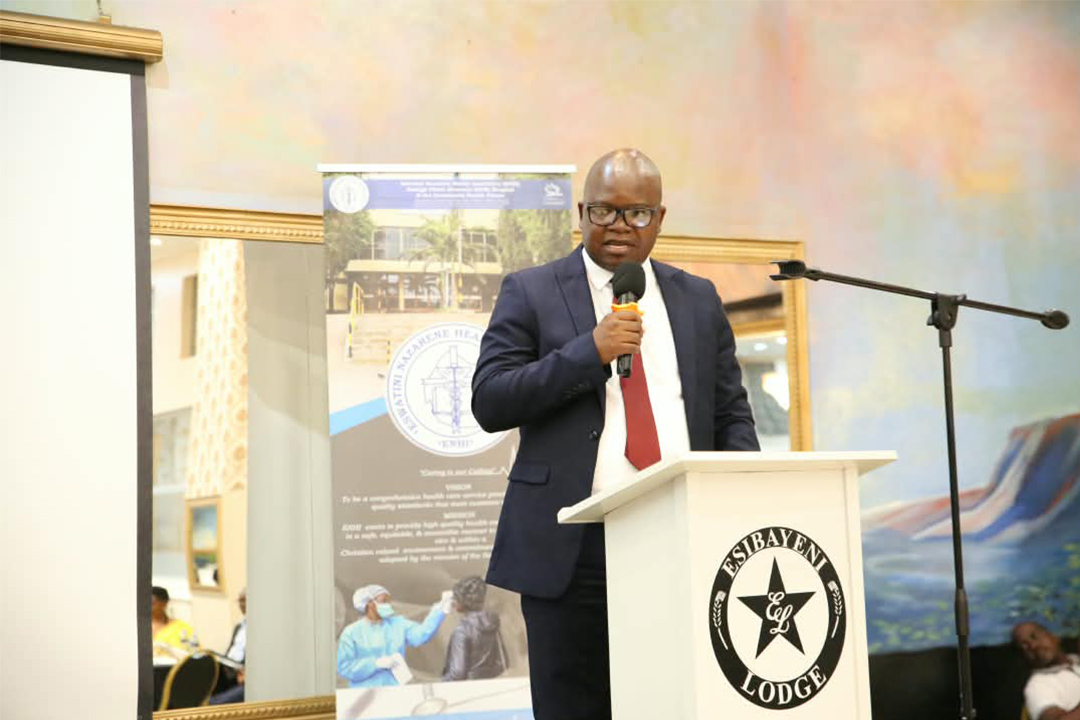
ENHI Chief Executive Officer Mazwi Mavuso made the call during the graduation ceremony of the Accelerating Local Organizational Capacity for Achieving TB/HIV Epidemic Control (ALLOCATE) Project at Esibayeni Lodge in Matsapha on Thursday.
Speaking under the theme “From Capacity Gaps to Leadership: ENHI’s Journey to Sustainable Excellence,” Mavuso said infrastructure, equipment and technology were important components of healthcare, but could never replace the people responsible for delivering services.
“At ENHI, we believe that if we want to transform healthcare, we must first invest in the people who deliver it,” Mavuso said.
He said skilled, confident and compassionate professionals were essential to ensuring that healthcare services were delivered effectively.
The statement came as ENHI celebrated the completion of the three-year ALLOCATE programme, which focused on strengthening institutional and professional capacity at the health institution.
Mavuso said the programme had invested in ENHI’s people and strengthened its systems, placing the institution under an obligation to preserve and build on those gains.
“Our responsibility now is to ensure that this investment is sustained long after the project has ended,” he said.
He warned against allowing the knowledge gained through the programme to become unused once the project had formally ended.
Mavuso said ENHI would therefore integrate the tools, procedures and lessons from ALLOCATE into institutional policies, workplans and standard operating procedures.
The institution would also establish continuous mentorship, coaching and peer-learning systems to ensure that graduates would in turn train and support other members of staff.
ALLOCATE content would be incorporated into staff orientation, in-service training and leadership development, while routine monitoring, audits and performance reviews would be used to assess whether the acquired knowledge and skills were translating into better service delivery.
The programme’s investment in healthcare workers was also highlighted by Georgetown University Country Resident Director Professor Samson Haumba.
Haumba said 233 healthcare workers had been trained across clinical cadres during the project, while 21 senior and middle managers were upskilled in programme and grant management.
He said the capacity-building approach extended beyond formal training and included direct clinical mentorship, peer learning networks and communities of practice.
In the first year alone, 182 structured mentorship visits were completed.
Haumba said the approach had helped move capacity strengthening from boardrooms and training venues to frontline service delivery.
“Capacity is not built in isolation; it is forged every single day in busy rural clinics, during monthly data reviews, in clinical handovers, and at the bedside of every patient who walks through your doors,” he said.
The project’s reach also expanded from 11 facilities in Lubombo and Manzini to all 21 ENHI health facilities across the four regions of Eswatini.
According to Haumba, this expansion demonstrated that the investment in people and systems had been applied across the institution.
The project also saw the Client Management Information System become fully operationalised across ENHI facilities, providing real-time data visibility to clinical teams and enabling facility managers to identify and address service-delivery bottlenecks.
The impact of the strengthened workforce and systems was reflected in health-service outcomes.
ENHI reported 26 659 active clients receiving lifesaving antiretroviral therapy, while viral-load suppression remained at 98 per cent.
Tuberculosis Preventive Treatment coverage among eligible clients rose from 60 per cent to 94 per cent.
Health Minister Mdududzi Matsebula said the project had contributed to improving the quality of care and quality of life of approximately 30 000 clients receiving antiretroviral therapy across all four regions of Eswatini.
He said the investment in healthcare workers was particularly important because they were the people who translated health-system resources into actual services for patients.
“Infrastructure, medicines and technology are essential, but at the heart of every successful health system is a skilled, confident, committed and compassionate healthcare worker,” Matsebula said.
He said mentorship was particularly valuable because it transferred knowledge, built confidence, developed leadership, strengthened professional practice and created capacity that remained within the health system.
“When we build the capacity of one healthcare worker, we invest in every patient that person will serve today, tomorrow and for many years to come,” he said.
The minister urged graduates not to keep their newly acquired knowledge to themselves.
“Share it, mentor others, strengthen your teams, improve your facilities, innovate and remain committed to excellence,” he said.
He described the graduates as ambassadors of the investment made in them and urged them to carry that responsibility with pride.
Mavuso also placed emphasis on mentorship as an important part of ENHI’s future.
Addressing the mentors, he said they were part of the future leadership of the institution.
“Take what you have learned and share it. Leadership is not about keeping the light to yourself; it is about helping others see the way,” Mavuso said.
He said ENHI’s calling remained simple: “Caring is our calling.”
However, he stressed that the calling carried responsibility, meaning that excellence had to become the institution’s standard.
ENHI, he said, must continue asking whether it was providing the right service, delivering quality care, developing competent professionals and building institutions capable of standing strong for generations.
The organisation’s investment in people was also linked to its wider institutional sustainability.
Mavuso said ENHI’s recently audited financial statements for the year ended March 2026 demonstrated improved financial performance, with its cumulative deficit reduced from approximately E40 million to E26 million in one year.
He described this as evidence of stronger financial stewardship, budgeting and institutional discipline.
While acknowledging that ENHI was not yet at the finish line, he said the institution was moving in the right direction.
For Mavuso, the completion of ALLOCATE represented not an end to learning, but a new phase in which ENHI would have to apply and multiply the knowledge acquired.
“The real graduation begins tomorrow, in our clinics, wards, laboratories, offices and boardrooms,” he said.
#ALLOCATE #ENHI #HealthcareWorkers #HealthWorkers #Healthcare #HealthSystems #Eswatini #CapacityBuilding #Leadership #PublicHealth #HIV #TB #SustainableHealthcare
(Courtesy Pic)