


BY SIFISO NHLABATSI
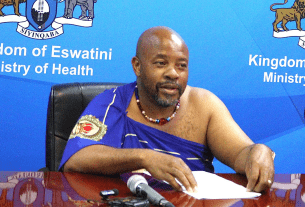
EZULWINI – Acting Director of Public Prosecutions Lomvula Hlophe has stated that immigration officers who abuse their positions to solicit bribes or commit serious offences in their line of duty should be arrested, prosecuted and have their ill-gotten assets seized.
Hlophe made the call while making submissions on the Immigration Bill, warning Parliament that the current legislation was too lenient on immigration officers who commit serious criminal offences.
She said criminal conduct should not simply result in an internal disciplinary hearing, arguing that officers who break the law must face the criminal justice system.
Hlophe said the Prevention of Organised Crime Act (POCA) should then be used to strip convicted offenders of assets acquired through criminal proceeds.

In vernacular she stated that ababoshwe bavitsitwe basale bangenalutho, which can be loosely translated to mean that they must be arrested and let POCA take away everything from them.
“The intention of POCA is to take away proceeds of criminal activities from culprits,” Hlophe said.
She explained that property bought with money obtained through illegal means should be taken away by the State.
She said the message should be clear to would-be offenders that criminal proceeds would not be allowed to remain with their families or associates after their death or imprisonment.
Hlophe said an immigration officer should not only be imprisoned for committing an offence, but should also face disciplinary proceedings that could ultimately result in the loss of employment.
She went further to suggest that, where possible, offenders should receive direct custodial sentences without the option of paying a fine.
Her comments come against the backdrop of a string of corruption and fraud cases involving officials within the Ministry of Home Affairs.
In March 2025 it was reported that Assistant Immigration Officer Misiwe Jele had been arrested and charged with 14 counts relating to alleged corruption and violations of immigration laws. The charges included allegations that she unlawfully facilitated the issuance of entry permits to foreign nationals without proper authorisation.
It was later reported that the ministry had warned that more arrests of corrupt immigration officers were expected, following investigations into the alleged illegal issuance of passports, permits and other government documents.
It has also been extensively reported on alleged corruption within Home Affairs in the country, including the case involving immigration officer Nkosinathi Mboneni Zwane and Zimbabwean national Delight Moyo, who faced numerous charges involving alleged fraud, theft and corruption.
In 2025 it was reported that investigations into the alleged fraudulent issuance of an Eswatini identity document to South African alleged crime boss Vusimuzi ‘Cat’ Matlala had exposed suspected organised activity within the ministry, including alleged fraudulent issuance of permits and passports and the use of deceased employees’ credentials.
The Matlala-linked investigation subsequently saw Home Affairs official Nonhlanhla Malambe face 17 charges.
Against this background, Hlophe said the offences outlined in the Immigration Bill were too serious to be dealt with solely through disciplinary action.
The Bill states that an immigration officer commits an offence if he or she accepts, agrees to accept, induces or assists another person to accept a bribe or other benefit connected to official duties.
It also criminalises accepting or agreeing to accept a benefit in return for failing to perform official duties, wilfully failing to perform functions under the Act, or inducing, aiding or attempting to aid another person to commit an offence.
“These are very serious offences,” Hlophe said.
She questioned why an officer accused of such conduct would, under the proposed provision, primarily face disciplinary action.
Hlophe said the current approach could contribute to the continued rot within immigration because officers accused of serious criminal conduct could end up before disciplinary committees instead of criminal courts.
She stressed that she had no objection to disciplinary proceedings, but maintained that disciplinary action should not replace criminal prosecution.
“Every crime, the person must face the consequences of being arrested and answering before court and let the court decide,” she said.
She urged legislators to review the provision and ensure that immigration officers accused of criminal offences are arrested, prosecuted and, where convicted, subjected to the full consequences of the law.
Hlophe said POCA should form part of that response by ensuring that corruption does not become financially rewarding.
The objective, she said, should be to ensure that an offender not only loses his or her freedom and employment, but also everything obtained through the proceeds of the crime.
#Eswatini #Immigration #Corruption #POCA #HomeAffairs #ImmigrationBill #LomvulaHlophe #AntiCorruption #Justice #Accountability
(Courtesy Pic)