


BY PHUMELELE GAMEDZE
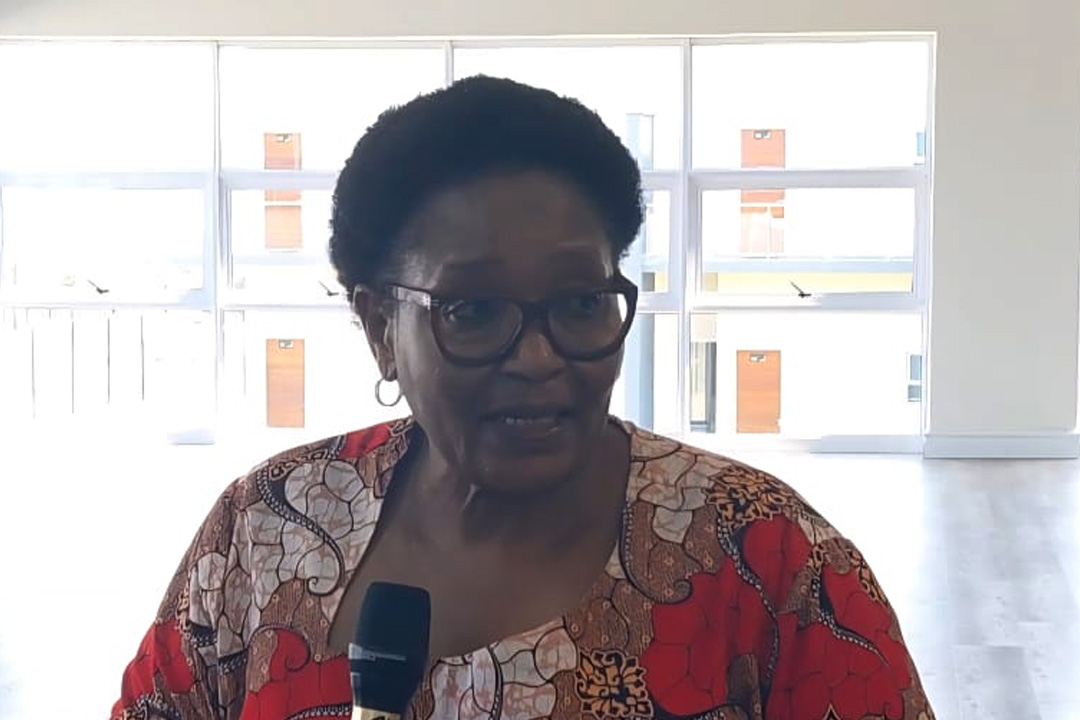
MBABANE– Deputy Prime Minister Senator Thulisile Dladla has called on Lubombo Members of Parliament to help build community trust in Imbeleko as Government prepares to collect household data across the region.
Dladla made the call today at Nsulutane Hotel at Hlane, during a meeting with MPs from Lubombo’s 11 Tinkhundla and members of the Deputy Prime Minister’s Office Portfolio Committee ahead of the National Dynamic Social Registry data collection exercise.
The meeting marks another important step in the national rollout of Imbeleko, a system designed to help Government identify vulnerable households more accurately and strengthen the targeting of social protection programmes.
Dladla said poverty alleviation programmes require Government to have reliable information about the people and households that need assistance.

“The Government of Eswatini has embarked on robust poverty alleviation programmes which require accurate identification of extremely vulnerable households and individuals, and ensuring equitable access to social protection programmes,” she said.
She said Imbeleko would help reduce duplication, inclusion and exclusion errors while improving the efficiency of social protection programmes.
“This will support data driven decision making to eliminate intuition, guesswork and past experiences,” Dladla
The Lubombo exercise builds on the experience gained in Shiselweni, where the Imbeleko household enumeration was conducted between June and July 2025.
The Shiselweni exercise provided Government with an important foundation for understanding household-level vulnerability and testing the systems, processes and community engagement required for a wider rollout.
Government’s broader Programme of Action identifies the National Dynamic Social Registry as a tool to improve the targeting of social protection programmes, reduce duplication and double-dipping, strengthen understanding of socio-economic needs and support better programme design and resource allocation.
Lubombo is now taking its place in that national journey
The regional Imbeleko launch was held at Lomahasha Inkhundla on August 26, 2026, followed by the recruitment of 22 supervisors from the region’s 11 Tinkhundla between September 1 and 4.
A further 216 data collectors were recruited between September 8 and 11, with successful candidates expected to be notified this week.
Dladla said the decision to recruit people from Lubombo was deliberate, ensuring that local residents play a direct role in gathering information about their own communities.
“The recruitment of supervisors and enumerators specifically from the Lubombo Region for this important exercise has been deliberate to ensure that residents of Lubombo own the entire process and contribute to the outcomes of this important national exercise,” she said.
Training for supervisors and data collectors is scheduled for September 28 to October 6, while household data collection is expected to begin on October 12 and conclude on November 27, 2026.
With data collectors set to visit households across the region, Dladla appealed to MPs to encourage residents to participate and provide the information requested during the interviews.
She said the support of MPs would be particularly important in building confidence because households may be hesitant to share personal and financial information.
“Your support will go a long way towards building trust, as communities are often skeptical about sharing personal and financial information,” she said.
The information gathered is expected to help Government better understand challenges affecting households, including inadequate shelter, access to clean drinking water, education, unemployment and challenges faced by persons with disabilities.
For Dladla, this makes Imbeleko more than a database.
“The social registry we are building is not just an information system; it is a foundation for fairness, transparency, and resilience,” she said.
She said the registry would help Government target assistance more accurately, improve coordination across ministries and allocate resources where they are most needed.
As Lubombo prepares for the household visits, the success of the exercise will depend on more than the 216 people carrying out the interviews. It will also depend on the willingness of communities to open their doors and ensure that their realities are captured.
Dladla said the ultimate goal was precision targeting, with interventions based on verifiable data while promoting transparency, accountability and shock-responsive support.
For Lubombo, therefore, Imbeleko is about making sure that when Government plans its next intervention, the people and households who need it are not invisible in the numbers.
#EswatiniPositiveNews #Imbeleko #Lubombo #SocialProtection
(Courtesy Pic)