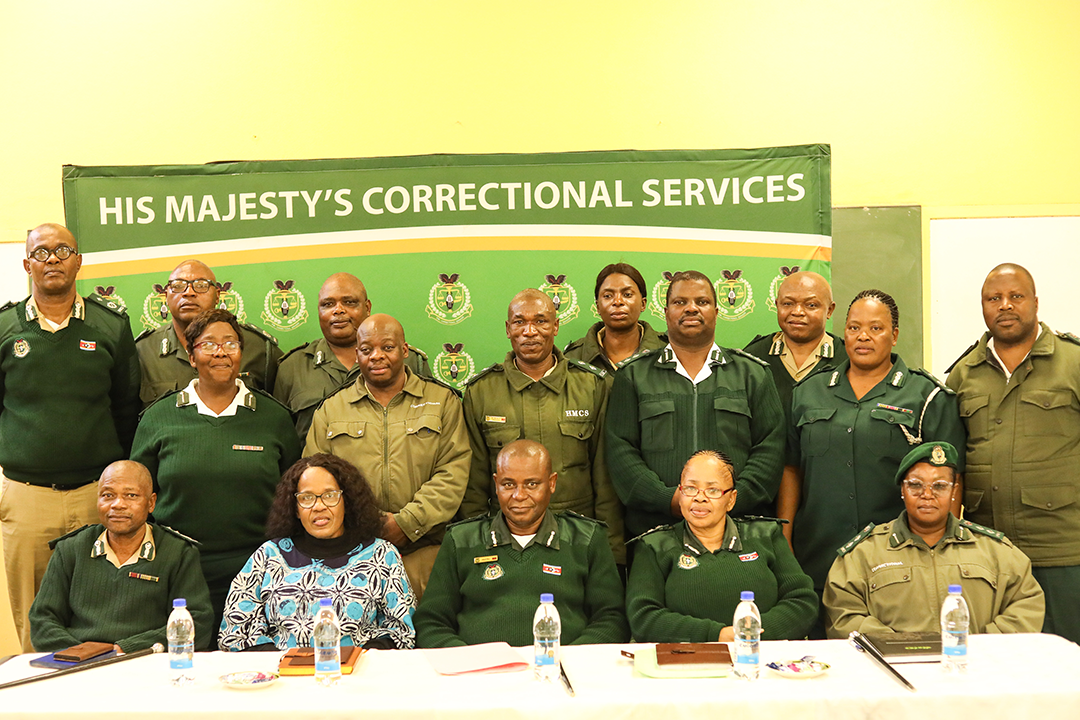



MBABANE – The Commissioner General of His Majesty’s Correctional Services (HMCS) has challenged a 12-member delegation of officers heading to Zambia to return with knowledge and practical lessons that will contribute to strengthening the administration of correctional centres in Eswatini.
The delegation, comprising mainly Officers-In-Charge, is scheduled to depart on Sunday to attend a SADC peer-to-peer workshop aimed at strengthening regional cooperation, sharing experiences and promoting continuous improvement in correctional services.
Bidding farewell to the officers, the Commissioner General said their participation should go beyond simply attending a regional workshop, stressing that they were travelling with a responsibility to learn, engage and bring back knowledge that could benefit the institution.
“You are not going there simply to attend. You are going there to learn, to share your experiences and to see what others are doing differently. Most importantly, you must come back with something that can add value to the way we administer our correctional centres,” the Commissioner General told the delegation.
The workshop forms part of a wider SADC peer-to-peer process that has previously been hosted in Namibia, Eswatini and Zimbabwe, with Zambia now taking its place in the regional engagement. The initiative provides correctional authorities with an opportunity to exchange practical experiences and examine approaches being implemented by their counterparts across the region.

For Officers-In-Charge, the exposure is particularly significant because they are responsible for translating institutional policies into day-to-day operations at correctional centres.
The Commissioner General acknowledged the demanding nature of their responsibilities, noting that leadership within a correctional centre requires officers to constantly balance security, discipline, administration, staff welfare and rehabilitation.
“As Officers-In-Charge, you are confronted with challenges every day. You are expected to maintain security and order, manage your staff, deal with operational pressures and, at the same time, ensure that rehabilitation remains at the centre of what we do,” she said.
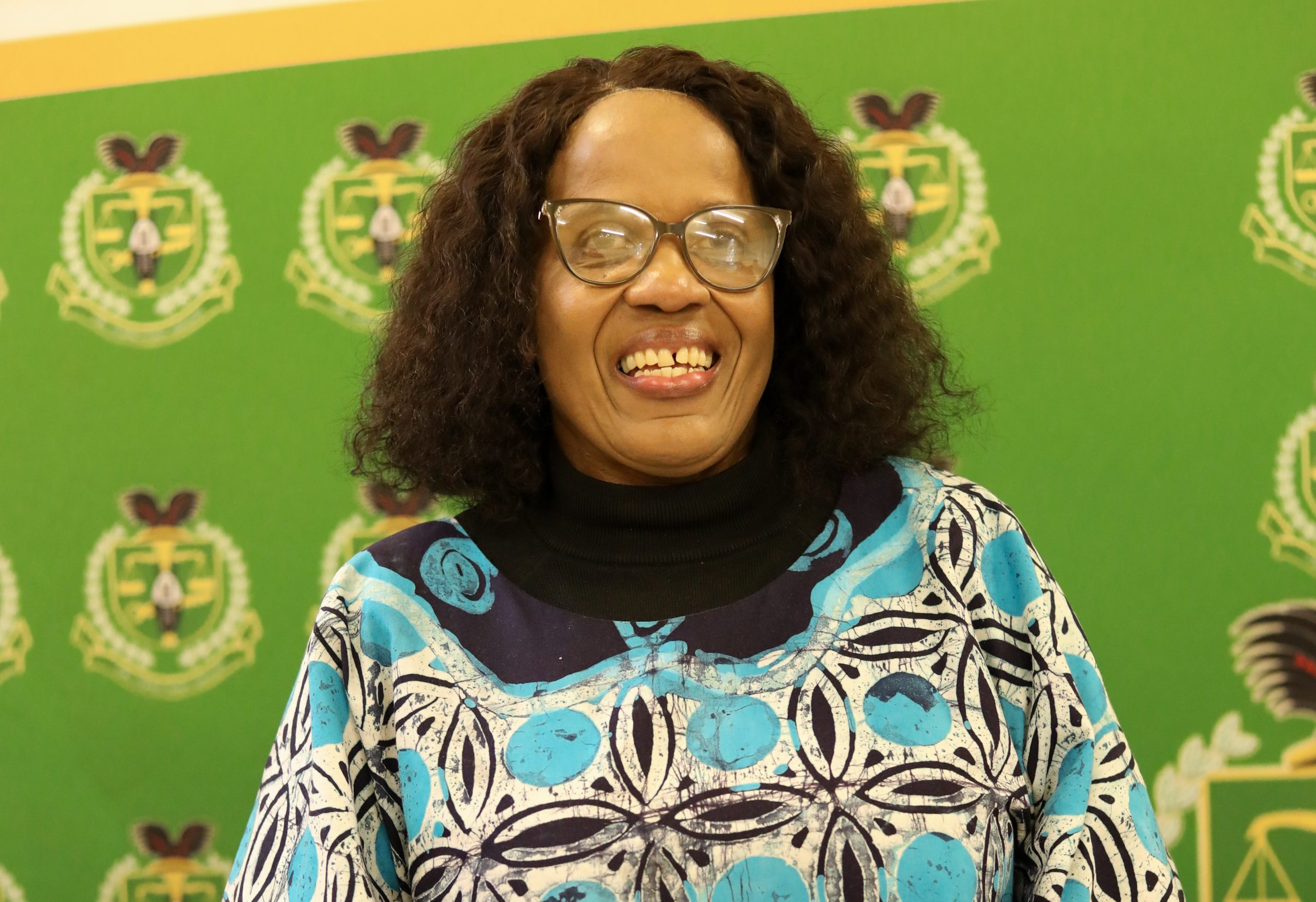
She said these realities made the peer-to-peer engagement particularly important because it would allow the officers to interact with counterparts who understand the complexities of correctional management.
The workshop is expected to provide an opportunity for the delegation to benchmark systems, exchange practical solutions and examine how other correctional institutions respond to common operational challenges.
According to the Commissioner General, benchmarking should not be viewed as an exercise of simply comparing institutions.
“Benchmarking is about learning. When you see something that works elsewhere, you must ask yourself how it can be adapted to our own environment. We cannot simply copy what others are doing. We must understand it, assess it and see how it can work within our own realities,” she said.
She further encouraged the officers to participate actively in the workshop and to ensure that the knowledge acquired does not remain with the delegation.
“What you learn there must not stay with the 12 of you. When you come back, you must share it with your colleagues. We want to see institutional learning taking place. The benefit of this trip must eventually be felt within our correctional centres,” she said.
The Commissioner General also highlighted the importance of leadership development, particularly for Officers-In-Charge who serve as a critical link between institutional policy and its implementation at centre level.
She said exposure to different leadership and management approaches could help officers reflect on their own practices and identify areas where improvements could be made.
Another area highlighted during the farewell was agriculture, which the Commissioner General identified as an area deserving greater attention, particularly as some correctional institutions within the region have developed productive agricultural programmes.
She encouraged the delegation to use the Zambian engagement as an opportunity to learn more about correctional agriculture and its potential contribution to rehabilitation and institutional sustainability.
“Agriculture is an area where we can learn from one another. I want you to look closely at what other correctional institutions are doing, particularly where agriculture is being used for skills development, rehabilitation and productivity,” she said.
She noted that agricultural programmes could provide offenders with practical skills, promote discipline and teamwork, create productive routines and potentially equip inmates with skills that could support their livelihoods after release.
The Commissioner General said the delegation should therefore approach the workshop with an open mind and a willingness to engage.
“You must ask questions. Do not be afraid to share our experiences, including the challenges we face. Our counterparts may also have challenges, and through these conversations we may find solutions that can assist all of us,” she said.
The regional nature of the workshop also provides HMCS with an opportunity to contribute to broader discussions on the future of correctional services within SADC.
The Commissioner General reminded the officers that they would be representing the institution and, by extension, Eswatini, and urged them to conduct themselves with professionalism and discipline throughout the engagement.
“You are going there as ambassadors of HMCS. Represent the institution with professionalism. Listen, learn, participate and bring back knowledge that will help us move forward,” she said.
As the delegation prepares for its departure, the expectation is that the Zambian workshop will serve as more than a professional engagement. It is an opportunity for HMCS officers to broaden their understanding of correctional administration, establish stronger regional connections and identify practical approaches that can be adapted to the Eswatini correctional environment.
For the Commissioner General, the success of the trip will ultimately be determined not by the number of sessions attended, but by the value the officers bring back.
“I expect you to come back different from the way you are leaving. Come back with new ideas, new perspectives and practical lessons. Let us use this opportunity to strengthen our institution and improve the way we serve,” she said.
The departure of the 12-member delegation therefore represents another step in HMCS’s continued engagement with regional correctional institutions, reinforcing the importance of cooperation, knowledge-sharing and continuous improvement in strengthening correctional administration across the SADC region.