


BY MBONGENI NDLELA
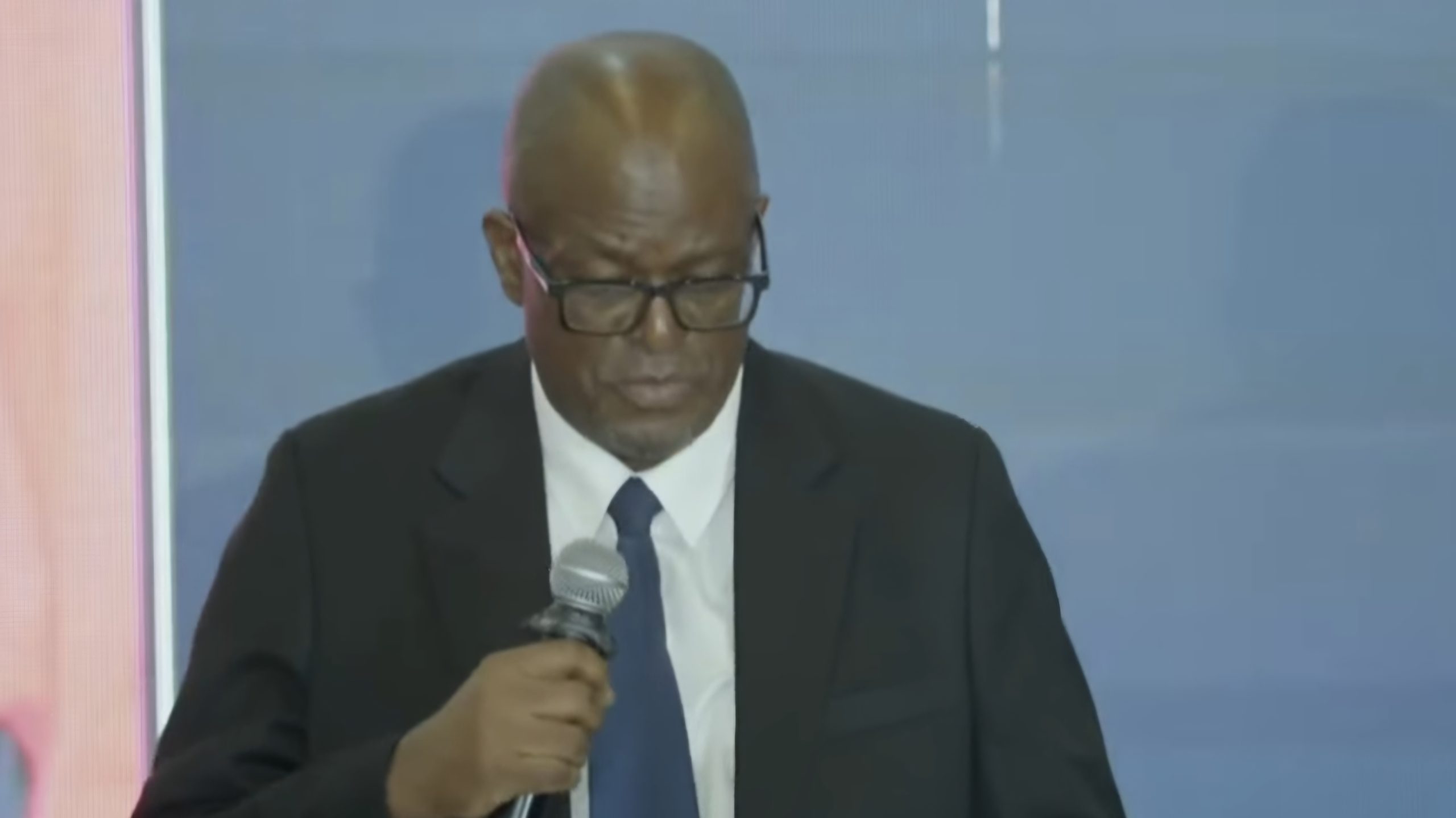
MANZINI– Zambia Chief Justice Mumba Malila SC has described the late Chief Justice Moses Cuthbert Bheki Maphalala as a practical, firm and respected judicial leader whose contribution strengthened cooperation among African judiciaries and left institutions across the continent better positioned to deliver justice.
Paying tribute to Maphalala during his State Memorial Service, Chief Justice Malila said the death of Eswatini’s Chief Justice had been felt far beyond the country’s borders, with regional and continental judicial bodies mourning a man who had become an influential voice in judicial cooperation.
Malila spoke on behalf of the Judiciary of Zambia, the Southern and Eastern African Chief Justices Forum as well as the newly established African Chief Justices Alternative Dispute Resolution (ADR) Forum.
He said news of Maphalala’s passing had come with sadness and disbelief because colleagues across the region had hoped he would recover from his illness and return to the work to which he had devoted himself.

For Malila, the loss was not simply that of a senior judicial officer.
It was the loss of a colleague, a friend and a man whose presence had become deeply woven into the regional judicial family.
“The news was deeply devastating,” Malila said, explaining that the region had lost not only a distinguished Chief Justice but a colleague whose contribution would be greatly missed.
He said Maphalala’s death was a loss to his family and the Kingdom of Eswatini, but also to the wider African judicial community where he had served with distinction for many years.
A REGIONAL JUDICIAL LEADER
Maphalala became Chief Justice of Eswatini in 2015 and went on to become one of the longest-serving members of the Southern and Eastern African Chief Justices Forum.
According to Malila, Maphalala was not a passive member who merely attended meetings. He took a genuine interest in the forum’s programmes, institutional development and long-term sustainability.
That commitment eventually saw fellow Chief Justices unanimously entrust him with the chairmanship of the forum during its 2023 Annual General Meeting in Arusha, Tanzania.
Malila said Maphalala accepted the responsibility at an important time when the regional body was working to strengthen its role as a platform for judicial cooperation.
As chairperson, he brought commitment, authority and a strong belief that African Chief Justices could achieve more when they worked collectively.
His influence was also felt at international level.
Malila recalled that Maphalala represented the forum at major international judicial gatherings, including meetings connected to the World Conference on Constitutional Justice and the World Congress.
He said Maphalala carried the regional forum’s voice with dignity while consistently advocating stronger cooperation between judicial institutions.
HE BELIEVED MEMBERS MUST HONOUR OBLIGATIONS
One of the clearest examples of Maphalala’s leadership, Malila said, was his insistence that belonging to an institution came with responsibilities and not privileges alone.
Maphalala strongly believed member judiciaries had to honour their financial obligations if the regional body was to function effectively.
To him, subscriptions were not merely an administrative requirement but a demonstration of commitment to the collective institution.
He also led by example.
During his chairmanship, Maphalala made it a priority to ensure that outstanding subscription arrears owed by the Judiciary of Eswatini were settled.
Malila said Maphalala personally followed the matter through and, as a result, the Judiciary of Eswatini was now up to date with its subscription obligations to the forum.
The Zambian Chief Justice described this as an important institutional legacy, particularly at a time when judiciaries across Africa operate under limited resources and competing financial pressures.
He said Maphalala understood that institutional solidarity required members to contribute their fair share and that his leadership helped strengthen the financial foundation on which regional judicial programmes depend.
CHAMPION OF ALTERNATIVE DISPUTE RESOLUTION
Maphalala was also remembered as a strong supporter of alternative dispute resolution, particularly mediation.
Malila said the late Chief Justice worked tirelessly towards the establishment and development of the African Chief Justices ADR Forum.
It was during Maphalala’s tenure as chairperson of the Southern and Eastern African Chief Justices Forum that significant steps were taken towards formalising the creation of the continental ADR body.
African Chief Justices had earlier agreed in principle to establish the forum before being given an opportunity during an Annual General Meeting in Kampala to consider an initial memorandum of understanding.
Malila said Maphalala’s leadership helped create the space necessary for the proposal to be presented to African Chief Justices and eventually progress towards formal establishment.
His support for ADR, Malila added, reflected Maphalala’s wider interest in finding practical ways of improving justice delivery.
‘HE MADE SURE THINGS GOT DONE’
Beyond titles and formal meetings, Malila painted a picture of a Chief Justice who valued action.
Those who worked with Maphalala, he said, knew him as a man who carried the dignity of his office while remaining collegial with fellow Chief Justices.
He was firm when necessary and was not afraid to make his views known.
But perhaps more importantly, Malila said, Maphalala did not want important matters to end with speeches and discussions.
“When he believed that something needed to be done, he had a determined and forthright way of making his position known,” Malila said.
He would then push to ensure that the matter was followed through to completion.
This practical approach, according to Malila, was among the qualities that made Maphalala such a valuable contributor to regional judicial cooperation.
He understood that relationships between African judiciaries could not be built through declarations alone, but required trust, personal relationships and a willingness among judicial leaders to listen and learn from one another.
LEGACY BEYOND ESWATINI
Malila said Maphalala had left behind a Southern and Eastern African Chief Justices Forum that was stronger because of his contribution.
He said fellow Chief Justices were richer for having worked alongside him, while the regional judicial community would continue remembering his commitment to cooperation and stronger judicial institutions.
His death, Malila observed, also carried a reminder for everyone entrusted with public office.
Positions are temporary, but the contribution made while occupying them can endure for generations.
“What endures is the contribution that we make while entrusted with responsibility,” he said.
Maphalala, he added, had used his time in office to serve not only the Judiciary of Eswatini and the country, but also the wider African judicial community.
His example demonstrated that leadership could extend well beyond the borders of one’s own jurisdiction.
Malila concluded by extending condolences to His Majesty King Mswati III, the bereaved family, the Judiciary and the people of Eswatini on behalf of the Judiciary of Zambia and the regional judicial bodies.
He assured the Judiciary of Eswatini that it was not mourning alone.
“The regional judicial family mourns with you,” he said.
For Malila and his colleagues across Africa, Chief Justice Maphalala’s chair may now be empty, but his contribution remains visible in the institutions he strengthened, the judicial relationships he nurtured and the continental initiatives he helped move from discussion into action.