


BY PHUMELELE GAMEDZE
MBABANE – What began as an awkward first-year mistake at the University of Eswatini has grown into a digital innovation that could change how students move around campus.
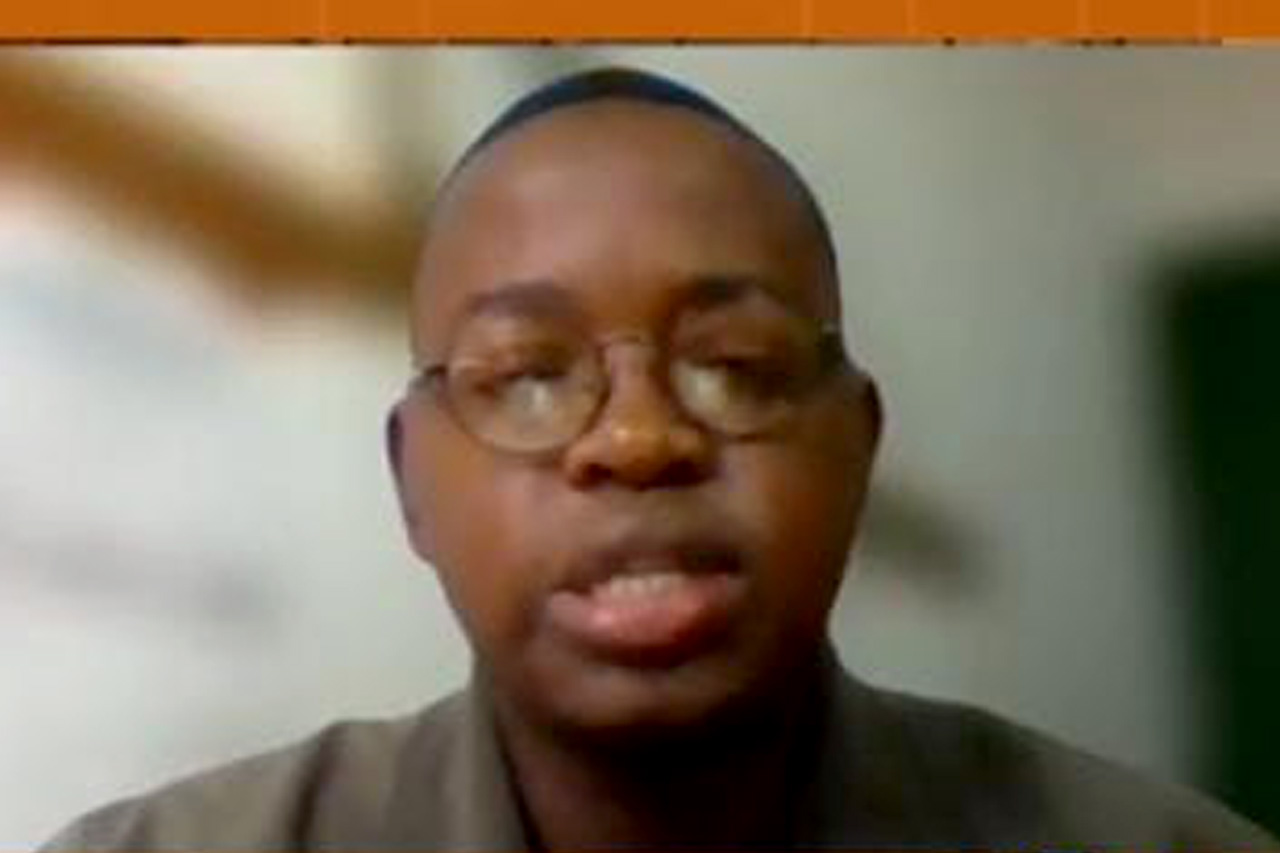
UNESWA student Banele Dlamini has developed a navigation system aimed at helping students locate lecture rooms, offices, laboratories and other facilities without the confusion that often comes with arriving on campus for the first time.
The innovation, known as the UNESWA Navigation System (UNS), or Umkhombandlela Wenyuvesi Yakangwane in isiSwati, was inspired by Dlamini’s own experience of getting lost while searching for a lecture room.
Speaking on Eswatini TV’s Kusile Breakfast Show, Dlamini recalled how, as a first-year student, he once walked into the wrong lecture and sat through part of a Commerce class before realising his mistake.

For a new student still trying to find his feet, asking for directions was not always easy.
“Being in first year, being shy, you didn’t have the guts to ask the next person,” he said.
That experience stayed with him.
By the time he reached his final year, Dlamini had decided to turn the problem into a practical solution for the students coming after him.
Using Geographic Information Science, GPS, spatial data and intelligent routing, he developed a platform specifically designed for the university environment.
Unlike ordinary navigation applications, which are mainly built around public roads and general destinations, UNS focuses on the spaces students use every day inside the Kwaluseni Campus.
The system is designed to guide users to lecture rooms, offices, laboratories and pathways across the institution.
According to Dlamini’s public description of the project, more than 90 per cent of mapped venues, offices and classes can already be reached through the system.
But UNS does more than simply point users in the right direction.
Students can create accounts linked to their academic programme and level of study, allowing the platform to provide information relevant to their timetable.
The system also allows students to report infrastructure problems anonymously.
Those reports are linked to specific locations, making it easier to identify where a fault or problem has been reported on campus.
Dlamini explained that the system is capable of generating possible routes through the campus network before directing a user towards an appropriate route to a selected destination.
At present, the innovation is focused on the Kwaluseni Campus, but Dlamini is already looking beyond it.
He said the next step would be to map UNESWA’s other campuses.
The project has received support from the Faculty of Science and Engineering, the Department of Geography, Environmental Science and Planning, as well as the Department of Student Affairs.
Dlamini has also acknowledged Faculty Administrator Alson Khumbulani Magagula, Dr Sizwe Mabaso and Dr Wisdom Mdumiseni Dlamini for their guidance and support during the development of the project.
For now, the platform is available as a web-based system, while Android and iOS applications are being developed.
Dlamini believes the idea has potential well beyond UNESWA.
He said similar technology could eventually be used at other universities, government facilities, tourism sites, transport systems and businesses.
Small businesses that are difficult to locate could, for example, be mapped onto similar systems to make them easier for customers and visitors to find.
The technology could also be used at large events, where visitors often struggle to locate entrances, camping areas, service points and other facilities.
For Dlamini, that broader vision is about making better use of digital technology and geospatial information to solve everyday problems.
He linked the innovation to Sustainable Development Goal 11, which focuses on building sustainable cities and communities.
The project also carries a wider message for young people at a time when youth unemployment remains a major concern.
Dlamini believes young people should not only point out the challenges around them, but should also use technology and available resources to create solutions.
“With the technology, with the resources that we have in our generation, artificial intelligence, the future is quite limitless for young people,” he said.
He encouraged young people to become more active in finding solutions to unemployment and other social challenges through technology and innovation.
For Dlamini, the journey behind UNS is remarkably simple.
He was once the confused first-year student searching for the right classroom.
Today, he is building a system designed to make sure the next student finds it.
(Courtesy Pic)