


BY MBONGENI NDLELA
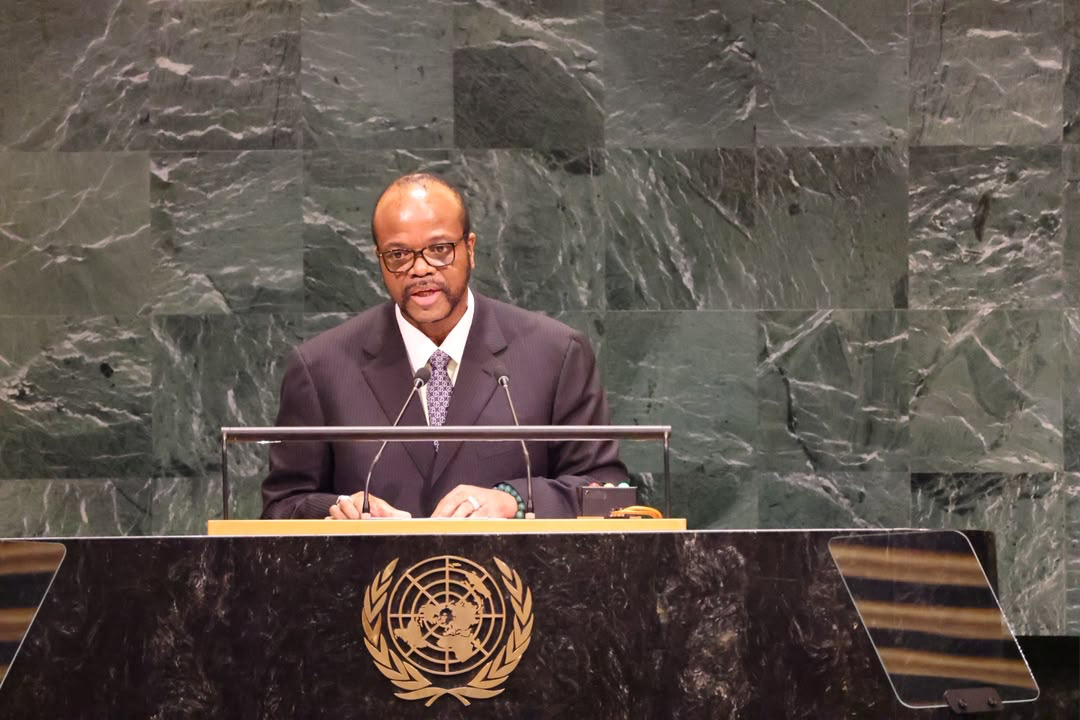
NEW YORK, USA – His Majesty King Mswati III has called for stronger international support to help African countries manufacture essential medicines, strengthen health systems and cope with climate shocks that are placing growing pressure on national resources.
Addressing the 81st Session of the United Nations General Assembly, the King linked health security and climate resilience to a wider question of global fairness, arguing that developing countries cannot be expected to confront cross-border crises alone.
“No country can protect itself from a global health emergency alone,” His Majesty said, reflecting on lessons from the COVID-19 pandemic.
The King said the world’s experience with the pandemic, together with recurring outbreaks of infectious diseases, showed that health systems had to remain vigilant and resilient.

He called for persistent inequalities in access to vaccines, medicines and medical technologies to be addressed.
His Majesty said African countries required stronger local and regional capacity to manufacture essential pharmaceuticals and health products instead of remaining heavily exposed to disruptions in global supply chains.
He pointed to a recent meeting of the East, Central and Southern African Health Community held in Eswatini, where participating countries resolved to act as a single bloc when purchasing essential medicines and medical supplies.
According to the King, that approach could reduce costs and improve supply-chain stability.
“We appeal to the UN, through the World Health Organisation, to support this endeavour,” he said.
From health, the King turned to climate change, describing it as another defining challenge requiring greater international cooperation.
His Majesty said developing countries contributed relatively little to global emissions yet were heavily affected by droughts, floods, changing weather patterns and other climate-related shocks.
“Therefore, climate action must be accompanied by climate justice,” he said.
The King called for stronger cooperation in climate adaptation, resilience, technology transfer, capacity building and access to predictable and affordable climate finance.
For countries with constrained public resources, the implication was significant.
Money required to respond to severe droughts, floods or other climate emergencies places added pressure on resources also needed for health, education, infrastructure and other development priorities.
His Majesty said the region was confronting severe El Niño-related weather conditions, requiring governments to draw on strained national resources to protect people and livelihoods.
“We must protect our environment, not only for our present generation, but for those yet unborn,” he said.
The address connected two issues that are often discussed separately at international forums.
Health emergencies can cross borders rapidly, while climate shocks can damage food systems, infrastructure, livelihoods and government finances.
In both cases, the King argued that national preparedness had to be backed by international solidarity and stronger regional capacity.
His Majesty’s call for pharmaceutical production also fitted into his broader economic argument for value addition and industrialisation in Africa.
Manufacturing medicines locally would strengthen health security while expanding productive capacity and reducing exposure to distant supply chains.
The King’s climate message carried a similar development dimension.
Access to technology and affordable climate finance, he said, was central to helping developing countries adapt without sacrificing other national priorities.
At a General Assembly focused on restoring trust, the appeal placed delivery at the centre of international cooperation.
Developing states, His Majesty argued, need practical support that strengthens hospitals, medicine supply, climate resilience and the ability of communities to withstand future shocks.
The measure of global cooperation, in that sense, would be seen not only in agreements negotiated in international halls, but in whether countries are better equipped when the next major health emergency, drought or flood arrives.
(Courtesy Pic)