


BY GCWALISILE MHLABANE
MANZINI – Emaswati have been challenged to sharpen their ability to question information, identify misinformation and use digital knowledge to make better decisions about their education, finances, livelihoods and everyday lives.
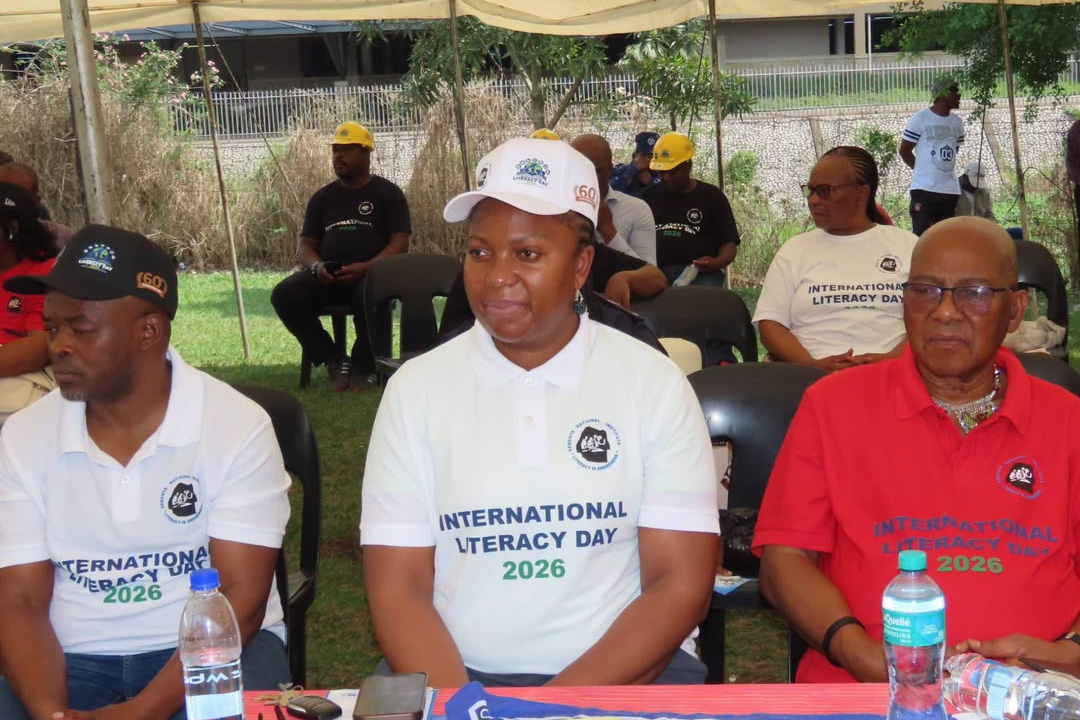
The call was made at Millennium Park in Manzini on September 24, 2026, during Eswatini’s national commemoration of International Literacy Day, held under the theme “Literacy for People, the Planet and Prosperity.”
The message from education leaders was that literacy is no longer only about being able to read and write. In a society where people receive news, financial advice, health information, advertisements and political and social commentary through phones and digital platforms, citizens also need the ability to understand, question and evaluate what they encounter.
The commemoration brought together the Manzini Regional Administrator, Acting Principal Secretary in the Ministry of Education and Training, Regional Secretary, Regional Education Officer, Sebenta National Institute Chief Executive Officer, Secretary General of the UNESCO National Commission, government officials, partners and members of the media.

Sebenta National Institute Chief Executive Officer Thembinkosi Mamba said literacy should equip people to use knowledge meaningfully in their daily lives.
“Literacy provision would not be complete if it does not make the beneficiaries thereof functional,” Mamba said.
He said modern literacy encompasses how people listen, speak, read, view, write and create, while understanding how language and information are used for different purposes and audiences.
For ordinary citizens, the implications are practical. A person may need to read a job advertisement, understand a loan agreement, compare prices, follow health instructions, complete an online application or determine whether a message circulating on social media is credible.
Mamba said Sebenta was taking education and vocational skills training closer to communities and working with communities to identify the skills they need.
He said the institute was also working to ensure its programmes support progression into formal education, continued learning and the TVET qualification system.
Acting Principal Secretary in the Ministry of Education and Training Dr Tholakele Mngomezulu-Dlamini said technological and social changes were expanding the meaning of literacy.
She said literacy should enable individuals to function effectively in different environments, including an increasingly digital society.
“A literate individual should be able to read with understanding, analyse numbers and data and apply 21st-century literacies,” Mngomezulu-Dlamini said.
She highlighted digital, media, information, visual, critical, tool and traditional literacy as important competencies.
The emphasis on critical literacy comes as misinformation and unverified claims can reach large audiences through digital platforms.
Speakers encouraged Emaswati to ask basic questions before accepting or sharing information: Is it true? Who produced it? What evidence supports it? What information is missing?
For citizens, such skills can have consequences beyond the classroom. Poor understanding of information can affect financial decisions, access to services, educational opportunities and participation in community life.
However, the commemoration also acknowledged that the country still faces foundational learning challenges.
Mngomezulu-Dlamini referred to findings from the Eswatini Multiple Indicator Cluster Survey 2021–2022, which identified challenges in foundational reading and mathematical skills among children.
She said continued investment in early learning and foundational skills remained important, including initiatives such as Grade Zero and support for Early Grade Reading and Early Grade Mathematics Assessment programmes.
The 2026 theme also connected literacy to economic participation and sustainable development.
Financial literacy can help people make informed decisions about money, while numeracy enables citizens to understand prices, figures and data. Media and information literacy can help people distinguish fact from opinion and assess information before sharing it.
The speakers stressed that responsibility for building a literate society cannot rest with schools alone.
Families, communities, libraries, government, educators, civil society and the private sector all have a role in encouraging reading, questioning and lifelong learning.
The message from Millennium Park was therefore not simply about producing more people who can read and write.
It was about ensuring that Emaswati have the knowledge and critical skills to navigate an information-heavy society, protect themselves from misinformation, make informed choices and turn learning into opportunities for themselves, their families and their communities.
(Courtesy Pic)