


BY MBONGENI NDLELA
LOBAMBA – Bank charges, delayed university funding, public service salary adjustments, the safety of Bhunu Mall, deaths of Eswatini students studying abroad and disputes over electricity poles on private property are among a wide range of issues expected to come under parliamentary scrutiny this afternoon.
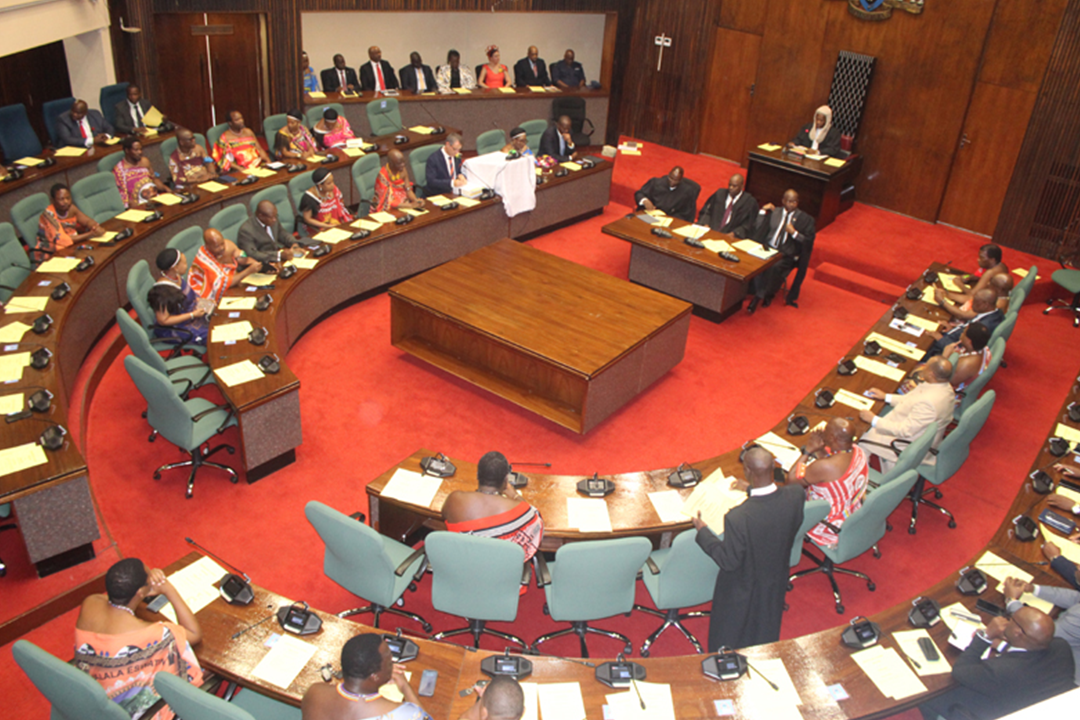
The House of Assembly is scheduled to sit at 2.30pm today, Monday September 28, 2026, with an Order Paper packed with questions and motions touching directly on the pockets, safety and livelihoods of ordinary Emaswati.
The sitting comes during the Third Session of the 12th Parliament, which was officially opened by His Majesty King Mswati III earlier this year. Government has also highlighted greater public access to parliamentary proceedings through live broadcasts.
One of the issues likely to attract considerable public interest is a motion concerning service fees, transaction charges and withdrawal fees charged by Standard Bank Eswatini.

The motion, moved by Lobamba Lomdzala Member of Parliament Welcome Dlamini and seconded by David Ngcamphalala, seeks to have the Minister for Finance institute an investigation, together with the Central Bank of Eswatini, into the charges.
The motion refers to public allegations that some banking fees are excessive and particularly burdensome to low-income earners, pensioners, students and small businesses. These remain allegations contained in the parliamentary motion and are not findings by Parliament.
Should the motion be adopted, it seeks a comprehensive report from the Minister for Finance on the findings and any proposed remedial measures within seven days.
Another matter carrying immediate implications for students and workers is the funding situation at the Southern Africa Nazarene University (SANU).
MP Sicelo Prince Dlamini is expected to move a motion calling upon the Minister for Finance to urgently release the university’s subvention for the financial year ended June 2026.
According to the motion, the alleged non-release of the funds has affected academic and administrative operations and is linked to difficulties in paying salaries and allowances for lecturers and support staff.
The motion also raises concerns about the procurement of teaching and learning material, laboratory equipment, library resources, outstanding debts to service providers and the welfare and academic progress of students.
It proposes that the Finance Minister table a report within 14 days, together with proof of payment towards the subvention.
Public servants will also be watching proceedings closely.
MP Nathi Mdockies Hlophe has tabled a motion asking the Minister for Public Service to explain whether recent salary adjustments were implemented in a fair, transparent and equitable manner, particularly in relation to lower-paid and underprivileged workers.
The motion seeks detailed information on how the adjustments were calculated and distributed across salary grades, the consultations undertaken with public sector unions and employee representatives and the percentage increases applied to lower, middle and senior salary grades.
It also asks Government to explain measures being considered to respond to concerns of lower-income earners and to provide information on the fiscal sustainability of the salary adjustments.
The Minister would, under the terms of the motion, be expected to table a comprehensive report within 14 days after its adoption.
BHUNU MALL SAFETY UNDER SPOTLIGHT
The House is also expected to hear a detailed oral question concerning Bhunu Mall.
MP Masiphula Mamba wants the Minister for Housing and Urban Development to update Parliament on the current state of the shopping centre following an incident at the property.
Among the questions being raised are whether the building is safe for stakeholders, whether a technical inspection was conducted and whether a report exists confirming that the building remains habitable.
The MP also wants information on the circumstances surrounding deaths and injuries linked to the incident, the role of the Construction Industry Council and the procurement process followed in selecting a contractor for renovation work.
He further seeks clarity on compensation for the family of the deceased and other affected people.
These questions seek official answers and should not be read as parliamentary findings on responsibility or liability.
STUDENT DEATHS ABROAD RAISED
Foreign Affairs and International Cooperation Minister Pholile Shakantu is also expected to face questions concerning reports of deaths involving Eswatini students studying abroad.
MP Sabelo Ndlangamandla wants Government to provide the total number of such deaths recorded over the past 24 months, broken down by country.
He is also seeking information about the leading reported causes of death and the mechanisms available to assist bereaved families with the repatriation of remains.
The question further seeks clarity on whether Government has a standard operating procedure or emergency funding arrangement for repatriation and what diplomatic missions are doing to monitor the welfare of students abroad.
Another Foreign Affairs question, from MP Charles Ndlovu, focuses on Eswatini’s diplomatic missions.
The MP wants information on the educational backgrounds and skills of personnel deployed to strategic embassies and whether their expertise is contributing towards the country’s pursuit of trade and business opportunities.
He is also seeking information about revenue linked to the missions and how their performance compares with established targets.
Ndlovu is separately asking the Minister for Education and Training why the country does not have stated targets for the number of students pursuing doctoral degrees and whether incentives could be introduced to encourage postgraduate study in research, science, technology and innovation.
EEC POLES ON PRIVATE LAND
Electricity infrastructure is another issue listed for oral questioning.
MP Nathi Mdockies Hlophe is seeking an explanation from the Minister for Natural Resources and Energy on procedures followed by the Eswatini Electricity Company when electricity poles are placed on or near private property.
The question refers to claims that some affected property owners were not adequately consulted before poles were erected and were later required to pay relocation costs.
The MP wants Government to explain the applicable procedures and whether property owners should bear relocation costs in cases where initial placement occurred without proper consultation.
FARMERS, IMPORTS AND NMC
Agriculture will also feature prominently.
Finance Committee Chairman Marwick Khumalo has tabled a private member’s motion seeking an assessment of the situation facing local sugar bean and maize farmers.
The motion calls for scrutiny of production figures attributed to the National Maize Corporation and asks Government to examine the impact of imported and allegedly smuggled agricultural commodities on the domestic market.
It further raises questions about consumer preference for different grades of beans and the role played by the NMC in the importation and marketing of maize.
The references to smuggling and market practices are allegations contained in the motion and would require investigation before they could be treated as established facts.
LAND DISPUTE COULD DRAW GOVERNMENT PROBE
Another motion seeks urgent Government intervention in a land dispute involving farm owners and residents under chiefdoms in the Nkhaba constituency.
MP Hope Shiba wants the Minister for Natural Resources and Energy to investigate disputes involving Farm No.1214 and other farms.
The motion refers to the eviction and demolition of two homes and claims that additional homes may be threatened.
It seeks verification of land ownership, circumstances surrounding the acquisition of the farms, consultation with affected residents, landowners and traditional authorities, and an assessment of the impact of the disputes on development projects.
A report with findings and recommendations is being sought within 14 days if the motion is adopted.
AUDITOR GENERAL INDEPENDENCE QUESTIONED
MP Masiphula Mamba has also tabled a motion seeking an explanation from the Finance Minister on the institutional independence of the Office of the Auditor General.
The motion refers to constitutional provisions dealing with the office and asks Government to explain the institutional arrangements under which it currently operates.
It further seeks Government’s response to concerns about the implications of those arrangements for accountability and public administration.
DIGITAL ESWATINI LOANS BEFORE HOUSE
Beyond questions and private members’ motions, the House is expected to receive several Finance Committee reports.
These include reports dealing with financing arrangements for the Digital Eswatini Project, including proposed loans associated with the International Development Association and the International Bank for Reconstruction and Development.
The Finance Committee will also table a report on the International Bank for Reconstruction and Development Eswatini Post and Telecommunications Corporation Loan Guarantee Bill, 2026.
Another report concerns the National Payment System Regulations, 2026.
The Ministry of Education and Training Portfolio Committee is meanwhile expected to table its report on the Sebenta National Institution Bill, 2026.
The Minister for Finance is additionally listed to table the State Owned Entities Loan and Guarantee Special Fund Regulations, 2026.
Taken together, today’s programme places household finances, education, banking, public-sector remuneration, land rights, infrastructure and Government accountability firmly before MPs.
For ordinary citizens, several of the matters on the Order Paper are far removed from abstract parliamentary procedure. They involve university salaries, bank deductions, property rights, electricity infrastructure, student welfare and the cost of earning and spending money.
The next stage will depend on what ministers tell the House, which motions MPs adopt and what reports Parliament ultimately requires from Government.