


BY SIFISO NHLABATSI
LOBAMBA – Members of Parliament are being asked to consider a different approach to Eswatini’s long-running corruption problem by establishing a Judiciary Commission of Enquiry, preferably comprising impartial retired jurists from within or outside the country, to investigate why institutions mandated to fight corruption have struggled to stop the scourge.
The proposal is contained in Private Members’ Motion 31/2026, by Hhukwini Member of Parliament Alec Lushaba and seconded by Appointed Member of Parliament Prince Mshengu.
Lushaba wants the Minister for Justice and Constitutional Affairs to establish the commission within 14 days of Parliament adopting the motion.
The proposed commission would investigate the causes and reasons behind the failure of institutions tasked with fighting corruption across all branches of Government.

It would also be empowered to refer matters to appropriate prosecutorial, investigative or disciplinary authorities where its investigations establish that a person, public officer, commissioner, employee, judicial officer or other office bearer had engaged in corruption.
The commission would have four months to complete its work and submit its findings to the Minister, who would then table the report before Parliament.
The proposal comes against a backdrop of recurring allegations and investigations involving public procurement, government expenditure and public institutions.
Among recent cases, the Auditor General flagged more than E3.3 billion in financial irregularities in the International Convention Centre and Five-Star Hotel project, including alleged tender breaches, unsupported expenditure and weaknesses in contract management and oversight.
In another case, a senior Ministry of Agriculture official was arrested in 2025 and charged with 106 counts of corruption, fraud, theft and money laundering, following an investigation by the Anti-Corruption Commission (ACC). The allegations involved at least E133 900.
Procurement has also remained a recurring area of concern, with medical suppliers lodging 19 objections with the Eswatini Public Procurement Regulatory Authority (ESPPRA) over government tenders worth about E1 billion.
The Ministry of Home Affairs has itself become a significant focus in Eswatini’s corruption concerns, particularly over the alleged fraudulent issuance of national documents. An investigation launched after the fraudulent Eswatini identity document linked to South African businessman Vusimuzi “Cat” Matlala uncovered allegations of an organised syndicate involving officials, including claims of irregular work permits, fraudulent birth, marriage and death registrations, passport fraud and bribes to facilitate government services.
The proposed parliamentary intervention also comes as Prime Minister Russell Mmiso Dlamini has repeatedly highlighted corruption as a major national problem.
In March 2026, the Prime Minister acknowledged that corruption remained deeply entrenched across sectors, saying there was still no light at the end of the tunnel despite government efforts to combat it.
In May, the Prime Minister said he had been criticised for intensifying the fight against corruption, describing corruption as one of the biggest obstacles to development and service delivery.
More recently, speaking at a national leadership gathering in September, Dlamini warned that systemic corruption could undermine Eswatini’s future, describing it not only as an economic problem but also as a moral failure requiring institutional and broader societal responses.
The motion therefore seeks to shift the focus from individual corruption cases to the effectiveness of the institutions themselves.
Rather than relying solely on existing anti-corruption structures to investigate alleged wrongdoing, the proposed commission would examine why those structures have allegedly failed to deliver the desired results and whether institutional weaknesses are allowing corruption to persist.
The proposal further envisages retired jurists, including those from outside Eswatini, conducting the inquiry, potentially placing the investigation outside the ordinary structures whose effectiveness would themselves be under scrutiny.
The motion is yet to be adopted by the House.
#Eswatini #AntiCorruption #Corruption #Parliament #HouseOfAssembly #AlecLushaba #Judiciary #Accountability #Governance #Justice
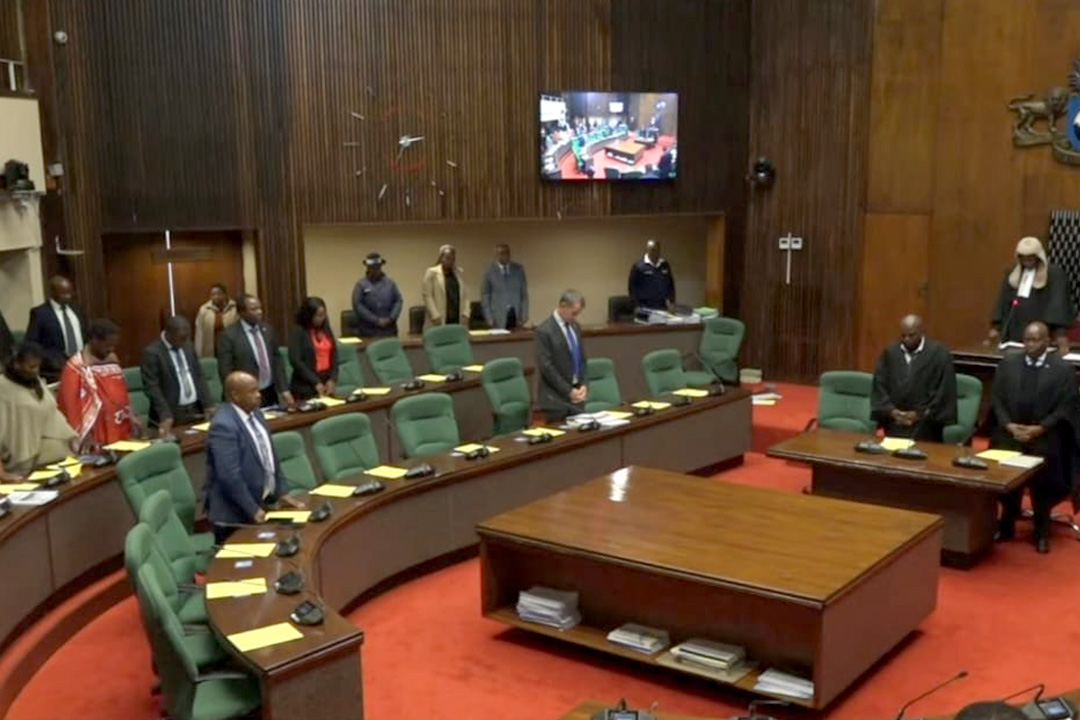
(Courtesy Pic)