


- The healthcare institution cuts its accumulated deficit by E17.8 million as tighter controls, cost management and strategic investment begin to show results
BY GCWALISILE MHLABANE
MANZINI – The Eswatini Nazarene Health Institutions (ENHI) is making notable progress in its financial recovery, with its accumulated deficit falling by almost half over the past financial year.
ENHI’s audited financial statements for the year ended March 2026 show that the institution reduced its accumulated deficit from approximately E37.8 million in 2025 to E20 million in 2026. The E17.8 million reduction represents an improvement of about 47 per cent.
The development marks a significant step for the faith-based healthcare institution, which has been working to strengthen its financial position while continuing to provide healthcare services and invest in its facilities.
Established in 1926, ENHI has developed into one of Eswatini’s major non-profit healthcare providers. Its operations include the 350-bed Raleigh Fitkin Memorial (RFM) Hospital, a regional referral and teaching hospital, as well as 20 Nazarene Community Health Clinics located across the country’s four regions. Collectively, the institution serves more than 500 000 people annually and contributes more than 40 per cent of healthcare services nationwide.

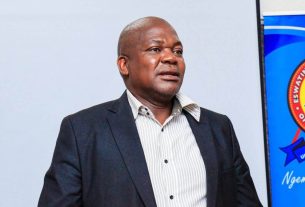
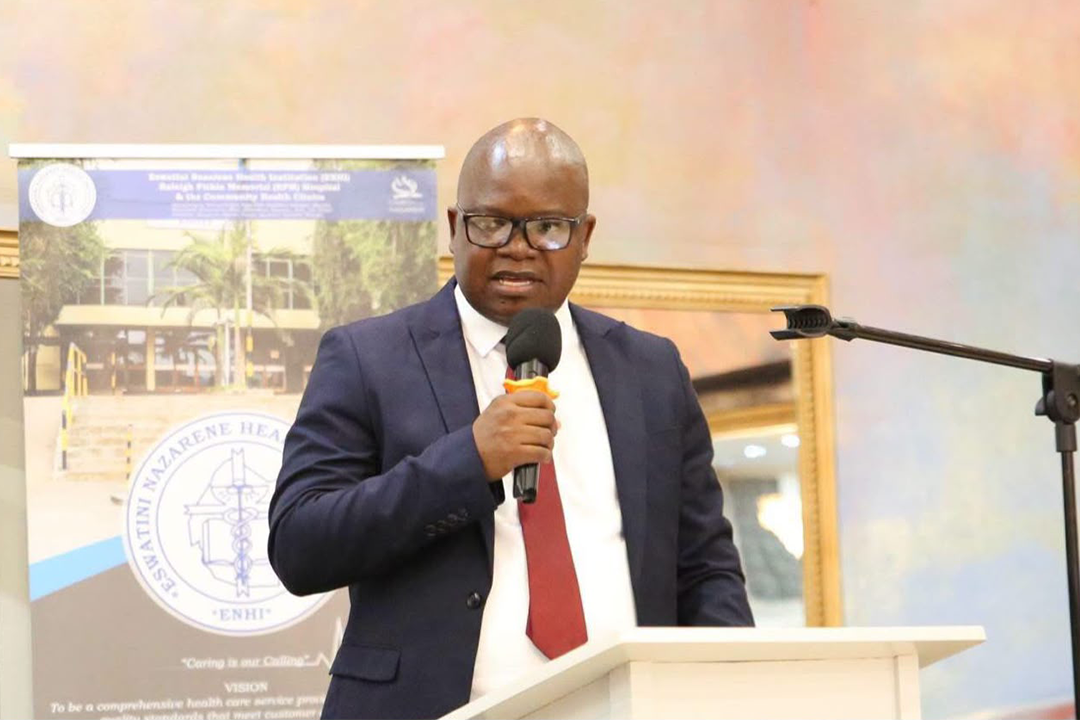
ENHI Chief Executive Officer Mazwi Mavuso shared the financial development with stakeholders, including Minister of Health Mduduzi Matsebula, during the ALLOCATE Programme graduation ceremony held at Esibayeni Lodge on Thursday, 3 September 2026.
Mavuso described the improvement as more than a positive accounting figure, saying it demonstrates the impact of measures introduced to strengthen financial controls, contain expenditure and broaden revenue streams.
Closing the financial gap
According to Mavuso, the reduction in the accumulated deficit demonstrates that ENHI is gradually narrowing the financial gap created over several years.
He said the movement from E37.8 million to E20 million is particularly significant because it took place while the institution continued to operate its healthcare facilities, acquire essential medical equipment and vehicles, and undertake infrastructure development and renovations.
Rather than simply concentrating on short-term survival, Mavuso said ENHI has increasingly focused on addressing the financial pressures that have accumulated over time.
The CEO acknowledged that the institution still faces financial and operational challenges and has not yet reached a debt-free position. However, he said the declining deficit provides evidence that the organisation is moving towards greater financial stability.
A focus on efficiency
Mavuso attributed the improvement to several interventions implemented across the organisation, coupled with the commitment of ENHI employees.
One of the key areas has been workforce management. With employee costs representing ENHI’s largest expenditure, the institution developed and implemented a strategic workforce plan aimed at aligning staffing requirements with available resources and operational needs.
The organisation has also tightened its budgeting processes and strengthened compliance with approved budgets.
Mavuso said these measures have helped departments become more deliberate about expenditure and ensure that available funds are directed towards essential services and institutional priorities.
“The guiding philosophy has been simple but powerful: ‘doing more while spending less’,” he said.
The approach has required departments to examine existing processes, identify unnecessary costs and find more efficient ways of delivering services without compromising healthcare provision.
From financial pressure to reinvestment
The latest figures also represent a notable change from the financial environment Mavuso encountered when he assumed the position of CEO in September 2023.
At that time, ENHI was experiencing considerable financial difficulties. Mavuso said the institution’s progress since then has been driven by stronger expenditure management, improved revenue generation and greater adherence to financial plans.
Importantly, he said the savings generated through these measures have been channelled back into the institution.
Among the investments undertaken are the acquisition of medical equipment and vehicles, renovations at RFM Hospital, construction and refurbishment work at three ageing clinics, digitalisation of institutional processes and investment in a solar energy plant.
The solar project is expected to strengthen ENHI’s energy security while helping reduce the institution’s electricity expenditure.
Mavuso stressed that the financial recovery should not be viewed as the achievement of management alone. He credited ENHI employees, the Board of Trustees, government and development partners for contributing to the progress.
Government support
Government assistance has also played an important role in supporting ENHI’s operations.
The institution receives a government subvention of E242 million, and Minister of Health Mduduzi Matsebula has expressed confidence in the management of the funds, emphasising the importance of responsible stewardship of public resources.
Mavuso also acknowledged the contribution of the King, government, the Board, development partners, the Office of Foreign Assistance, Georgetown University, non-governmental organisations, sister institutions and other stakeholders.
According to the CEO, their combined support has contributed to ENHI’s ongoing efforts to strengthen its financial position, improve infrastructure, introduce innovation and sustain healthcare services.
Challenges remain
Despite the progress, Mavuso acknowledged that ENHI continues to operate under financial pressure.
One of the challenges is the implementation of the salary review for State-Owned Entities, which he said has introduced additional financial pressure on the institution.
He said ENHI remains hopeful that government will assist in addressing the implications of the review while ensuring that staff morale is protected and the institution’s financial sustainability is not compromised.
For ENHI, the latest financial results represent a shift in the institution’s trajectory.
Rather than allowing its historical financial challenges to define its future, the organisation is seeking to use financial discipline as a foundation for continued investment in healthcare, infrastructure, technology and service delivery.
Mavuso said the long-term objective remains the establishment of a financially sustainable and ultimately debt-free ENHI.
The reduction of the accumulated deficit from E37.8 million to E20 million does not mark the end of the recovery journey, but it provides a measurable indication that the institution’s financial strategy is beginning to deliver results.