



… Finance Minister says property declarations will help expose tax gaps
BY MBONGENI NDLELA
MBABANE – If a business has declared no profit for 10 years, but its owner continues buying properties in Mbabane or Manzini, should the taxman be asking where the money is coming from?
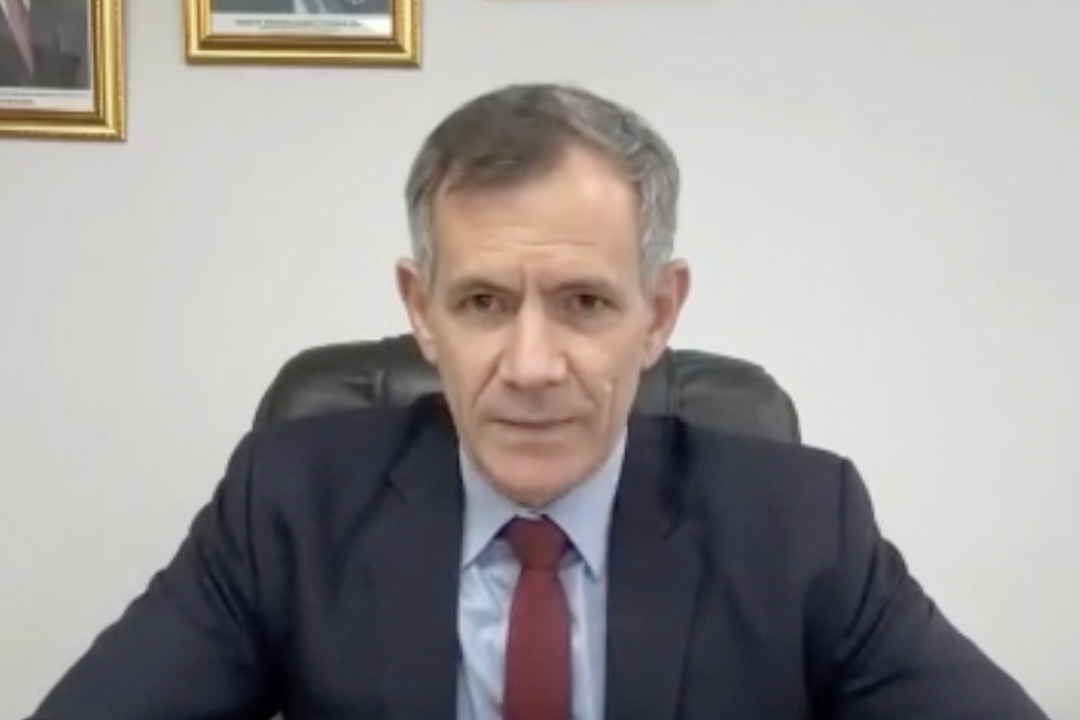
That question is likely to stir debate among property owners, businesses and ordinary taxpayers after Minister of Finance Neal Rijkenberg revealed that Government is turning its attention to property ownership as it seeks to close gaps in tax collection.
Rijkenberg says people whose property holdings exceed E3 million will be required to declare them when submitting their tax returns, with the exercise largely focused on properties situated on title deed land.

The Minister presented the move as part of Government’s attempt to identify cases where declared income may not correspond with visible wealth.
“If you have declared zero profit in your business for the last 10 years, but you are buying a few properties in Mbabane or Manzini, for instance, one now has to declare,” Rijkenberg said.
He said Government was particularly concerned about businesses that reported little income, paid limited PAYE or claimed to fall below applicable thresholds while apparently having enough money to accumulate significant property assets.
His remarks raise an important national debate: Is closer scrutiny of property ownership a fair way of catching tax dodgers, or will compliant property owners fear being subjected to unnecessary scrutiny?
Rijkenberg sought to calm such concerns, stressing that owning valuable property was not, on its own, a problem.
He gave the example of an employed person who earns a declared salary and legitimately uses that income to buy a house.
“If obviously you’ve been earning a salary and you bought a house, great. I mean, there’s no problem at all,” he said.
The issue, according to the Minister, arises where the financial picture presented to the tax authority appears inconsistent with an individual or business owner’s accumulation of assets.
PROPERTY BECOMES PART OF TAX PICTURE
Rijkenberg said Government had progressively tried to close different avenues through which income could escape the tax system.
He explained that moving large amounts of physical cash has become increasingly difficult as international financial systems tighten controls against illicit financial flows.
Financial institutions and authorities are also increasingly able to exchange information where transactions raise legitimate concerns, he said.
The Minister said Government had now noticed that property was another area requiring attention.
“We are finding that people are buying properties. And so with additional cash, properties are being bought,” he said.
He said the immediate attention was mainly on *title deed land*, particularly urban properties where ownership records, valuations and registered title deeds can be established.
Rijkenberg specifically said the exercise was not currently focused on Swazi Nation Land.
“We’re mainly talking about properties in title deed land. So we’re really not talking about Swaziland land for now,” he said.
That distinction could become important as the public begins debating how far tax authorities should go in comparing declared income against accumulated assets.
WHY E3 MILLION?
According to Rijkenberg, people owning property valued at more than E3 million will need to declare those holdings as part of their tax returns.
The requirement comes as the Eswatini Revenue Service continues its 2026 annual income tax filing programme.
ERS says an income tax return provides the tax administrator with information concerning a taxpayer’s finances and tax affairs for a particular tax year. The authority also states that the Commissioner General may require other persons to submit returns depending on the applicable annual notice.
ERS formally called for submission of returns for the tax year ended June 30, 2026 under Sections 33 and 38bis of the Income Tax Order of 1975, as amended.
But Rijkenberg’s explanation puts a sharper policy question before the country: *should declared income be looked at alongside a person’s property portfolio when authorities assess whether the correct amount of tax is being paid?*
For compliant taxpayers and businesses, the Minister argues that stronger enforcement could actually make the market fairer.
He warned that when one company pays its taxes while a competitor avoids them, the non-compliant business acquires an unfair advantage because its costs are artificially lower.
“What happens is the ones not paying tax outcompete the ones paying tax,” he said.
“And you end up with a whole society ultimately not paying tax. And we really don’t want that. It must be fair.”
“LET’S PAY OUR TAXES”
Rijkenberg also delivered a direct message to both Emaswati and foreigners doing business in the Kingdom: everyone who earns taxable income should contribute.
He said people welcomed into Eswatini and doing business in the country should equally meet their tax obligations.
“But let’s pay our taxes. Everybody must know that if you are here and welcome to our beautiful kingdom, pay your tax,” he said.
The Minister stressed that the initiative was not intended to target one nationality, community or section of society.
Rather, he said, Government wanted to close loopholes wherever they appeared.
That explanation is likely to form one side of the public debate.
On the other side will be questions taxpayers may reasonably ask: How will property values be determined? Will a person who inherited valuable property be treated differently from someone who purchased it from undeclared income? How will authorities distinguish legitimate accumulated wealth from suspected tax avoidance? And what safeguards will exist to ensure information is used fairly?
Those questions were not answered in detail in the Minister’s speech, and will require further explanation from the relevant authorities as implementation takes shape.
SACU MONEY TO RELIEVE PRESSURE
Rijkenberg’s remarks came as he also confirmed that SACU revenue was expected to arrive next week and provide relief to Government’s cash-flow position.
He said part of the available relief would be directed towards Micro Projects, particularly the Community Development Fund, where delayed payments have affected a number of small contractors.
Government is simultaneously pursuing additional financing for broader budget-support and cash-flow requirements, he said.
But it is his message on property and tax compliance that could resonate far beyond the immediate cash-flow discussion.
Rijkenberg’s argument is straightforward: Government cannot sustainably finance roads, schools, hospitals and other public services if some economically active people pay what they owe while others find ways around the system.
He said closing tax gaps was ultimately aimed at ensuring Government could collect revenue due to it and use that money for healthcare, education, roads and other public services.
The debate now shifts to the public.
If someone repeatedly declares little or no taxable income but accumulates millions of Emalangeni in property, should that automatically invite questions from the taxman?
And perhaps more importantly: *where should Eswatini draw the line between protecting taxpayers’ privacy and making sure everybody pays their fair share?
(Courtesy Pic)


