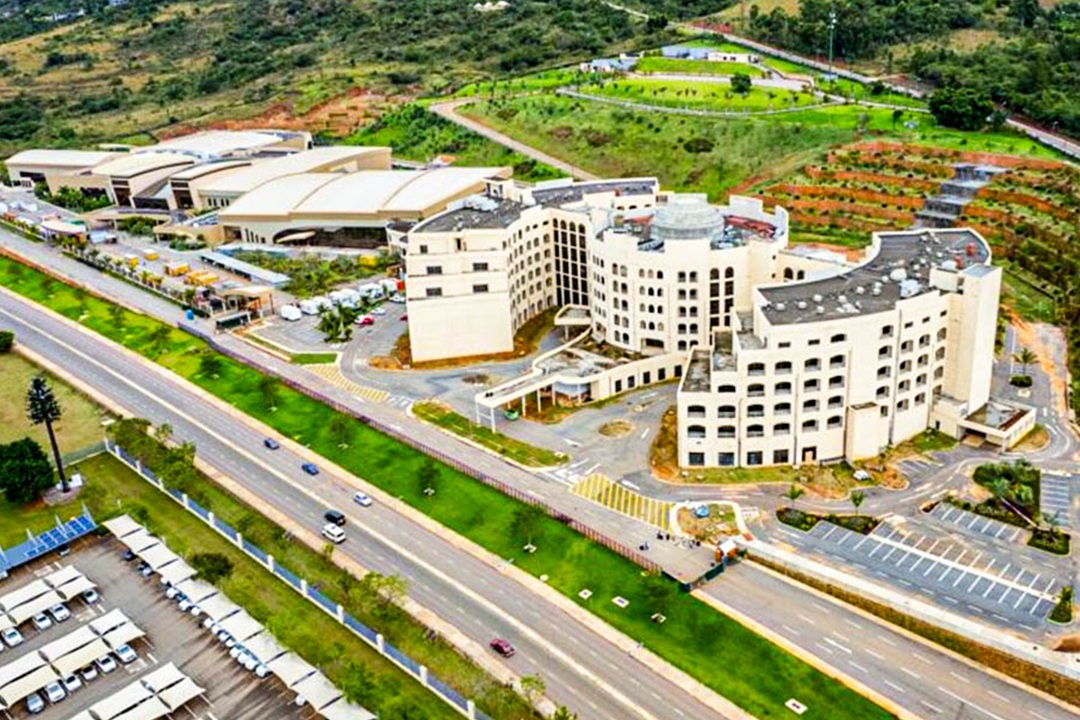



- Seed Summit presents rare opportunity for SMEs to turn conference tourism into real income
BY MBONGENI NDLELA
EZULWINI – When thousands of African delegates descend on Ezulwini this week, the biggest question should not only be whether Eswatini successfully hosts the African Union Seed Summit.
There is another equally important economic question: How much of the visitors’ money will remain in the hands of ordinary emaSwati after the summit ends?
The African Union has confirmed that the Inaugural Seed Investment Summit will be held from October 5 to 7, 2026 at the Ezulwini Palazzo Convention Centre, bringing together Heads of State, ministers, government officials, farmers’ organisations, researchers, private-sector representatives, development agencies and other stakeholders from across the continent.
Minister of Tourism and Environmental Affairs Jane Mkhonta-Simelane has said more than 3000 people are expected for the agriculture conference alone.

That represents thousands of people who will need somewhere to sleep, something to eat, transport, gifts to take home, clothes, entertainment and experiences that remind them they have been to Eswatini.
Hotels will understandably take a considerable share of that spending.
But conference tourism should not end at hotel reception desks.
A summit of this size should also mean money for the woman sewing traditional attire in Manzini, the woodcarver producing decorative pieces at Mantenga, the young photographer looking for customers, the food entrepreneur preparing indigenous dishes, the tour guide, taxi operator, jewellery maker and the small farmer supplying fresh produce.
TURN EZULWINI INTO A MARKETPLACE
There is perhaps no better time to put Eswatini’s creativity on display.
Walk around major tourism destinations elsewhere in Africa and it is common to find entrepreneurs strategically positioned where international visitors gather.
They do not wait for tourists to search for them.
They take the products to the tourists.
That is an approach local entrepreneurs can adopt during the AU summit.
Imagine designated, professionally arranged stalls close to the conference precinct displaying emaSwati-made products.
Instead of tables packed randomly with merchandise, entrepreneurs could create attractive mini-shops carrying clearly branded products and visible prices.
Tailors could sell modern clothing incorporating elements of lihiya, siswati prints and traditional patterns.
Designers should not necessarily restrict themselves to full traditional attire.
There can be scarves, shirts, skirts, dresses, neckties, handbags, laptop sleeves, hats, shawls and jackets carrying subtle Swazi designs.
A foreign delegate attending meetings throughout the day may not necessarily purchase full traditional regalia.
But that same person may happily spend E200, E300 or E500 on a professionally finished scarf, shirt, bag or jewellery piece that reminds them of Eswatini.
That is where entrepreneurship requires creativity.
MAKE THE PRODUCTS EASY TO TRAVEL WITH
Visitors travelling by air do not want to carry large, heavy objects.
Local manufacturers should therefore think small, attractive and portable.
A craftsman who normally sells a large wooden sculpture could develop smaller desk-sized pieces.
Artists could produce framed miniature paintings of Sibebe, Execution Rock, Mantenga Falls, traditional dancers or other recognisable features of the Kingdom.
Entrepreneurs could develop attractive gift boxes containing locally produced goods.
One package could contain Eswatini honey, handicraft jewellery and a small traditional fabric item.
Another could contain coffee or tea, locally produced snacks and a miniature cultural souvenir.
A simple inscription such as “Eswatini 2026 – Africa Seed Summit”, where authorised, could make an ordinary product a keepsake.
Packaging matters.
Something selling for E80 at an informal stall could potentially attract a much higher value when professionally packaged, labelled and presented as an authentic product of Eswatini.
SELL THE STORY, NOT ONLY THE PRODUCT
There is another element emaSwati entrepreneurs sometimes underestimate: visitors buy stories.
A handmade necklace becomes more valuable when the buyer understands who made it, where it was made and what its design represents.
A piece of fabric becomes more interesting when the visitor understands its cultural meaning.
A bottle of honey becomes more memorable when the buyer learns that it was produced by a rural cooperative supporting families somewhere in the Kingdom.
Every participating SME could have a small card attached to its merchandise explaining the story behind the product.
A QR code could direct customers to the business’s WhatsApp, Facebook, Instagram page or online store.
That means a E300 transaction made during the summit could become a business relationship continuing long after the visitor has flown home.
SOUTH AFRICA SHOWS WHAT BUSINESS EVENTS CAN DO
There are strong African examples showing why major conferences should be treated as economic events rather than simply gatherings.
South Africa deliberately incorporates small enterprises into its business-events industry.
For Meetings Africa 2025, the country’s Department of Tourism funded the participation of 26 SMEs alongside more than 190 confirmed exhibitors, specifically creating opportunities for smaller businesses to enter the conference economy.
The results of large events there demonstrate the wider possibilities.
South Africa’s government reported that the 2025 Africa Travel Indaba contributed approximately R610.6 million to GDP, generated R45.54 million in tax revenue and supported 1104 jobs. Authorities explicitly described the tourism value chain as extending beyond accommodation to aviation, culture, technology and community enterprises.
Meetings Africa 2024 similarly generated estimated direct expenditure of R145 million, while its overall GDP contribution was reported at R420 million. Small businesses were deliberately included among exhibitors.
Eswatini does not need events of exactly the same scale to learn from that model.
The principle is simple: when international visitors arrive, governments and tourism authorities deliberately connect those visitors with local businesses.
MINISTRY CAN CREATE A ‘MADE IN ESWATINI’ ZONE
The Ministry of Tourism and Environmental Affairs could take this opportunity further by working with the Eswatini Tourism Authority, municipalities, the Ministry of Commerce, Trade and Industry and relevant SME organisations to establish a properly managed Made in Eswatini visitor market around the summit precinct.
It should not resemble an unplanned street market.
The standard must reflect the international status of the conference.
Selected SMEs could receive uniform stalls, clear branding, electronic payment facilities, adequate lighting and assistance with product presentation.
Products should be screened for quality.
Visitors attending a continental summit should encounter the finest products the Kingdom can offer.
There could be separate sections for fashion, crafts, food, jewellery, visual art, agricultural products and tourism experiences.
Fashion designers could conduct short demonstrations showing how traditional material is transformed into contemporary clothing.
Craftspeople could demonstrate weaving, carving or beadwork.
That becomes entertainment while simultaneously encouraging purchases.
HOTELS SHOULD BECOME SALES POINTS
The Ministry could also encourage hotels accommodating delegates to reserve spaces for local products.
Imagine arriving in your hotel room and finding a professionally designed card reading:
“Welcome to the Kingdom of Eswatini. Discover authentic locally made products during your stay.”
A QR code could provide information on nearby craft markets, restaurants, cultural attractions and participating SMEs.
Hotel foyers could host rotating exhibitions by local businesses.
Rather than delegates leaving Ezulwini having seen only conference halls and hotel corridors, every effort should be made to introduce them to Eswatini.
CREATE EXPERIENCES AFTER THE MEETINGS
Conference delegates normally have limited free time.
That actually creates another business opportunity.
Tour operators could develop short two-hour or three-hour packages specifically for delegates.
Instead of offering only full-day excursions, businesses could advertise products such as:
“Two Hours in Eswatini”
A delegate could finish conference business in the afternoon, visit Mantenga Cultural Village, purchase crafts, taste local food and return to the hotel.
There could be evening cultural experiences combining dinner, traditional dance and craft shopping.
The key is convenience.
The easier Eswatini makes it for visitors to spend money, the more money they are likely to leave in the country.
FARMERS SHOULD NOT BE LEFT OUT
There is an added irony if Eswatini hosts a major African summit on agriculture and seed systems while local farmers remain outside the economic activity surrounding it.
Hotels, restaurants and caterers serving thousands of visitors will require vegetables, fruit, meat, eggs and other produce.
Where possible, this should translate into increased sourcing from local farmers and agribusinesses.
The African Union says the summit itself is intended to unlock investment opportunities and strengthen African seed systems. (au.int)
That makes the event an ideal platform for Eswatini agricultural SMEs to market themselves.
A young farmer producing chilli sauce, honey, dried fruit or other value-added products should be able to see this conference not merely on television but as a potential marketplace.
TRAIN VENDORS BEFORE THE NEXT BIG EVENT
Not everything can be organised overnight for this week’s summit.
But the event should become a learning exercise.
The Tourism Ministry could establish a permanent Business Events SME Programme.
Before major international conferences, selected entrepreneurs could undergo short training covering pricing, customer care, packaging, basic French and Portuguese greetings, card payments, digital marketing, merchandising and international customer expectations.
Entrepreneurs could then be placed on a database and rotated through major conferences hosted by Eswatini.
That would transform major events into a predictable SME economic programme rather than leaving entrepreneurs to hear about conferences after delegates have already arrived.
FROM CONFERENCE DELEGATE TO TOURIST
Hosting international meetings is itself an opportunity for Eswatini.
The Ezulwini Palazzo, officially opened in April 2026, was positioned as an important part of the country’s ambition to compete for global conferences and high-value business events.
Government has previously recognised that hosting African Union meetings can create spending on accommodation, food, handicrafts, transport and other services.
The Seed Summit therefore provides an important test.
Success should not be measured only by smooth motorcades, packed hotels, good speeches and successful meetings.
It should also be measured by how far the economic opportunity travels.
Did a tailor receive new orders?
Did a young photographer earn money?
Did a farmer supply a hotel?
Did a craftswoman sell products to delegates from five countries?
Did a tour operator take visitors to Mantenga?
Did an international visitor discover a local business through a QR code and place another order after returning home?
Those are the smaller transactions that eventually build a tourism economy.
For three days, a section of Africa will effectively come to Eswatini.
The challenge for emaSwati entrepreneurs is to stop seeing the visiting delegations merely as important people travelling in convoys.
They are also potential customers.
And if Eswatini wants conference tourism to make a meaningful contribution to SMEs, then every large international meeting should leave behind more than photographs and declarations.
It should leave money circulating in emaSwati businesses.