


- She was honoured in Brussels for women’s leadership, institutional governance
BY MBONGENI NDLELA
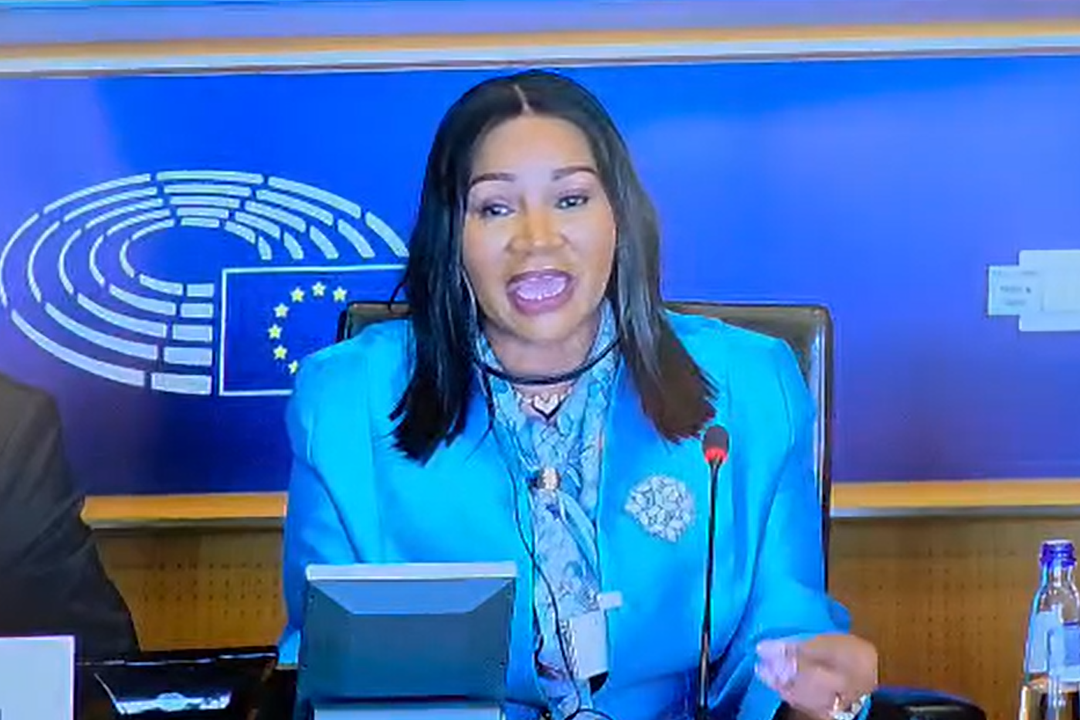
BRUSSELS, BELGIUM – Eswatini’s Senate President, Senator Pastor Lindiwe Dlamini, has received international recognition at the EuropeAfrica Investment Forum 2026, placing the Kingdom’s parliamentary leadership in the spotlight at a high-level gathering bringing together African and European leaders.
Dlamini was recognised with the Global-South-EU Women in Institutional Leadership Award 2026, an honour celebrating women’s leadership, stronger institutions and inclusive development.
The recognition formed part of the EuropeAfrica Investment Forum 2026, held at the European Parliament in Brussels on October 1 and 2, under the High Patronage of the European Parliament.
The award citation describes Dlamini as a leader committed to good governance, women’s empowerment and inclusive development, highlighting her role as President of the Senate of the Kingdom of Eswatini.

But beyond the personal recognition, Dlamini used the international platform to put forward a broader economic argument: Africa’s relationship with Europe should increasingly move beyond exporting raw materials and importing finished products.
Her message called for a partnership built around co-production, value addition, technology transfer, manufacturing and stronger parliamentary accountability.
The position is outlined in her presentation on how African parliaments and the European Parliament can strengthen oversight of trade agreements so that their benefits reach ordinary communities, women, young people and small businesses.
TRADE MUST REACH ORDINARY PEOPLE
A major part of Dlamini’s intervention centred on what happens after governments sign international trade agreements.
She argued that parliaments should not regard ratification as the end of their responsibility.
Instead, lawmakers should follow agreements throughout their implementation, scrutinise how they affect national economies and determine whether they are actually creating opportunities for citizens.
The Senate President said parliamentary oversight should ensure that international trade agreements encourage local processing, manufacturing, value addition, skills development and technology transfer within Africa rather than maintaining an economic model in which African countries mainly supply raw materials.
That approach could have direct significance for countries such as Eswatini, where expanding manufacturing, opening export markets and enabling smaller businesses to participate in regional and international value chains remain important development priorities.
Dlamini also placed women and young entrepreneurs at the centre of the discussion.
Her presentation noted that complex trade procedures and non-tariff barriers can hit small-scale women traders, young entrepreneurs and micro-enterprises particularly hard.
She called for trade arrangements, including implementation of the African Continental Free Trade Area (AfCFTA), to incorporate measures that make customs systems, rules of origin and digital trading platforms accessible to smaller enterprises.
PARLIAMENTS MUST FOLLOW THE MONEY
The Senate President further argued that governments cannot promise easier international trade without investing in the infrastructure needed to make it possible.
Transport systems, renewable energy, digital connectivity, border technology and capacity-building programmes all require funding.
Parliaments, she said, therefore have an important responsibility to scrutinise budgets and ensure that governments and international development partners provide sufficient resources for trade-related infrastructure.
Her intervention effectively shifted the debate from the signing ceremonies that normally accompany international agreements to the practical question many citizens ask afterwards: What difference does the agreement make on the ground?
For a small business owner, that difference could mean simpler customs procedures.
For a young entrepreneur, it could mean access to a larger continental market.
For a woman involved in cross-border trade, it could mean fewer administrative obstacles.
And for African economies, Dlamini argued, it could mean progressing from raw-material exporters towards economies capable of processing and manufacturing products closer to home.
ESWATINI EXPERIENCE TAKES GLOBAL STAGE
Dlamini also shared Eswatini’s parliamentary experience, telling the forum that lawmakers have a distinct role in ensuring trade policies are translated into domestic law and subjected to proper scrutiny.
Her presentation states that Parliament in Eswatini has established a special Committee on Trade and International Affairs, while calling for national laws governing customs, standards and investment to remain aligned with regional agreements and World Trade Organisation obligations.
She further challenged legislatures to ensure that governments provide adequate resources for border management, information and communications technology systems and capacity building, while working to reduce non-tariff barriers.
Importantly, Dlamini said women, young people and SMEs should not merely be discussed as beneficiaries of trade policy.
Their real experiences, she argued, should help parliaments identify and remove the obstacles preventing businesses from participating fully in regional trade.
AFRICA-EU PARTNERSHIP, BUT AFRICA MUST LEAD
One of the strongest messages emerging from Dlamini’s presentation was that closer cooperation with Europe should complement, rather than overshadow, Africa’s own continental economic integration programme.
She supported stronger cooperation between African parliaments and the European Parliament through regular dialogues, joint hearings and exchanges involving relevant parliamentary committees.
Such cooperation could focus on practical matters including customs procedures, non-tariff barriers, access to finance and helping SMEs enter regional value chains.
However, she maintained that implementation of the AfCFTA must remain African-led.
“The objective should be very practical: to help African businesses trade with other African businesses more easily,” her presentation states.
European institutions could contribute knowledge, experience and partnership, but African institutions should remain at the centre of implementing the continental free trade area.
Dlamini said stronger parliamentary oversight could ultimately turn the AfCFTA from a continental commitment on paper into real economic opportunities within African communities.
AWARD PUTS WOMEN’S LEADERSHIP IN FOCUS
Her recognition in Brussels adds another dimension to that message.
The Global-South-EU Women in Institutional Leadership Award 2026 celebrates the contribution of women occupying positions from which they can influence institutions, public policy and development.
For Eswatini, the recognition also provided international visibility for the country’s Senate at a forum focused on investment, institutional cooperation and the future of Africa-Europe economic relations.
Dlamini’s appearance therefore carried two messages from Brussels: women can occupy and shape major institutions, and those institutions must ensure that international economic agreements eventually produce tangible benefits for people.
Her closing position was equally clear: parliamentary cooperation should contribute towards prosperity, employment and stability across borders, while ensuring that trade becomes more accessible and inclusive.
At a forum whose message was “Invest Together, Innovate Together, Prosper Together,” Eswatini’s Senate President used her moment of international recognition to argue that prosperity cannot simply be measured by the number of agreements countries sign.
The real test, she suggested, is whether those agreements create businesses, strengthen industries, open markets and improve opportunities for the women, young people and communities they are supposed to serve.