


BY SIFISO NHLABATSI
EZULWINI — Agriculture Minister Mandla Tshawuka has challenged governments, investors and development partners to move beyond commitments and unlock greater investment in Africa’s seed sector to strengthen food security and agricultural transformation.
Tshawuka said investment should be the central focus of efforts to build effective and sustainable seed systems across the continent.
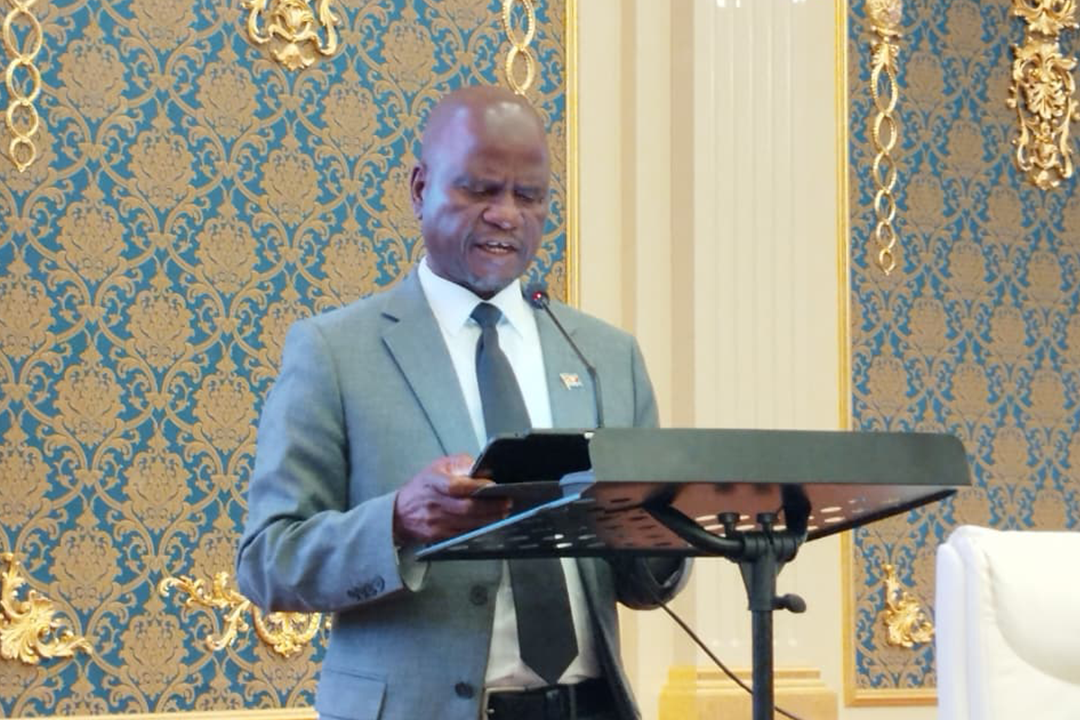
“The central word in our gathering today is investment,” Tshawuka said during the opening of the Senior Officials Meeting of the Africa Seed Summit in Ezulwini.
He said Africa needed to create conditions that make investment in the seed sector possible, sustainable and commercially attractive while ensuring that development outcomes were achieved.

According to Tshawuka, this required increased mobilisation of private capital into the African seed sector and measures to reduce the risks faced by investors and seed enterprises.
He also called for improved access to finance for local seed companies and emerging entrepreneurs.
Tshawuka said research institutions needed to be better connected with markets so that innovations could move from laboratories and research facilities to farmers.
He said improved seed must ultimately reach smallholder farmers, be of good quality and remain affordable.
“Only effective collaborations between Governments, the private sector, development finance institutions, research institutions, farmers and international partners will deliver these fundamentals,” he said.
Tshawuka said African countries needed to strengthen public-private partnerships and create investment opportunities across the seed value chain.
This includes research and development, seed multiplication, processing, storage, certification, distribution and access to markets.
He said international partners also had an important role to play in mobilising investment, transferring knowledge and technology and supporting climate-resilient agriculture.
However, Tshawuka stressed that international cooperation should help African countries build sustainable institutions and stronger domestic capacity rather than create permanent dependency.
He said the continent should identify bankable investment opportunities, strengthen the connection between African research and commercial investment, improve regulatory environments and mobilise development and blended finance.
Tshwaukа also called for greater support for local seed enterprises and investment in climate-resilient varieties.
He said farmers should be supported to make informed choices while women and young people should be given opportunities to participate in emerging seed enterprises, agricultural technology and agricultural value chains.
“Africa’s youth should not see agriculture as an industry of the past. They should see it as one of the continent’s greatest investment opportunities of the future,” he said.
For Eswatini, Tshawuka said seed development formed part of the country’s broader agricultural transformation agenda, which includes improving productivity, building climate resilience, increasing agro-processing, providing targeted funding and connecting farmers to profitable markets.
He said the continent had the resources, people, markets and knowledge to feed itself, but required greater coordination, investment, stronger institutions and political commitment.
#AfricaSeedSummit #SeedInvestment #Agriculture #FoodSecurity #Investment #SeedSystems #AfricanAgriculture #Eswatini