



BY NELIWE NGUBANE
MBABANE— A tree planted today may take years to provide shade, but the decision to plant it can begin with a young person. For Melokuhle Simelane of Baha’i High School, that is precisely why young people should not be viewed only as beneficiaries of tomorrow’s environmental decisions.
They are already stakeholders today.
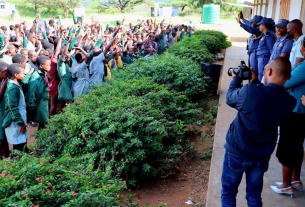
Delivering a speech on “Youth Driven Environmental Conservation” during Mic Drop Monday, Simelane called on leaders and institutions to move beyond simply encouraging young people to care about the environment and instead involve them directly in environmental decision-making.
Her argument comes against the backdrop of environmental challenges such as pollution, illegal dumping, climate change and biodiversity loss, issues that affect communities now and have implications for future generations.

Simelane highlighted several ways in which young people are already contributing to environmental conservation.
From organising clean-up campaigns and planting trees to promoting recycling and using social media to educate others, young people are finding practical ways to encourage environmental responsibility.
These activities demonstrate that youth participation is not merely theoretical.
However, Simelane believes there is a gap between participation and decision-making.
She questioned why young people are often invited to environmental events only after decisions have already been made, while their perspectives are not always included when policies and programmes are being developed.
For her, genuine youth-driven environmental conservation means creating structures where young people can propose ideas, contribute solutions and participate in projects that directly affect their communities.
Municipal councils and other institutions therefore have an opportunity to strengthen environmental initiatives by creating channels through which young people can meaningfully participate.
This could include youth-led environmental projects, community clean-up programmes, recycling initiatives, environmental education campaigns and platforms where young people can engage decision-makers on environmental concerns.
But Simelane also placed responsibility on the youth themselves.
She acknowledged that young people cannot expect institutions to do everything. They too must demonstrate the change they want to see by reducing waste, protecting natural resources and encouraging sustainable practices within their communities.
Her speech therefore presented environmental conservation as a partnership.
Young people have energy, creativity and the ability to mobilise their peers, while municipalities and other institutions have the structures, resources and policy-making responsibilities needed to create sustainable systems.
Bringing these strengths together could help communities move from environmental awareness to practical action.
At the centre of Simelane’s message is the belief that the decisions being made today will determine the environment future generations inherit.
That makes young people more than future leaders.
They are current stakeholders with ideas, responsibilities and a role to play in shaping the environmental future of their communities.
And, as Simelane reminded her audience, their voices need to be heard while decisions are being made,not only after they have already been taken.
#MicDropMonday #YouthVoices #EnvironmentalConservation #YouthParticipation #ClimateAction #SustainableCommunities #YouthLeadership #BahaIHighSchool #ILoveMbabane
(Courtesy Pic)